Languages
Saturday, November 21, 2026



News and Views from the Global South

Ecobreves – EL SALVADOR: Denouncing Contamination
An environmental organization will present the Central American Water Tribunal with three charges of contamination against the government and several companies of El Salvador.
Rio+10 in a State of Emergency
The United Nations and the South African government are leading a final attempt to resuscitate the World Summit on Sustainable Development, which gets underway in Johannesburg in less than a month.Good-Bye Garbage Dumps
The clean-up of several unregulated garbage dumps in the industrial Brazilian municipality of Sao Bernardo do Campo has served to raise the environmental awareness of the area's 700,000 residents.Ecobreves – COLOMBIA: Water Classes
The Water Classrooms initiative will train 3,000 school children in the northern Colombian department of Atlántico to take care of water resources, through an agreement between the private sector and the departmental government.
Adobe Stands Up to Quakes
A non-governmental organization in El Salvador is promoting the construction of adobe homes designed to withstand the relatively frequent earthquakes that hit Central America. Adobe is an ecological and inexpensive alternative, say experts.Ecobreves – ARGENTINA: Ecotourism in Antarctica
Argentina's tourism office is promoting ecological tourism in Antarctica, the frozen continent located 4,600 km from the nation's capital, and 1,200 km from its southern extreme.
Alternatives to Environmental Neo-Liberalism
The current globalization process, has imposed an "over-economization" of the world, is tarnishing the prospects for the upcoming Johannesburg Summit.Ecobreves – PERU: Transport of Dangerous Substances
The Peruvian government is launching a plan for the safe shipment of contaminating materials like petroleum, acids and other industrial products, with the support of United Nations agencies.
UN Conferences and Summits
The international conferences and summits convened by the United Nations generate intense mobilization around issues of global interest. On the current agenda are two major gatherings, one about sustainable development, the other about the information society.Ecobreves – MEXICO:: Cheap and Wasted Water
Mexico's water consumers pay a third of the cost of purification and distribution, and just 30 percent comply with payments for the service, complain authorities.Ecobreves – HONDURAS: Tegucigalpa the Most Polluted
A report by the Swiss Foundation for Development Aid warns that the Honduran capital has the worst air pollution of Central America, which explains why there has been an increase in respiratory illnesses there.Ecobreves – EL SALVADOR: Anti-Dengue Fumigation Criticized
Ecologists in El Salvador denounce the use of the insecticide permithrin in the government's fumigation campaign aimed at eradicating the Aedes aegypti mosquito, which transmits dengue fever among humans.Ecobreves – CENTRAL AMERICA: Promoting Clean Energy
Central America could cut its carbon dioxide emissions by 200,000 tons in the next 10 years through a plan encouraging the use of renewable energy sources, financed by the Global Environment Fund and the United Nations Development Program (UNDP).
'Aqua' to Revolutionize Climate Predictions
The Brazilian probe incorporated into the Aqua satellite will allow predictions of rains and drought for South America with 90 percent accuracy.Ecobreves – BRASIL: Agro-Ecology Is Growing
Family farming provides 70 percent of the food consumed in Brazil, representing an important step towards agro-ecology, say experts.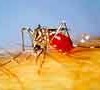
Dengue
Dengue has become a health problem for tropical areas of Latin America over the last several decades. But this disease, cause by four types of virus transmitted by a mosquito, has been known for centuries.Ecobreves – PANAMA: Coffee Bees
The presence of African bees led to a 25-percent increase in the production and weight of two varieties of coffee grown in the western Panamanian province of Chiriquí, according to a study by the Smithsonian Tropical Research Institute.Ecobreves – GUATEMALA: Sales of Oxygen to Netherlands
The Guatemalan government is negotiating an agreement for the sale of oxygen to the Netherlands, giving the European country a larger quota for the emission of greenhouse gases and the Central American nation resources to preserve its natural wealth.Ecobreves – CUBA: Fighting Desertification
Cuban technicians are receiving training in Germany to recover an arid zone in the southeastern province of Guantánamo, one of the Caribbean island's most fragile ecosystems.Ecobreves – CHILE: Wild Animals Released
The wild animal rehabilitation center of the Pro-Defense of Flora and Fauna National Committee released two chilla foxes (Pseudalopex griseus) and two quiques (Galictis cuja), species threatened by hunters and smugglers.
Central America Wearies under Dengue Onslaught
The tropical epidemic has been merciless in the region, and is revealing the vulnerability of the poorest sectors of the population.« Previous Page — Next Page »


Tierramérica is the main communications platform on sustainable development and the environment in Latin America and the Caribbean. It is produced by IPS Noticias, the agency’s Spanish-language service, which created it jointly with the United Nations Development Programme (UNDP) and the United Nations Environment Programme (UNEP), with later support from the World Bank. The weekly editions of Tierramérica are published in Spanish, Portuguese and English and are picked up and printed by dozens of media outlets in the region. Follow us on Facebook and Twitter.

From the Frontline of Environment
Supported by

Tierramérica en Español

Terramérica em Portuguese

