Languages
Saturday, October 3, 2026



News and Views from the Global South
Tierramerica - Ecobrief
Ecobreves – VENEZUELA: Parks on Yellow Alert
A "conservationist meter" applied to eight of Venezuela's 43 national parks by the non-governmental organization Vitalis shows "yellow alert", between red for "danger" and green for "satisfactory".Ecobreves – CUBA: Prize-Winning Eco-Construction Technique
A Cuban approach for constructing and repairing homes with ecological materials that are resistant to natural disasters received the World Habitat Award on Oct. 1, awarded annually by the Britain-based Building and Social Housing Foundation.Ecobreves – BRAZIL: Prize for Microfiltering Membranes
The Brazilian company PAM, awarded Sep. 19 as the best firm "incubated" by the National Association of Promoting Entities of Innovative Enterprise, is the first producer of microfiltering membranes in Latin America.Ecobreves – MEXICO: Illegal Timber Reaches the Government
Part of the tables, shelves and other wooden objects that the government of Mexico purchases -- this year for a total of some 180 million dollars -- comes from forests that were logged illegally, charge environmentalists.Ecobreves – ARGENTINA: The Better to Recycle With
With the aim of sharing experiences in urban recycling policies, Latin American officials, business leaders, academics and activists met recently in Buenos Aires.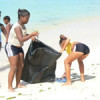
Ecobreves – CUBA: Kids and Adults in Nature Clean-Up
Hundreds of people in Cuba took part in the campaign "To Clean the World", sponsored by the United Nations Environment Program, reforesting and cleaning up coastal areas.Ecobreves – CHILE: Mapuches Denounce Government at the UN
The Chilean government should turn in the report about the denunciation presented by ecologists and Mapuche Indians of the central region of Araucanía "if it wants to hold a post in 2008 on the UN Human Rights Council."Ecobreves – VENEZUELA: A Plan to Save the Amphibians
Scientific and environmental institutions drafted a plan to protect the 320 species of toads, frogs and salamanders (five percent of the world's total) that live in Venezuela.Ecobreves – GLOBAL: Ozone Protocol Also Curbs Climate Change
Twenty years after the Montreal Protocol entered into force, United Nations officials are celebrating the fact that this pact has gone beyond its objective of protecting the atmospheric ozone layer to reducing emissions of gases that cause climate change.Ecobreves – MEXICO: Dolphins Mistreated and Killed in Captivity
Corruption and complicity of authorities allows some 20 dolphin aquariums to operate in Mexico, with more than half dying prematurely from pneumonia, stress and trauma from beatings.Ecobreves – BRAZIL: Sugarcane Doesn't Need the Amazon
The ethanol fuel boom is driving the expansion of sugarcane plantations in Roraima, Brazil's northernmost state, because of its stable climate and flat terrain -- ideal for mechanized harvest.Ecobreves – CHILE: Warning on Salmon Farms in Earthquake Zone
The environmental group Oceana has urged the Chilean government to take a cautionary attitude in taking a decision to renew authorization for raising salmon in floating cages in the Aysén fjord, 1,600 km south of the capital.Ecobreves – HONDURAS: Reforesting the Capital's “Lungs”
Fruit and timber trees -- 300,000 of them -- have been planted over the past two years on Juan A. Laínez hill, once one of the Honduran capital's main green spaces, and environmental "lungs".Ecobreves – CUBA: The Return of a Natural Pool
A natural pool, Los Cangilones, along the Máximo River in the central Cuban province of Camagüey, will once again receive bathers year-round, after being rescued from contamination from the waste of a nearby fish farm.Ecobreves – VENEZUELA: Sea Turtles Faithful to Their Beaches
A hawksbill turtle (Eretmochelys imbricata) that was marked with a metal plate three years ago has returned to lay eggs in Macuro, on the northeastern Venezuelan peninsula of Paria.Ecobreves – BRAZIL: Agro-industry's Own Environmental Research Center
The main entities of Brazil's agricultural-industrial sector announced last week the creation of ARES, the Institute for Responsible Agribusiness.Ecobreves – MEXICO: Electrochemical Gold Purification
Mexican researchers began operating a prototype electrochemical reactor that separates gold and silver from other minerals, without producing toxic residues.Ecobreves – BRAZIL: Lawsuit Against Eucalyptus
Seven environmental organizations from the southern Brazilian state of Rio Grande do Sul are demanding that federal justice authorities only authorize eucalyptus plantations if they comply with environmental impact studies.Ecobreves – CENTRAL AMERICA: Honduras and Guatemala to Protect Shared Ecosystems
The governments of Honduras and Guatemala signed a cooperation agreement on Aug. 27 to protect the natural resources the two countries share along their Caribbean coastlines.Ecobreves – ARGENTINA: Whales in the Schools
A plan for children to develop "a comprehensive appreciation of whales and their environment" will begin in late September in five schools of the southern Argentine province of Chubut.Ecobreves – VENEZUELA: A Bank for Depositing Garbage
A "garbage bank" will premiere this year in Santa Teresa del Tuy, a bedroom community southeast of Caracas where some 300,000 people live, and who generate 100 tons of solid waste each day, the project's main promoter, ecologist Oswaldo Alvarado, told Tierramérica.« Previous Page — Next Page »


Tierramérica is the main communications platform on sustainable development and the environment in Latin America and the Caribbean. It is produced by IPS Noticias, the agency’s Spanish-language service, which created it jointly with the United Nations Development Programme (UNDP) and the United Nations Environment Programme (UNEP), with later support from the World Bank. The weekly editions of Tierramérica are published in Spanish, Portuguese and English and are picked up and printed by dozens of media outlets in the region. Follow us on Facebook and Twitter.

The Week with IPS

NEXT STOP - SDGs
Tracking global progress towards a sustainable world
Tracking global progress towards a sustainable world
