Languages
Sunday, November 8, 2026



News and Views from the Global South
Tierramerica - Ecobrief
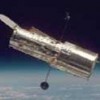
Ecobreves – UNITED STATES: Campaign to Save the Hubble
Scientists responsible for the Hubble space telescope are seeking a reversal of the decision by NASA (U.S. National Aeronautics and Space Administration) to cancel maintenance missions to prolong the useful life of the telescope-satellite by four to five years.Ecobreves – MEXICO: Dolphins Out of Place
The International Fund for Animals Welfare accused the Mexican authorities of dragging its feet in responding to reports of the import of 28 dolphins from the Salomon Islands and their shipment to an area where the introduction of non-native species is prohibited.Ecobreves – ARGENTINA: Attorneys for the Environment
The Argentine Network of Lawyers for the Defense of the Environment will begin operating in March to facilitate, promote and strengthen access to justice and the development of effective strategies in environment-related cases.Ecobreves – GUATEMALA: Protection for the Reefs
Environmental authorities from Guatemala and Belize installed a plant on the Sarstún River aimed at protecting the portion of the Mesoamerican Reef System (SAM) that corresponds to those two countries.Ecobreves – HONDURAS: Reforestation to Save Unique Ecosystem
Local residents and officials have begun planting 52,000 trees in order to save the ecosystem surrounding Lake Yojoa, a tourist destination and home to 10 percent of flora and fauna species found in Honduras.Ecobreves – NICARAGUA: Titanium Discovered
A layer of chromium and titanium has been found in a Caribbean region of Nicaragua, holding some 200,000 tons, according to the calculations of the National Geological Resources Administration (ADGEO).Ecobreves – GUATEMALA: Dam Threatens Dozens of Families
The inundation caused by a dam in Guatemala has already claimed the life of one local resident, and threatens 58 families, who fear floods in the village of Los Cerritos, 125 km south of the capital.Ecobreves – HONDURAS: Effort for Air Quality Control
The municipal government has installed four air quality control boxes throughout the Honduran capital, the city with highest rates of air pollution in Central America.Ecobreves – BRAZIL: Forest Fires Here Hurt the Environment Elsewhere
The gases and particulates generated by forest fires in the Brazilian Amazon cause climate changes more than 4,000 km away, says Paulo Eduardo Artaxo Neto, physics professor at the University of Sao Paulo.Ecobreves – VENEZUELA: Free Maggie?
Venezuelan authorities are preparing to release Maggie the dolphin, a young female of the Delphinus capensis family, who beached on the coast of Margarita Island in May 2003.Ecobreves – CHILE: Warning: Fake Sunscreens
Chile's Institute of Public Health (ISP) has appealed to consumers to help detect sunscreen lotions sold in the capital that do not meet skin protection requirements.Ecobreves – CUBA: Recovering Ecosystem Hurt by Copper Mining
Cuban experts are working a project to recuperate an ecosystem damaged by several centuries of copper exploitation in Santiago de Cuba, 900 km east of Havana.Ecobreves – NICARAGUA: Producing Organic Beef
Ranchers and slaughterhouses in Nicaragua are promoting the production of organic beef, low in fat and cholesterol, from cattle that are fed only natural grasses.Ecobreves – COLOMBIA: More Palm Oil, Less Coca
The presidential advisory council for Plan Colombia, an anti-drugs initiative, approved two projects for growing palm oil trees in the department of Norte de Santander, aimed at replacing illegal drug crops and to benefit 714 rural families.Ecobreves – PERU:: Recycling Fish Waste
A Peruvian farming community on the Pacific coast, 800 km north of Lima, is manufacturing a new type of fertilizer, using fish remains and other waste, previously dumped at sea by the local fisherfolk.Ecobreves – UNITED STATES: Politics Behind Space Program
The announcement that the United States will establish a lunar space station by 2020 and use it as a base to reach Mars is seen by critics as a political move by President George W. Bush to boost his chances for re-election in November.Ecobreves – GLOBAL: Sea Turtle Symposium
More than 1,000 researchers from 70 countries will gather in Costa Rica from Feb 22 to 29 to debate the current state of sea turtles and the measures necessary to prevent their extinction.Ecobreves – GUATEMALA: Training Eco-Tourism and Natural Resources Experts
The Ministry of Education of Guatemala will inaugurate 23 technology institutes to train experts in areas including ecological tourism, water resources management and forestry.Ecobreves – HONDURAS: Protection for Cayos Cochinos
Honduran environmentalists hope to promote scientific research and eco-tourism in the bay of Cayos Cochinos, on the Caribbean Sea, declared a natural marine monument in December.Ecobreves – COSTA RICA: Kids Take a Closer Look at Bats
More than 550 primary school children from the Costa Rican capital, from Sarapiquí, in the north, and from Guanacaste, in the northeast, will study the lives of bats through a program to begin in February.Ecobreves – COSTA RICA: Sustainable Tourism Gets a Boost
Twenty initiatives for rural tourism in Talamanca, in Costa Rica's southeastern highlands, this year are becoming pilot projects for sustainable tourism in Central America.« Previous Page — Next Page »





Tierramérica is the main communications platform on sustainable development and the environment in Latin America and the Caribbean. It is produced by IPS Noticias, the agency’s Spanish-language service, which created it jointly with the United Nations Development Programme (UNDP) and the United Nations Environment Programme (UNEP), with later support from the World Bank. The weekly editions of Tierramérica are published in Spanish, Portuguese and English and are picked up and printed by dozens of media outlets in the region. Follow us on Facebook and Twitter.

The Week with IPS

NEXT STOP - SDGs
Tracking global progress towards a sustainable world
Tracking global progress towards a sustainable world
