Languages
Monday, November 9, 2026



News and Views from the Global South

Ecobreves – GUATEMALA: Different Hooks to Save Sea Turtles
The Guatemalan Ministry of Agriculture launched a campaign to convince dorado and shark fishing operations to change the type of hooks they use as a means to prevent accidental capture of sea turtles, which are in danger of extinction.Ecobreves – VENEZUELA: Parrots and Macaws Back at Home
Nine yellow-crowned parrots (Amazona ochrocephala) and one scarlet macaw (Ara macao), all three months old, were repatriated to Venezuela by authorities from the neighboring island of Curacao, where they had been taken illegally.
Ecobreves – CUBA: Hurricane Charley No Relief for Drought
Hurricane Charley, which hit the western part of Cuba early in the morning of Aug. 13, caused a great deal of destruction but nothing to alleviate the island's ongoing drought.Ecobreves – CHILE: Ecologists Demand Land Regulation
The non-governmental organization Sustainable Chile is calling on the Ricardo Lagos government to implement territorial regulation based on national development goals, and has demanded the withdrawal of a parliamentary bill that would deregulate territorial planning that favors market interests.Ecobreves – BRAZIL: Unbeatable Record for Aluminum Recycling
Brazil leads the way in recycling aluminum cans, with recovery reaching 89 percent of the total produced in 2003, surpassing Japan, which is second worldwide with 81.8 percent.Ecobreves – GUATEMALA: Fungus Threatens Cacao
Cacao production in Guatemala could be devastated if moniliasis reaches the country, farmers warn the government. This plant disease is caused by a fungus that attacks the cacao bean and is already found in Honduras and El Salvador.Ecobreves – HONDURAS: NGOs and Military United Against Disaster
More than 400 soldiers from Latin America and representatives from 10 non-governmental organizations from Europe, Africa and the United States, began training Aug. 23 in disaster prevention, mine clean-up, disarmament in conflict zones, and protection of water sources.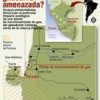
Peru's Paracas Reserve Imperiled on Two Fronts
The Paracas marine reserve in Peru, already threatened by pollution from fishmeal factories, now faces possible impacts from a natural gas plant.Scouring the Seas for Matter to Create Life
Can we create ''super bacteria'' capable of generating energy? There are those who believe it can be done, including the controversial scientist J. Craig Venter, expert in synthetic biology.Ecobreves – GUATEMALA: Activists Against Mining
Guatemalan environmentalists are demanding that President Oscar Berger call off the processing of 360 applications for licenses to mine for gold, silver and nickel.Ecobreves – HONDURAS: Reforesting Gulf of Fonseca Islands
Honduran civil society groups and local authorities last week planted some 15,000 trees in an effort to reforest El Conejo and El Tigre islands in the Gulf of Fonseca, located on the Pacific coast and near the El Salvador border.
A Plan to Privatize the Amazon?
The Brazilian government is considering giving private parties the right to limited forestry exploitation in the Amazon. The parliamentary debate on the issue promises to be a hot one. It is not a matter of privatization, but rather one of ''consolidating national sovereignty'' over the Brazilian Amazon, the Environment Ministry's head of forests and biodiversity told Tierramérica.
Hesitant Vindication of Transgenic Crops
French scientists point to the benefits of genetically modified crops, but admit that their findings are not conclusive. ''GM crops pose potential benefits in theory, but it has not been definitively proven,'' Maxime Schwartz, head of a transgenics research team, acknowledged in a conversation with Tierramérica.Ecobreves – COLOMBIA: Progress in Eradicating Coca by Hand
Three thousand families in the northwest Colombian department of Antioquia have benefited from the government's Family Forest Ranger program for eliminating illegal coca bush by hand and protecting the environment. The initiative was developed a year and a half ago.Ecobreves – MEXICO: Monarchs in Danger
Illegal loggers are destroying the sanctuaries of the monarch butterfly (Danaus plexippus) in Mexico, says Homero Aridjis, head of the environmentalist Group of 100.Ecobreves – PERU: Growing Controversy Over Pipeline
Even now that the valves are open on the 700-km natural gas pipeline that extends to the Peruvian capital from the Camisea jungles in the south, criticisms of the project continue to heat up.Ecobreves – ARGENTINA: Nuclear Regulation Cutbacks Condemned
The Argentine office of the environmental watchdog group Greenpeace has called on the government to normalize the operations of the Nuclear Regulatory Authority, an independent body created in 1987 to regulate and monitor nuclear power plants and supervise the transport of radioactive materials.Ecobreves – VENEZUELA: Saving Lions from the Circus
Sasha and King, two African lions that the Venezuelan Environment Ministry rescued from a circus, will have a new home in the Caricuao Zoo, southwest of the nation's capital.Ecobreves – CHILE: Scientists and Artists Against Dragnet Fishing
Scientists, artists and writers in Chile joined a campaign Aug. 3 to effectively limit dragnet fishing, a technique they say devastates marine resources.Ecobreves – BRAZIL: Amazon's Secrets Revealed
Fires used to clear forest for farmland -- a practice known in Portuguese as 'quemadas' -- in the Amazon are responsible for three-quarters of Brazil's carbon dioxide emissions. But each hectare of forest absorbs, on average, a half-ton of carbon each year.Ecobreves – CUBA: Heritage Status Sought for Wetland
Cuba's Ciénaga de Zapata, one of the largest wetlands in the Caribbean islands, could have access to more environmental and social projects if it is declared a Heritage of Humanity nature site by UNESCO (United Nations Educational, Scientific and Cultural Organization).« Previous Page — Next Page »





Tierramérica is the main communications platform on sustainable development and the environment in Latin America and the Caribbean. It is produced by IPS Noticias, the agency’s Spanish-language service, which created it jointly with the United Nations Development Programme (UNDP) and the United Nations Environment Programme (UNEP), with later support from the World Bank. The weekly editions of Tierramérica are published in Spanish, Portuguese and English and are picked up and printed by dozens of media outlets in the region. Follow us on Facebook and Twitter.

From the Frontline of Environment
Supported by

Tierramérica en Español

Terramérica em Portuguese

