Languages
Tuesday, October 13, 2026



News and Views from the Global South
Regional Alliances

SOUTH AMERICA: Mercosur Bloc – More Politics, Better Integration
The leaders of South America's Mercosur trade bloc decided to set up a committee to facilitate the incorporation of new members, adopt a mechanism to defend democracy in case of a coup, and ban vessels from the Malvinas/Falkland Islands from docking in member countries' ports.SOUTH AMERICA: Leap in Mercosur Bloc Exports “Not Just Commodities”
The boom in exports from South America's Mercosur trade bloc is due not only to commodities sold to China and other large emerging economies, but also to industrial goods bound for other Latin American and Caribbean markets.ECONOMY: Size Is Key Factor in Emerging Powers
Two decades ago, Japan was the main threat to U.S. global economic dominance, but this challenge waned before the advent of the 21st century. Now China and India are the new champions of growth, with the clear implication that population size is a decisive factor in their rise to power.ECONOMY-LATIN AMERICA: The Downside of Strong Currencies
Latin America returned in 2010 to the strong economic growth it enjoyed over the past decade, after only a minimal slowdown during the global crisis that broke out in 2008. But the weakness of the dollar relative to local currencies is a cause for concern among governments and sectors that produce goods for export.« Previous Page





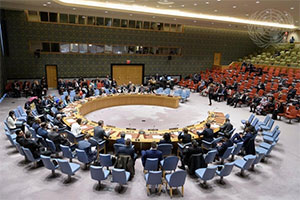 Security Council Considers Cooperation between UN and ASEAN. Credit: UN Photo/Manuel Elías
Regional alliances within the Global South have emerged as key international players in recent years, reshaping multilateral diplomacy and development governance. In 2023, the Group of 20 incorporated the African Union as a new parliamentary member, making the African Union the second regional bloc to become a member after the European Union. This action symbolized the ascent of the Global South’s international position. In 2025, the Association of Southeast Asian Nations also led a new collaborative climate effort with the creation of ASEAN Sparks, a program seeking to accelerate the growth of climate technology enterprises. Additionally, the African Continental Free Trade Area strengthened its intra-regional economic resilience. However, despite these advances, regional alliances and organizations continue to face mounting challenges. In 2025, the African Union, the Economic Community of West African States, and the Organization for Security and Co-operation in Europe all struggled with geopolitical deadlock and underfunding when it came to peace operations. This highlights how regional alliances are not yet capable of replacing UN-led multilateral frameworks. IPS gives timely reports on new developments within regional alliances in the Global South.

The Week with IPS

NEXT STOP - SDGs
Tracking global progress towards a sustainable world
Tracking global progress towards a sustainable world
