Languages
Sunday, August 30, 2026



News and Views from the Global South
Newsbriefs
Promoting Happiness to Build the Future We Want
The importance of emotional well-being has gained attention on the international stage marking the first ever International Day of Happiness (IDH). U.N. Secretary-General Ban Ki-moon Wednesday called on the international community to commit to an inclusive and sustainable human development that will improve the well-being of those who lack basic services needed to pursue happiness.
HONDURAS: Activists Protest Lack of Transparency in Extractive Industry
The Honduran government’s announcement of its plans to join the Extractive Industries Transparency Initiative (EITI) has raised expectations as well as doubts, particularly due to the speed with which it aims to complete a process that has taken several years in other countries of the region.Global Experts Call for Lifelong Learning on Development Agenda
“Inequalities limit education and learning opportunities for the most disadvantaged and excluded children.” Geeta Rao Gupta, Deputy Executive Director of UNICEF, told a gathering of over 100 representatives from UN agencies, donors, academia and civil society organisations.
Low Expectations Colour Obama’s Israel Trip
With Barack Obama set to travel on his first trip to Israel as president, expectations for a major breakthrough on the long-stalled Israeli-Palestinian “peace process” are low to nonexistent.
Dependent on Venezuela’s Oil Diplomacy
Venezuela’s economic challenges, more than the uncertainty over who will succeed late president Hugo Chávez, could threaten the oil diplomacy he practiced in the region.
Russia to Get Venezuelan Oil for a Few Cents a Barrel
Russian state oil firm Rosneft and Venezuela’s PDVSA (Petróleos de Venezuela S.A.) have agreed to form a partnership to exploit an oilfield with estimated reserves of 40 billion barrels, strengthening the alliance between the two countries.EDUCATION EXPERTS MEET IN SENEGAL TO DISCUSS POST-2015 AGENDA
Around 75-100 education experts -- representing governments, the United Nations, multilateral and bilateral organizations, civil society/non-governmental organizations (NGO)s, youth and the private sector-- will meet in Dakar, Senegal to discuss achievements and challenges – specifically on both the “Education For All” goals and the Millennium Development Goals (MDGs).
Colombia’s Peace Process Sans Chávez
Late Venezuelan leader Hugo Chávez played a key role in the current attempt to negotiate peace in Colombia. Along with Cuban President Raúl Castro, he confidentially urged the FARC guerrillas to agree to Colombian President Juan Manuel Santos’s secret proposal for peace talks.
Alliance of Civilizations: “Soft Power” to Serve Humanity
“I believe the Alliance can become a major soft power tool to diffuse tensions and conflicts, especially those which are ethnically or identity based,” said Nassir Abdulaziz Al-Nasser, the new High Representative for the U.N. Alliance of Civilizations (UNAOC).Trinidad Pressured to Drop Mandatory Hanging
Ruth Dreifuss, the former Swiss president and chancellor of the University for Peace, may never have heard of Dennis Ramjattan, and vice versa, although they occupy opposite sides of a longstanding debate in this twin-island state.
Native Women Bring Solar Energy to Chile’s Atacama Desert
Three indigenous communities from the Chilean highlands have just received solar panels, which will be set up and maintained by unlikely solar engineers: five native women who travelled halfway around the world to India and overcame language and other barriers to bring photovoltaic energy to their villages.
At Home, and Not at Home
The influx of hundreds of thousands of war-weary refugees from Syria to Lebanon is putting an almost unbearable strain on many of the communities that have taken them into their homes. A domestic economic crisis compounded by the arrival of such large numbers of refugees is weighing heavily on many impoverished areas.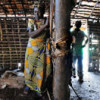
Child Sexual Exploitation on the Rise in North Kivu
A street in Goma’s city centre, the capital of North Kivu in eastern Democratic Republic of the Congo, has been nicknamed “the ward of death” because of the brutal crimes that frequently occur there.
Resentment as South Africa Speaks Business for Continent
There is growing resentment in Africa about the way in which South Africa professes to speak for the rest of the continent in its role as a member of key developing nation blocs, researchers and experts have warned.Impact of the Arab Spring on Women’s Rights
Academics, diplomats, UN officials and representatives of non-governmental organizations (NGOs) gathered at the 57th Commission of the Status of Women to exchange views about whether Arab Spring is a chance or a risk for women’s rights.A “Golden Age” for Native Cinema
Indigenous filmmakers and audiovisual artists worldwide are celebrating their growing visibility, as native voices and stories edge their way onto the big screen, gaining international recognition both artistically and commercially.
‘Every Day Is a Fukushima Memorial’
Japan prepares to mark the second anniversary of the Mar. 11 triple disaster – an earthquake, tsunami and a critical nuclear reactor accident – with much soul searching across the country.Argentina to Legalise Surrogate Motherhood
Argentina is set to become the first country in Latin America to legalise surrogate motherhood as an option for heterosexual and homosexual couples or single people who cannot conceive but want to have a child who is biologically their own.
Haiti Moves to Tighten Laws on Sexual Violence
Haiti is poised to enact major reforms to its penal code to make it easier for victims of rape to prosecute their attackers.
Victims Want Voice and Vote in Colombia’s Peace Talks
Victims of crimes of the state want their recommendations to be taken into consideration by the peace talks between the Colombian government and the FARC guerrillas that are seeking to end half a century of armed conflict.Press Freedom on the Chopping Block
Saddled with a long list of woes brought on by an economic crisis, debt-stricken Greece now finds itself tackling a different kind of austerity than the one implemented by its European creditors: this time it is press freedom, not public budgets, on the chopping block.« Previous Page — Next Page »


The Week with IPS

NEXT STOP - SDGs
Tracking global progress towards a sustainable world
Tracking global progress towards a sustainable world
