Languages
Thursday, November 12, 2026



News and Views from the Global South

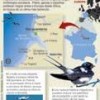
Swallows Arrive in European Winter
Many bird species are migrating early to Europe from Africa. Ornithologists believe climate change is the cause behind the new travel habits of swallows, ducks, storks and geese, and could be a threat to their reproductive cycles.
Colombia's Bid to Save Its National Flower
The cattleya trianae orchid is in danger of extinction. But using both traditional and modern techniques, experts are fighting to keep this emblematic flower from disappearing.Free Zone for Paraquat
Paraquat is used without restrictions in Central America, where the herbicide is believed to cause some 400,000 poisonings each year. Each country of the region spends an estimated seven million dollars annually on medical treatment for those affected.Ecobreves – MERCOSUR: Invasion of the Golden Mussel
Brazil announced an emergency plan to fight the invasion of the golden mussel (Limnoperna fortunei), a plague throughout the entire Rio de la Plata river basin. Brasilia has asked its Mercosur (Southern Common Market) partners, Argentina, Paraguay and Uruguay, to join in controlling invasive aquatic species.Ecobreves – CUBA: Forest Coverage Expands
Cuba increased the portion of its territory covered in forests from 13.4 to 23 percent through a strategy that incorporated the creation of forestry farms. Official figures show that forests today hold more than 130 million cubic meters of usable lumber and have potential to grow 7.5 million cubic meters annually.Ecobreves – VENEZUELA: Once Parched, Now Flooded
Yearned for during months of intense drought, Venezuela's rainy season, which normally lasts from May to October, has arrived -- and in a most frightening way.Ecobreves – SOUTH AMERICA: Lawmakers and Activists for Renewable Energy
Members of the Latin American Parliament and leaders of civil society organizations gathered in the Chilean capital to promote development in South America of public policies that incorporate renewable and sustainable sources into the energy matrix.
Clean Water Access Far Short of Millennium Goal
Two years after the World Summit on Sustainable Development, progress in access to water and sanitation is alarmingly slow, say experts. It would take double the current expenditures of 16 billion dollars a year to halve the population lacking access to clean water by 2015.Ecobreves – ITALY: Condemnation of Canadian Seal Hunt
The expansion of the seal hunt in Canada is "unacceptable" and Italy's lawmakers are asking the government to take action against it, as have the United States and Belgium, Valerio Calzolaio, secretary of the Italian Chamber of Deputies, told Tierramérica.
Investment in Development Is a 'Moral Duty'
The World Bank's environmental and social requirements for approval of infrastructure projects are among the strictest in the world, says Ian Johnson, the institution's vice-president for sustainable development.Ecobreves – HONDURAS: Priest to Lead March for Life, Environment
Roman Catholic priest Andrés Tamayo, an environmental activist, is preparing to lead the Jun. 24 "National March for Life" in Honduras, aimed at forcing the government to take steps against deforestation and unregulated mining.Impossible to Cut Hunger in Half by 2015
The U.N. Food and Agriculture Organization realizes that it will not be able to meet the 2015 goal of relieving half of the 54.8 million people in Latin America and the Caribbean from the hunger they suffer. Between 1990 and 2000, public sector resources for development assistance have fallen off 50 percent, FAO director-general Jacques Diouf told Tierramérica.Ecobreves – COSTA RICA: Effort Against Unsustainable Lobster Fishing
International experts are meeting Apr. 26 to 28 in Panama to discuss strategies to halt the unregulated catches of spiny lobster (Panulirus argus) in Central America.Ecobreves – ARGENTINA: Claims Against Shell Continue
Claims against the Shell oil company continue despite the fact that the company last week paid 600,000 dollars to 40 Argentine families to withdraw the lawsuits related to the oil spill along the coast of Magdalena, in Buenos Aires province.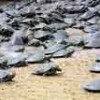
Endangered Young Turtles Take to the Water
Venezuela has broken a wildlife conservation record: in 15 years it has produced and protected 168,000 South American river turtle hatchlings. Under the supervision of experts, year-old members of this endangered freshwater species each April make their way to their permanent home, the Orinoco River.
Desertion of Coffee Plantations Hurts Ecosystems
In El Salvador and Honduras, some 20,000 hectares of coffee plantations have disappeared. Their carbon-fixing function is crucial in mitigating climate change. In Nicaragua, the desertion of coffee agriculture has cost 122,000 jobs and created a food crisis in the department of Matagalpa.Ecobreves – PERU: Creating a 'Green' Ministry
The Peruvian Congress will establish an Environment Ministry and an Environmental Prosecutor's Office in August, announced lawmaker Fabiola Morales on Apr. 16.Ecobreves – ARGENTINA: Demands to Maintain Logging Ban
The Paraná Ecologist Forum this month filed a claim to prevent the annulment of an emergency environmental decree that bans logging of native forests and riverside jungles in the northeast Argentine province of Entre Ríos, home to 21 percent of the country's plant species.Ecobreves – COLOMBIA: Support for Certification of Eco-Agriculture
Colombia's Ministry of Environment, Housing and Territorial Development, through the National Plan for Green Markets, on Apr. 19 began the second round for co-financing for "green certification" -- an effort to consolidate ecologically sound farming.Ecobreves – GUATEMALA: Off to Fight Fires!
Twenty-five brigades of specialized firefighters were established in April by the National Forests Institute (INAB) to confront the wave of fires that affect Guatemala's forests each summer.Ecobreves – BRAZIL: UNEP Inaugurates Office
The United Nations Environment Program, UNEP, inaugurated its first office in the Brazilian capital in mid-April. The aim is to take advantage of Brazil's environmental experience to benefit the rest of Latin America and the Portuguese-speaking countries of Africa.« Previous Page — Next Page »





Tierramérica is the main communications platform on sustainable development and the environment in Latin America and the Caribbean. It is produced by IPS Noticias, the agency’s Spanish-language service, which created it jointly with the United Nations Development Programme (UNDP) and the United Nations Environment Programme (UNEP), with later support from the World Bank. The weekly editions of Tierramérica are published in Spanish, Portuguese and English and are picked up and printed by dozens of media outlets in the region. Follow us on Facebook and Twitter.

From the Frontline of Environment
Supported by

Tierramérica en Español

Terramérica em Portuguese

