Languages
Thursday, November 12, 2026



News and Views from the Global South

Ecobreves – CHILE: Warning: Fake Sunscreens
Chile's Institute of Public Health (ISP) has appealed to consumers to help detect sunscreen lotions sold in the capital that do not meet skin protection requirements.Ecobreves – CUBA: Recovering Ecosystem Hurt by Copper Mining
Cuban experts are working a project to recuperate an ecosystem damaged by several centuries of copper exploitation in Santiago de Cuba, 900 km east of Havana.Ecobreves – COSTA RICA: Kids Take a Closer Look at Bats
More than 550 primary school children from the Costa Rican capital, from Sarapiquí, in the north, and from Guanacaste, in the northeast, will study the lives of bats through a program to begin in February.Ecobreves – NICARAGUA: Producing Organic Beef
Ranchers and slaughterhouses in Nicaragua are promoting the production of organic beef, low in fat and cholesterol, from cattle that are fed only natural grasses.Ecobreves – COLOMBIA: More Palm Oil, Less Coca
The presidential advisory council for Plan Colombia, an anti-drugs initiative, approved two projects for growing palm oil trees in the department of Norte de Santander, aimed at replacing illegal drug crops and to benefit 714 rural families.Ecobreves – PERU:: Recycling Fish Waste
A Peruvian farming community on the Pacific coast, 800 km north of Lima, is manufacturing a new type of fertilizer, using fish remains and other waste, previously dumped at sea by the local fisherfolk.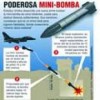
Mini-Nukes, the New Threat
The United States will begin this year to design low-power nuclear arms. Their firepower is to be less than five kilotons of TNT but, say critics, they could cause the biggest humanitarian and environmental disaster since World War II.Ecobreves – UNITED STATES: Politics Behind Space Program
The announcement that the United States will establish a lunar space station by 2020 and use it as a base to reach Mars is seen by critics as a political move by President George W. Bush to boost his chances for re-election in November.Salmon Producers Go on the Offensive
Chilean salmon farmers deny their fish are carcinogenic, contrary to what was reported in Science magazine. Ecologists and consumers are demanding more rigorous standards to certify salmon that is safe to eat.Ecobreves – GLOBAL: Sea Turtle Symposium
More than 1,000 researchers from 70 countries will gather in Costa Rica from Feb 22 to 29 to debate the current state of sea turtles and the measures necessary to prevent their extinction.To the Rescue of the Tacaná Volcano Watershed
Work has begun to rescue the watershed of a million-year-old volcano on the Mexican-Guatemalan border. Some 700,000 people, many of them descendants of the Maya, stand to benefit.Anti-nuclear Treaties
Under suspicion of violating international rules against the proliferation of nuclear weapons, in late 2003 Iran signed a protocol that opens the doors to unrestricted inspections of its national territory. The apparently innumerable efforts to stop the global arms race have proved insufficient.Ecobreves – GUATEMALA: Training Eco-Tourism and Natural Resources Experts
The Ministry of Education of Guatemala will inaugurate 23 technology institutes to train experts in areas including ecological tourism, water resources management and forestry.Ecobreves – HONDURAS: Protection for Cayos Cochinos
Honduran environmentalists hope to promote scientific research and eco-tourism in the bay of Cayos Cochinos, on the Caribbean Sea, declared a natural marine monument in December.Ecobreves – GUATEMALA: Protecting a Thorny Forest
A small forest populated with thorny plants was declared a protected area by the local Cabañas government in eastern Guatemala. The move is aimed at protecting endangered species.Ecobreves – COSTA RICA: Sustainable Tourism Gets a Boost
Twenty initiatives for rural tourism in Talamanca, in Costa Rica's southeastern highlands, this year are becoming pilot projects for sustainable tourism in Central America.Ecobreves – BRAZIL: Cloning Cacao
Biotechnology and specialized agronomy practices are contributing to the recovery of the cacao crop in the northeastern Brazilian state of Bahia, which until 1989 was the world leader in this raw material for chocolate.
Sovereignty Debate Surrounds Chilean Nature Park
Politicians say the declaration of protection for Pumalín Park, in southern Chile, is a violation of national security. The park is the property of a U.S. millionaire.Ecobreves – CHILE: Historic Decision Against Cell Phone Antenna
The Chilean Supreme Court on Jan. 6 ordered the removal of the cellular telephone tower from the historic center of La Serena, a city 460 km north of Santiago. The ruling stated that the antenna is an environmental and architectonic offense.Slow Reaction on Mad Cow Disease
Consumers charge that the Bush administration is giving in to pressure from the beef industry, opposed to instituting stricter controls at the slaughterhouse.Ecobreves – CUBA: Cranes at Center of Study
Cuban scientists this year will study potential reproduction sites of the Cuban crane (Grus canadiensis nesiotes), considered endangered due to changes in its natural habitat.« Previous Page — Next Page »





Tierramérica is the main communications platform on sustainable development and the environment in Latin America and the Caribbean. It is produced by IPS Noticias, the agency’s Spanish-language service, which created it jointly with the United Nations Development Programme (UNDP) and the United Nations Environment Programme (UNEP), with later support from the World Bank. The weekly editions of Tierramérica are published in Spanish, Portuguese and English and are picked up and printed by dozens of media outlets in the region. Follow us on Facebook and Twitter.

From the Frontline of Environment
Supported by

Tierramérica en Español

Terramérica em Portuguese

