Languages
Friday, November 13, 2026



News and Views from the Global South

WTO on the Road to Cancun
The August 30 agreement on granting poor countries access to low-cost medicines was among the few items of good news on the rocky road towards the World Trade Organization's Fifth Ministerial Conference, to begin in the Mexican city of Cancun on Sep. 10. Disagreements persist in nearly all other areas of the ambitious negotiating agenda, including agricultural trade, services and investment. The environment, meanwhile, is but a marginal issue.Ecobreves – CUBA: New Orchid Discovered
- Scientists in Pinar del Río, 170 km from the Cuban capital, discovered a new orchid species, the Encyclia cajalbanensis, in the Sierra del Rosario forest, a mountainous zone of this biologically rich western province.Ecobreves – CHILE:: 'Polluting' Cemetery Declared Illegal
Citizens groups in Chile convinced the nation's Comptroller General to declare illegal the construction of a cemetery in a Santiago area ceded by the Housing Ministry without conducting an environmental impact study.Ecobreves – VENEZUELA: Swapping Waste for Food
The municipal government of Libertador, which covers two-thirds of the Venezuelan capital, is taking in debris and solid waste and handing out food in the poor southwestern neighborhoods, inspired by similar programs in the Brazilian city of Curitiba.
A Farmer Prepares for Final Battle Against Monsant
The resolution of the case of Canadian farmer Percy Schmeiser against the agribusiness-biotech giant Monsanto could have global repercussions for patent rights. The Canadian Supreme Court will hear the case in January 2004.
Dual Fuel Cars Revive Brazil's Alcohol Industry
The new "bi-fuel" vehicles could expand the use of renewable energy, which had been on the decline in the late 1990s.Sugarcane a Culprit in Cuban Soil Depletion
In less than 200 years, Cuba lost eight million hectares of forests.Ecobreves – COLOMBIA: Coal Ports to Be Relocated
The Colombian government is planning to move three coal shipping ports on the northern coast as part of an environmental plan after two ships collided, causing a fuel spill and the temporary closing of nearby beaches.
Eco-Guerrilla 'Poisons' Local Environmental Movement
According to environmentalists in the Honduran department of Olancho, there is a campaign underway to undermine their efforts and to frighten the population.Ecobreves – GLOBAL: IFAW Seeks Iceland Sanction
The International fund for Animal Welfare (IFAW) has called for economic sanctions against Iceland, which last week began hunting whales after a 14-year moratorium.Ecobreves – ARGENTINA: Petrochemicals Leave Lead Contamination
Fifty percent of the children who live near a petrochemical center in Argentina's Buenos Aires province have high levels of lead in their blood, according to a study by the private consultancy JMB environmental engineering, conducted at the behest of municipal authorities.Ecobreves – HONDURAS:: Lawmaker Accused of Setting Forest Fire
The Honduran environmental prosecutor's office will charge lawmaker Mauro Caballero, of the opposition Liberal Party, of setting fire to eight hectares of forest, habitat of several endangered animals, including turtle and snake species, government attorney Juan Francisco González said.Ecobreves – GUATEMALA: : Farm Irrigation Plan Promoted
Guatemala will invest 17.2 million dollars in irrigation programs in order to boost farm production in areas afflicted by prolonged drought, Carlos Set, minister of agriculture and livestock, told Tierramérica.Ecobreves – EL SALVADOR: Killer Pneumonia
With the assistance of the Pan-American Health Organization (PAHO), Salvadoran authorities will investigate the cause of the high mortality rate associated with pneumonia in this country, where 326 people have died of the illness so far this year.Ecobreves – SOUTH AMERICA:: Plan Launched for 'Camelid' Livestock
- The U.N. Food and Agriculture Organization (FAO) will support the raising and sustainable use of "camelid" livestock in Argentina, Bolivia, Chile, Ecuador and Peru, providing 247,000 dollars for an 18-month program.Ecobreves – HONDURAS: Demanding Decent Housing
"Decent and safe housing", demanded experts and activists gathered in the Honduran capital to promote a common strategy for Latin America.Ecobreves – GUATEMALA: Drought Causes Crop Losses
Dozens of hectares of crops, primarily maize and beans, were lost due to the prolonged drought in Guatemala's eastern departments, reports Agriculture and Livestock Minister Carlos Set.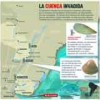
Invading Mollusks Come to Stay
The introduction of exotic species is one of the biggest threats to freshwater and ocean ecosystems alike, say biologists.Ecobreves – EL SALVADOR: Forest Inventory Underway
By October 2004 El Salvador will have a complete census of its forests and an estimate of their capacity to absorb carbon dioxide, say government officialsTrafficking Pushes Emblematic Bird Toward Extinction
The yellow-eared parrot is a symbol of the critical situation of 112 bird species in Colombia.
Malaria on the Move
More than two decades after DDT was removed as the number-one weapon against malaria, the spread of the disease continues to be a major problem for Central American countries.« Previous Page — Next Page »


Tierramérica is the main communications platform on sustainable development and the environment in Latin America and the Caribbean. It is produced by IPS Noticias, the agency’s Spanish-language service, which created it jointly with the United Nations Development Programme (UNDP) and the United Nations Environment Programme (UNEP), with later support from the World Bank. The weekly editions of Tierramérica are published in Spanish, Portuguese and English and are picked up and printed by dozens of media outlets in the region. Follow us on Facebook and Twitter.

From the Frontline of Environment
Supported by

Tierramérica en Español

Terramérica em Portuguese

