Languages
Friday, November 6, 2026



News and Views from the Global South
Other Voices
News and Views from our Content Partners
Hanif Hassan Al Qassim calls for bold laws, regulations and polices for empowerment of women
“Our job is to provide an environment that unlocks women’s potential – one that protects their dignity and femininity, helps them create the necessary balance in their lives, and values their talents and potential. Given this environment, I am confident that women will perform nothing short of miracles.”Undemocratic Data
Over the past few decades, the performance of governments around the world has increasingly been judged, both internally as well as externally, by notions of how the economy has performed over a relatively short period of time. For democratic governments, this span usually coincides with an election cycle of four to five years.US Dim Mak point 7: Air bases vulnerability
On December 5, 2016, The Sun, a UK-based publication, reported: “The US is readying for World War Three with China by mobilizing 400 bases packed with warships and nukes to create a ‘perfect noose’ around the superpower.” It is part of US preparation for the possible implementation of its “Air-Sea Battle” doctrine that Pentagon planners have prepared to use against China’s “anti-access, area-denial” – a term coined by US military writers to describe China’s series of weapons systems that will prevent the US military from gaining access to potential battlefields (i.e., Taiwan, Korean Peninsula, South China Sea, East China Sea, Malacca Strait, etc.) or coming to the rescue of their principal allies in the region (Taiwan, South Korea, Japan, Philippines, Singapore, Australia, etc.).
A Last Call to Protect Our Children
On the first day of April in 1930, a law came into force in the then Indian subcontinent restraining child marriage. The Child Marriage Restraint Act, 1929, made it absolute that marriage solemnised before one reaches the minimum marriageable age would be seen as a violation of law and thereby, a punishable offence.Of Meet-ups, Start-ups and Bootstraps
Confused by the heading? Well, this is the golden age of the millennials. Many moons ago while discussing small and medium scale businesses with a young entrepreneur, he referred to start-ups and a new ecosystem.
Public Hearings Can Fight Corruption
Bangladesh is a lower middle-income country with a promising and stable economy. The economy of Bangladesh continues to maintain its sustainable growth momentum with a healthy 7 percent-plus growth rate in FY 2015-16. The gead count poverty rate declined from 31.5 percent in 2010 to 23.2 percent in 2016 while the extreme poverty rate decreased from 23.2 percent in 2010 to 12.9 percent in 2016 (BBS, 2016). The foreign exchange reserve shows a steady increase and the exchange rate of US dollar remains stable. The country's remarkable steady growth is possible due to a number of factors including macroeconomic stability, population control and openness of the economy. Building on its social-economic progress so far, the government has taken up multifarious initiatives to elevate Bangladesh to a knowledge-based and technology-driven middle-income country by 2021.
In Defence of Women’s Shelters
Many of the women’s shelters currently operating in Afghanistan have been founded and funded during the Nato/US presence over the past decade.
General Assembly President on the Crucial G77 Role in Upcoming SDG Events
Addressing the Group of 77, the President of the UN General Assembly Ambassador Peter Thomson of Fiji said he plans a series of high–level meetings over the next few months in which the G77, joined by China, is expected to play a crucial role.UN Development System Has Key Role in SDGs Success
The Group of 77 has underlined the importance of the governance process of the UN Development System (UNDS) pointing out the need to strengthen transparency, accountability, and responsibility of the UNDS to member states, as well as the need to improve the working methods of the Executive Boards.
G77 Chair Critical on Lack of Progress on Social Development
Addressing the 55th Commission for Social Development (CSD), the chair of the Group of 77, Ambassador Horacio Sevilla Borja, Permanent Representative of Ecuador, said the Group is “deeply concerned about the uneven progress achieved in fulfilling all of the interrelated commitments made at the 1995 World Summit for Social Development and by the lack of satisfactory progress of social development”.Sustainable Development & Sustainable Peace are Interlinked, Says G77
Speaking during the UN General Assembly’s High-Level Dialogue on Sustainable Peace, G77 chair Ambassador Horacio Sevilla Borja, Permanent Representative of Ecuador, said the overarching objective of eradication of poverty in all its forms and dimensions remains the greatest global challenge and an indispensable requirement for sustainable development.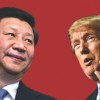
Challenges Facing the Chinese President
China's President Xi Jinping has been walking a very delicate tightrope since the inauguration of the new President of the USA who has threatened to launch an economic war with China. One of candidate Donald Trump's promises to his nation was to declare China as a currency manipulator on day one of taking his oath of office. Fortunately for China, President Trump is busy with other more pressing problems and has missed his self-imposed deadline by more than a month already. It is a fair guess that President Xi Jinping is counting days before his US counterpart will succumb to the calls by Democrats to implement one of his campaign promises and declare China a currency manipulator. The top Democrat in the Senate, Chuck Schumer, called out to President Trump, "Mr. President: if you really want to put America first, label China a currency manipulator."Win-win Solution for Migrant Worker Issues
Last Sunday’s front page lead story in this newspaper on the risk to foreign employment due to the 2017 Budget by raising the minimum wage for skilled labour seems to have caught the eye of Parliament. The Minister in charge of Foreign Employment confirmed the fact that her ministry was rather perturbed that it had not been consulted, and wanted the proposal reversed.Trump and US
Donald Trump`s presidency is the tip of the spear that xenophobic white supremacists are using to reconquer America. A Republican-dominated Senate and the House of Representatives may dif fer with Trump on smaller matters but will support him on core issues. The alt-right`s goal is to barrel over traditional American values of freedom and generosity, terrorise Muslim and immigrant families into leaving, and remove the checks and balances that have preserved the country`s openness to new peoples and ideas.
Asean Can Defuse China Sea Standoff
The summit of the Association of Southeast Asian Nations (Asean) being hosted by the Philippines this year has an opportunity to defuse the escalating tension in the China Sea. With all the claimants sitting around the table some progress can be achieved if the dialogue among the participants effectively moderate behavior and expectations in the South China Sea. With a spirit of give and take, the multilateral dialogues can produce new regional initiatives that can enhance cooperation on less sensitive issues, such as the environment, scientific research and eventually cooperative resource management. This in turn can lead to the final solution of the South China Sea dispute.« Previous Page — Next Page »





The Week with IPS

NEXT STOP - SDGs
Tracking global progress towards a sustainable world
Tracking global progress towards a sustainable world
