Languages
Friday, November 6, 2026



News and Views from the Global South
Other Voices
News and Views from our Content Partners
An Opportunity
Pakistan’s leaders often boast of our vital strategic geographical location. Yet this location has done little more than thrust the country into global wars and force it to become a proxy battleground for foreign ideological agendas. Pakistan now has an opportunity to turn this reality around courtesy of the profound geopolitical changes facing the world today.Sri Lanka and the Born-again Commonwealth
Interestingly, if not ironically, the British Government having voted to exit the European Union (EU) in accordance with the wishes of a majority of its people, is now looking forward – or maybe looking back – at the Commonwealth once again.
Fountains of Knowledge
It was a very intriguing topic. Earlier this month, Don Carlson, an education specialist from Microsoft Singapore visiting Colombo, and I were discussing education into the 21st century when we came to the point of: Will teaching as a vocation, survive this century?
Willing Executioners
Terrorism, in one form or another, has existed for centuries. While its goals change according to the prevailing context, the basic technique ie using force to achieve political, social and religious ends has been the same throughout history, and has often included the use of suicide attackers.
Islam and Christianity the Great Convergence: Working jointly towards equal citizenship rights
 Message of His Royal Highness Prince Hassan bin Talal of the Hachemite Kingdom of Jordan
New Broadband Commission call to action provides guide to close digital gender gap
The Broadband Commission for Sustainable Development's Working Group on the Digital Gender Divide, co-chaired by the GSMA and UNESCO, released a new report, Recommendations for action: bridging the gender gap in Internet and broadband access and use, which sets specific recommendations to address the barriers women face in access and use of the Internet.
Worst Humanitarian Crisis since WWII
It is a matter of grave concern that, according to a UN estimate, twenty million people are facing starvation in Yemen, South Sudan, Somalia and Nigeria. These are the conflict prone regions that have witnessed civil war, foreign invasion, a breakdown of civil order and the rise of militancy. We are appalled that this crisis, which has been built up over a period of time, has been allowed to continue. Clearly, enough has not been done, as a UN official told the Security Council, that without immediate help, death and severe malnutrition would plague the regions for a long time.
Developing Nations Call for New Trust Fund on Forest Protection
The Group of 77 is calling for the creation of a new and dedicated Trust Fund for the implementation of the UN’s strategic plan on forests for the period 2017-2030.An Islamic system?
Many people say Pakistan`s problems today stem from the wilful failure of rulers to establish an Islamic system. These are not supporters of the militant Islamic State group but well-meaning individuals who abhor IS excesses. For them, this system is like turning on a water tap waiting to deliver unlimited sustenance.Misplaced optimism
The PricewaterhouseCoopers (PwC) report The World in 2050, that came out a few weeks ago, forecasts Pakistan as the world`s 16th largest economy in terms of GDP by 2050, ahead of Italy and Canada.The Rights and Plight of Women
On March 8, various events marked International Women’s Day, a day dedicated to recognise the role of women around the world and their contribution to home, society and country, indeed the world at large. To call them the ‘fairer sex’ as they were once referred to as a compliment may not be politically correct in modern times, illustrating how the lexicon has also changed with changing mores.
Ecco Subcontractor in Breach of the Law
Low wages, precarious employment, and lots of overtime. A recent report from the EU project ”Change Your Shoes” show that Indonesian subcontractors for several European footwear companies, including Ecco and Deichmann, are not in compliance with the law.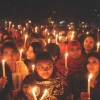
Against All Odds They Fight
On this International Women's Day, I want to remember Nasima, Dolly, Shyamoli and all those women who did not allow violence and discrimination to break them, but rather gave them strength to stand up and fight back. In the course of our work we come across many such brave women, who, in spite of suffering the most horrific forms of violence such as rape, gang rape, acid attacks, stalking, sexual harassment etc. continue to persevere and turn their lives around. My article today is a tribute to them and all the women in Bangladesh who struggle everyday of their lives to make this world a better place for themselves and their families.Women and the World of Work
Today is International Women’s Day, a collective day of global celebration of the social, economic, cultural and political achievements of women, but also a call to do much more to achieve parity.
The Economic Impact of Gender Based Violence
No country can afford gender-based violence. In Bangladesh, the costs of gender-based violence are estimated at 2.1 percent of the country's GDP. Each day, violence stops a girl from going to school and prevents a woman from taking a job, compromising their future and the economic and social development of their communities. Survivors are left to deal with physical injuries and emotional scars, while social and legal services struggle to respond. Can Bangladesh continue its much-heralded progress toward middle-income status if its economy is robbed of the invaluable resource of half its population?« Previous Page — Next Page »





The Week with IPS

NEXT STOP - SDGs
Tracking global progress towards a sustainable world
Tracking global progress towards a sustainable world
