Languages
Saturday, November 21, 2026



News and Views from the Global South
Africa

Q&A: “No Problems in Voting, So Why Should There Be Problems in Counting?”
While the run-up to Zimbabwe's general elections, Saturday, was plagued with irregularities, the voting process itself has been given a relatively clean bill of health by the Zimbabwe Election Support Network (ZESN), which encompasses 38 civic groups.DEVELOPMENT-MALAWI: Water Utility Over-Stretched and Under-Maintained
Long known as a peaceful and quiet city, especially at night, Blantyre is steadily losing its reputation for tranquility. Residents now find themselves waking up to the hustle and bustle of women carrying metal and plastic buckets as they move around the city most nights and early mornings in search of water.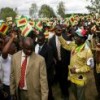
POLITICS-ZIMBABWE: "The Election Will Not Be Free and Fair"
Where to begin with listing the concerns that surround Saturday's general elections in Zimbabwe?Q&A: "We Have Managed to Make the Female Agenda a Current Affairs Issue"
Towards the end of last year, IPS reported on efforts to increase women's political participation in Zimbabwe, ahead of the Mar. 29 elections. As it happens, only about 13 percent of candidates for the House of Assembly are women - along with some 30 percent of Senate aspirants, according to statistics from the Women in Politics Support Unit, a local non-governmental organisation (NGO). So, what went wrong?ZIMBABWE: A Society "Not Ready for Female Leadership"?
Women make up about half the population in Zimbabwe. But, they're far from accounting for 50 percent of those on the ballot for this month's general elections in the Southern African country - sparking concern amongst gender activists.ZIMBABWE: A "Can Do" Approach to Greater Political Involvement of Women
With general elections taking place in Zimbabwe on Mar. 29, efforts have been underway to increase women's political participation in the Southern African country.KENYA: Free Secondary Schooling Policy Faces Testing Times
When Kenya's government introduced free primary schooling in 2003, vast numbers of additional pupils were brought into the education system overnight, putting it on a steep learning curve.BURKINA FASO: Ensuring That the Origin of Life Isn’t Also the End of It
"Water is the origin of life...I come from Central Africa where we have a lot of water, but it was when I came here that I really understood the meaning of this expression," says Antoinette Dinga Dzongo, the African Development Bank's representative in Burkina Faso, in reference to the need for improved water provision in this West African country.
POLITICS-DR CONGO: In a Governmental Vacuum, Yearnings for a Lost Empire
On a broad hillside high above the meandering flow of the Mpozo River, a handful of policemen guard a ruin.DEVELOPMENT- ANGOLA: Research Initiative Nets Interesting Discoveries
More than 50 species of fish have been recorded in the initial phase of a two-year joint research project on the Kwanza River in Angola.RIGHTS-ANGOLA: Free Rein for Human Traffickers
There is little awareness on the problem of trafficking in persons, mainly women and children, in Angola, and no laws for cracking down on the growing phenomenon.WORLD WATER DAY-SOUTH AFRICA: Celebrations in the Midst of Crisis?
South Africa is currently celebrating Water Week (Mar. 17-23) to coincide with World Water Day on Mar. 22. The week also coincides with a national crisis in confidence about the ability of government to provide citizens with safe drinking water.POLITICS-KENYA: An Intractable Land Dispute Grinds On
More than a week after the launch of an army operation to flush out the Sabaot Land Defence Force (SLDF) in Mount Elgon, a district along the border with Uganda, the fugitive chief of the outlawed militia has reportedly urged an end to the campaign, but remained defiant towards government.
KENYA: Education Amidst Displacement
With the new academic year in Kenya underway, teacher Moses Simiyu Kalenda is once again instructing children - just not in the place where he expected to be doing so.
RIGHTS-SOUTH AFRICA: Death Penalty Referendum Call – Critics Cry Populism
Jacob Zuma, the president of the African National Congress (ANC), the ruling party in South Africa, has of late been called a chamaeleon who adapts his speeches to what his audience wants to hear. It's a tactic that has proved controversial, not least when Zuma took up the issue of the death penalty.DEVELOPMENT-SWAZILAND: “Leadership Doesn’t Act Like It Is a Crisis”
A substantial increase in the number of Swazis requiring food aid has raised questions in this Southern African country. Why the rise, and how long are the higher numbers likely to prevail? More fundamentally, what has caused such widespread and enduring hunger to begin with?
DEVELOPMENT-EAST AFRICA: Promise and Peril in Going – and Staying
Justina Bkole (38) was just a toddler when her parents fled to western Tanzania in 1972, to escape ethnic clashes in neighbouring Burundi. Like thousands of other refugees who made the same journey, she stayed in the East African country: a place to which she now has strong ties, even if her roots are in Burundi.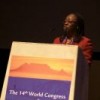
HEALTH-AFRICA: Training Anaesthesiologists to Do, And To Train
The need for a global effort to address the shortage of anaesthesiologists in Africa was highlighted over the past week during the World Congress of Anaesthesiologists - which took place in Cape Town, South Africa.HEALTH-AFRICA: Anaesthesiology on Life Support
A discussion about anaesthesiology and anaesthesiologists is something that could bring on drowsiness, even sleep...Until, that is, the talk turns to shortages of anaesthesiologists in Africa and how this can increase surgical mortality. Statistics on this matter are frightening enough to keep anyone awake.WOMEN'S DAY-KENYA: Equal Pay in Theory, Not Always in Fact
On Mar. 8, a century ago, thousands took to the streets of New York in demonstrations aimed at improving life for women. Burning issues of the day included the need for better working conditions - higher pay, a shorter work day - and winning the right to vote.RIGHTS-NIGERIA: The Threat of Death Hangs Over Thousands
Three months after the U.N. General Assembly called on states which practice capital punishment to adopt a moratorium on executions, several thousand Nigerians continue to live in fear of the gallows, with activists accusing the government of inertia - and even of failing to carry out its past promises to free the aged on death row.« Previous Page — Next Page »


The Week with IPS

NEXT STOP - SDGs
Tracking global progress towards a sustainable world
Tracking global progress towards a sustainable world
