Languages
Tuesday, October 13, 2026



News and Views from the Global South
Honduras
Drugs and Violence Underscore U.S. Influence in Honduras
A rise in drug trafficking in Honduras has resulted in a sharp increase in violence, leading some to question the United States' influence in the country.Murder of Prominent Honduran Journalist “Sends a Terrible Message”
A few short hours after Honduran President Porfirio Lobo said he had seen evidence that Alfredo Villatoro, a radio reporter kidnapped May 9, was alive, the journalist’s body was found in a residential neighbourhood on the south side of the capital.Honduran Government Seeks to Minimise Cost of Prison Fire
The government of Honduras hopes to reach friendly settlements with the families of inmates killed in the Comayagua prison fire, to avoid international lawsuits.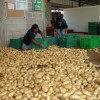
HONDURAS: Indigenous Cooperatives Cultivate Success
Thanks to the quality and freshness of their produce, indigenous Lenca farmers in western Honduras are regular suppliers of seven supermarket chains. This year they won the National Environmental Prize, in the community initiatives category.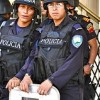
HONDURAS: Purging Schools of Crime
Reports of a purported police network in Honduras engaged in murders, extortion, kidnapping, car theft and drug trafficking prompted the government to sack several high-level police officials and ask Congress for help in purging the police at all levels.HONDURAS: Putting Defence In the Hands of Civilians
Prominent academics and activists say one of the main pending challenges in Honduras is a resumption of the demilitarisation of the country and the strengthening of civilian control over defence policy that was brought to an abrupt halt by the June 2009 coup d'etat.HONDURAS: Cabinet Shake-Up Raises Questions on Influence of Cartels
The dismissal of Óscar Álvarez as minister of security in Honduras, after he proposed a bill that would have allowed him to purge the police force of corrupt elements, has raised suspicions about the political influence of drug cartels.HONDURAS: Dying for Land
The deployment of large numbers of troops in the Bajo Aguán region of Honduras is reviving the age-old conflict over land in an area torn between organised crime groups capable of undertaking armed actions, wealthy landowners and peasants demanding further land reform.HONDURAS: Human Rights Concerns Dog Return to OAS
Honduras was allowed back into the OAS even though it never tried those responsible for the June 2009 coup that ousted then president Manuel Zelaya. But the international criticism and pressure for justice and action on human rights has not let up.HONDURAS: Zelaya Says Coup Was International Conspiracy
After his return to Honduras put an end to two years of exile, former President Manuel Zelaya said the coup in which he was removed on Jun. 28, 2009 was the work of an "international conspiracy" that should be investigated.HONDURAS: Civilians Keen to Redefine Role of Military
Reasserting effective civilian control over the Honduran armed forces, after a coup that overthrew President Manuel Zelaya in June 2009, will require constitutional reform and a greater grasp by society on defence issues.Honduras Has Much to Explain in Human Rights Exam
Honduras must answer to the United Nations Human Rights Council this week with respect to the numerous complaints of human rights violations committed before, during and after the Jun. 28, 2009 coup d'état that overthrew President Manuel Zelaya.
UN Delegations Seek to Boost Reconciliation in Honduras
The cause of dialogue and reconciliation in Honduras has received a boost from visits by two United Nations delegations, here to test the waters in preparation for talks to resolve political and social conflicts triggered by the coup that ousted former president Manuel Zelaya in June 2009.HONDURAS: The Military Still Have Veto Power
The de facto veto power that the military exercised with the toppling of president Manuel Zelaya exactly one year ago today effectively blocks any possible political or electoral reforms, experts say.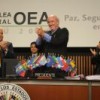
AMERICAS: OAS Debates Same Old Problems, Few New Solutions
The 40th General Assembly of the Organisation of American States, held in the Peruvian capital this week, failed to issue a decision on the reinstatement of Honduras, and instead served as a forum for Argentina, which seeks sovereignty over the Malvinas/Falkland Islands, and for Bolivia, in its fight for access to the Pacific Ocean.HONDURAS: Inter-American Human Rights Report Riles Government
On a fact-finding mission to Honduras this week, an Inter-American Commission on Human Rights (IACHR) delegation took aim at the dismissal of several judges who expressed their opposition to the Jun. 28 ouster of president Manuel Zelaya.HONDURAS: One Hundred Days Lobbying for Int’l Recognition
In his first one hundred days in office, Honduran President Porfirio Lobo has lobbied hard for international recognition of his government, in order to pull the country out of the isolation it has faced since the Jun. 28, 2009 coup that overthrew Manuel Zelaya.HONDURAS: Disputed Truth Commission to Investigate Coup
With a warning by its members that it will not be a "decorative" body dedicated to merely "collecting stories about what happened," the Truth and Reconciliation Commission set up in Honduras to investigate events surrounding the June 2009 coup that overthrew the government of Manuel Zelaya began to operate Tuesday.Pressure Mounts on Honduras as Journalist Death Toll Rises
Honduran President Porfirio Lobo plans to seek help from police forces in Colombia and the United States to try to solve the murders of seven journalists committed in the space of less than two months, which will also be investigated by a delegation from the Inter-American Commission on Human Rights next month.HONDURAS: Truth Commission Under Fire from All Sides
The Truth and Reconciliation Commission set up to investigate the June 2009 coup that ousted Honduran president Manuel Zelaya will begin its work in May under the sceptical watch of a wide range of observers, from human rights organisations to right-wing political sectors.HONDURAS: Deadliest Month Ever for Reporters
Reporters in Honduras have long complained about gag laws, threats, exile and attacks. But never before have so many journalists been killed in one month.« Previous Page — Next Page »





The Week with IPS

NEXT STOP - SDGs
Tracking global progress towards a sustainable world
Tracking global progress towards a sustainable world
