Languages
Tuesday, October 20, 2026



News and Views from the Global South
Microplastics
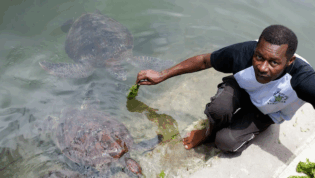
Zanzibar’s Battle to Save Endangered Turtles Intensifies as Global Study Exposes Deadly Microplastic Threat
On a warm morning at Matemwe, a small crowd gathers behind a rope barrier as the sand begins to tremble. A tiny head pushes through a soft mound of earth, then another, and another. Within minutes, the shallow nest—protected for weeks by a ring of wooden stakes and mesh—comes alive with the rustle of dozens of hatchlings. Volunteers crouch nearby, recording the emergence time and shading the small creatures with their hands to protect them from swooping gulls.
Plastic Tsunamis Threaten Coast in Latin America
Although Latin America produces just five percent of the world's plastic, it imports billions of tons annually for the use of all kinds of products, some of which end up in the sea as garbage.
World Environment Day Highlights Deadly Cost of Plastic
On June 5th, World Environment Day will be hosted in India under the banner of “Beat Plastic Pollution,” aiming to raise awareness and civic engagement alongside creating a global movement to reduce the amount of plastic in the environment.
Q&A: “What Price Do We Put on Our Oceans?”
“Political resolve is the key for succeeding in our fight against oceans pollution,” Erik Solheim, head of UN Environment, who is leading hands-on the organisation’s global campaign to clean up seas and oceans of plastic litter, agricultural run‑off and chemical dumping, told IPS.
Marine Litter: Plunging Deep, Spreading Wide
Imagine a black-footed albatross feeding its chick plastic pellets, a baby seal in the North Pole helplessly struggling with an open-ended plastic bag wrapped tight around its neck, or a fishing vessel stranded mid-sea, a length of discarded nylon net entangled in its propeller. Multiply these scenarios a thousand-fold, and you get a glimpse of the state of the world’s oceans.





The Week with IPS

NEXT STOP - SDGs
Tracking global progress towards a sustainable world
Tracking global progress towards a sustainable world
