Languages
Thursday, October 8, 2026



News and Views from the Global South
Sri Lanka
HEALTH-SRI LANKA: Buddhist Monks Battle Tobacco, Alcohol Lobbies
Sri Lanka’s Buddhist monks see their fight against tobacco and alcohol abuse as more urgent than the war that the government of President Mahinda Rajapakse is prosecuting against Tamil separatist rebels.ECONOMY-SRI LANKA: ‘Norwegian Truce Provided Window of Prosperity’
While the Norway-brokered ceasefire between the Sri Lankan government and Tamil separatist militants finally failed, last week, it did provide a six-year window of prosperity to this island nation torn by a festering ethnic conflict.SRI LANKA: Writing Tamil Tigers' Obit
By withdrawing from the Norwegian-brokered ceasefire, signed in 2002 with the Liberation Tigers of Tamil Eelam (LTTE), the Sri Lankan government is only ‘’legalising existing ground reality,’’ a government spokesman says.SRI LANKA: Full-Scale War Threatens Civilian Lives
The Sri Lanka government, which has announced the abrogation of a 2002 Norwegian-brokered ceasefire agreement with the Liberation Tigers of Tamil Eelam (LTTE), is planning a do-or-die military battle against the separatists in the politically-troubled northern and eastern provinces.CHALLENGES 2007-2008: Sri Lanka's Tinderbox Set to Go
Three years after the Indian Ocean tsunami left over 32, 000 Sri Lankans dead and 500,000 survivors homeless, this island country stands on the brink of another disaster - this time manmade and in the shape of an all-out war between Tamil separatist rebels and the country’s armed forces.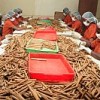
SRI LANKA: Fair Trade Labels Ensure Returns For Farmers
Organic farmers in this hilly, central region of Sri Lanka are convinced that they have a simple fair trade model that could be replicated in other parts of the world.MIGRATION-LEBANON: Sending Money Home
Four months ago, Eric and his wife Karen left the Philippines for Lebanon to provide for a better life for their family. While driving buses, in the Philippines, Eric became certified as an electrician to improve his chances of finding employment abroad.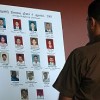
SRI LANKA: No Respite For Aid Workers
The contrast is stark. A little more than a year ago Action Contre la Faim (ACF), a French charity, was one of the biggest relief agencies in Sri Lanka’s war-torn north and east with 200 employees on its rolls. Today there are only nine.LABOUR-SRI LANKA: Inflation Wears Garment Industry Thin
Thousands of garment workers, mostly young women from rural Sri Lanka, are clamouring for better wages in a campaign that could trigger a mass fallout in the industry, and a possible shift in production to other countries where costs are cheaper.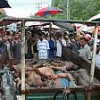
RIGHTS-SRI LANKA: Civil War Brutality Hits New Lows
While Sri Lanka’s minister for human rights Mahinda Samarasinghe has denied allegations by a top United Nations official that torture is ‘routine’ in the country, there is little doubt that the renewed civil war has resulted in brutality hitting new lows.
TECHNOLOGY-SRI LANKA: Leapfrogging Out of Poverty on IT
In a north-central village, deep inside Sri Lanka’s backwoods, a young man is glued to a computer screen, pushing a mouse and filling in figures.
RIGHTS-SRI LANKA: Tamils Traumatised by War, Tsunami – Study
Residents of war-wracked Jaffna city in northern Sri Lanka are a community on the run; every family has a bag packed with essentials, ready to flee at a moment's notice, a new research study reports.SRI LANKA: Women Battered Despite Domestic Violence Law
Sri Lankan women battered by their spouses have been seeking refuge in a law enacted two years ago to tackle domestic violence, but activists say they need far closer protection.RIGHTS-SRI LANKA: Arbour’s Visit a Guided Tour – Critics
United Nations Human Rights Commissioner Louise Arbour’s five-day tour of this strife-torn country is already circumscribed by the fact that she will not be allowed to visit areas in the Jaffna peninsula controlled by the Liberation Tigers of Tamil Eelam (LTTE).
ENVIRONMENT-SOUTH ASIA: Superstition May Yet Save Marine Reserve
India’s plans to dredge a navigable canal between the Gulf of Mannar (which separates India from Sri Lanka) in the face of strong economic and ecological objections have now run, of all things, into a religious obstacle.
ENVIRONMENT-SRI LANKA: In Denial Mode on Sanitation Issues
Compared to the rest of South Asia, Sri Lanka has impressive sanitation statistics with 90 percent of the population having access to latrines. But what happens to human waste thereafter is another story.RIGHTS-SRI LANKA: Consider Sanctions Says Parliamentarian
As the nationalist government of President Mahinda Rajpakse continues to resist calls for a United Nations rights monitoring mission in Sri Lanka an elected Tamil leader said the time may have come to consider international sanctions.
ENVIRONMENT-SRI LANKA: Tsunami Alert Systems Working – Too Well
A tsunami alert, last week, sent thousands of Sri Lankans living along the coasts of this island nation fleeing inland, but authorities were exultant that the early warning systems installed after the disastrous Dec. 26, 2004 Indian Ocean tsunami were working.SRI LANKA: Calls for Int'l Intervention Met With Chauvinism
When Sri Lankan health minister Nimal Siripala de Silva shocked delegates to the 8th International Congress on AIDS in Asia and the Pacific (ICAAP) by telling them that "when the western world was living in jungles, we were leading a civilised life,’’ it marked the chauvinism of President Mahinda Rajapakse’s nationalist government.SRI LANKA: "Deadly" Climate for Reporters and Aid Workers
Sri Lanka, which is fighting a longstanding insurgency against Tamil separatists, is fast gaining notoriety as "one of the world's worst places" both for journalists and humanitarian aid workers - due primarily to a rising death toll and veiled threats from government and paramilitary forces in the country.SRI LANKA: Probe French Aid Agency For Massacre – Gov't
A year after 17 workers of the French aid agency Action Against Hunger (ACF) were lined up and shot dead in the eastern town of Muttur, no one is sure who is responsible for the gruesome massacre - government forces or Tamil separatist rebels.« Previous Page — Next Page »





The Week with IPS

NEXT STOP - SDGs
Tracking global progress towards a sustainable world
Tracking global progress towards a sustainable world
