Languages
Sunday, October 25, 2026



News and Views from the Global South
Education Cannot Wait. Future of Education is here
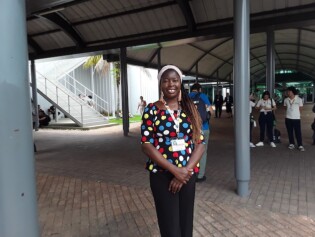
Pan-African Activist Advocates for Climate-Resilient Food, Education Systems at Belém Talks
“I am the founder of the ‘I Lead Climate Action Initiative,’ which is a Pan-African movement that carries out grassroots-based climate action to address the climate crisis in Africa. We advocate for the restoration of Lake Chad, the world’s largest environmental crisis through research and engagement,” says Adenike Titilope Oladosu.
Education Cannot Wait Interviews Dr. David Edwards, General Secretary of Education International
Dr. David Edwards is the General Secretary of Education International, the voice of teachers and other education employees around the world. Through its 386 member organizations, Education International represents over 32.5 million teachers and education support personnel in 178 countries.

Invest in Girls’ Education: Invest in Our Future
On today’s International Day of the Girl Child, Education Cannot Wait (ECW) and our strategic partners call for substantial new funding to ensure every girl impacted by crises is able to access 12 years of quality education.
Education Cannot Wait Interviews Mohamed M. Malick Fall, UN Resident and Humanitarian Coordinator in Nigeria
Mohamed M. Malick Fall was appointed as the United Nations Resident Coordinator in Nigeria in February 2024. He has more than 20 years of experience in the development, humanitarian and peacebuilding fields. Prior to his appointment, he served as the UNICEF Regional Director for Eastern and Southern Africa, where he provided oversight and guidance to 21 UNICEF Countries Offices, including on the formulation and implementation of the Country Programme Documents, the UN Reform process, and the engagement with the Regional and Economic Commission and African Union and the private sector.

Our Teachers, Our Heroes
1 calls on people everywhere to provide teachers and the communities they serve with the resources they need to succeed in their crucial profession.
Education Cannot Wait Interviews Tom Dannatt, Founder and CEO of Street Child
Tom Dannatt is a Founder and CEO of Street Child, an international non-government organization active in over 20 disaster-hit and lowest-income countries – working for a world where all children are ‘safe, in school and learning’. Tom founded Street Child in 2008 with his wife Lucinda and has led the organization since its inception. Street Child leads the civil society constituency within ECW’s governance and, accordingly, Dannatt represents the constituency on the Fund’s High-Level Steering Committee.

Education Cannot Wait Interviews Dr. Faiza Hassan, Director of the Inter-Agency Network for Education in Emergencies
Dr. Faiza Hassan is the Director of the Inter-Agency Network for Education in Emergencies (INEE). A chemical engineer who transitioned into education leadership, Dr. Hassan brings close to 20 years of diverse experience in education, social policy reform and humanitarian response. She has a proven track record in strategic management, technical leadership and driving impactful, large-scale complex programmes.
#KeepHopeAlive Through Education
On the first International Day of Hope, we are all responsible to #KeepHopeAlive for the children impacted by the world’s most severe humanitarian crises. Perhaps the strongest responsibilities lie with those entrusted to lead the world and make the right moral and legal choices. This is especially so today, when we have led the world into an abyss of excruciating pain for nearly a quarter of a billion innocent children now suffering brutal conflicts and violence, forced displacement and punishing climate disasters – without quality education.
Education Cannot Wait for the Children of Africa
As we commemorate International Day of the African Child, we honor the courage, resilience and dreams of millions of children and youth across Africa. Their potential is limitless, their right to a quality education is non-negotiable.
End Child Labour Forever through Education for All Children
As we mark today’s World Day Against Child Labour, we must confront an urgent global truth: over 160 million children around the world are engaged in child labour – many of them in the most dangerous, degrading and life-limiting conditions imaginable. These are children forced to work in fields, factories and conflict zones – deprived of their right to safety, to dignity and, above all, to an education.
The World Must Respond to Africa’s Forgotten Crises
The challenges facing many parts of the African continent today are vast and immense. From the surge in violence in eastern Democratic Republic of the Congo to all-out-war in Sudan, years of progress are being obliterated by bombs, killings and other grave violations of international law.
The Children of Gaza Deserve Their Humanity – Their Education Cannot Wait
22 May 2025, New York – In the past two months alone, more than 950 children have reportedly been killed in strikes across the Gaza Strip. That’s 15 children every day who lose their lives in this horrific conflict. Those who survive face the risk of famine, illness, and the collapse of essential services, including education.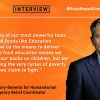
Education Cannot Wait Interviews Tom Fletcher, Under-Secretary-General for Humanitarian Affairs and Emergency Relief Coordinator
Tom Fletcher is the United Nations Under-Secretary-General for Humanitarian Affairs and Emergency Relief Coordinator, OCHA. He started his official duties on 18 November 2024.

Girls’ Education Bridges the Digital Divide
There is a global digital divide, threatening to leave entire generations of women and girls behind. Today, we place them at the centre of our shared massive action as we commemorate International Girls in ICT Day. Today, we reaffirm our commitment to harness the transformative power of education and provide these girls with the training, skills and resources they need to be part of the digital revolution that is shaping our planet. Today, we must recommit to financing their education.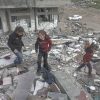
Children at the Center
Creativity and innovation are essential to finding extraordinary solutions to abnormal problems. Now more than ever we must continue finding creative solutions to protect the world’s most vulnerable children from the excruciating pain of war, dispossession and destruction of their last hope: a quality education. The current humanitarian and development funding levels are falling. However, with creativity we can prevent further deterioration and instead turn towards an upward direction.
Healthy Beginnings, Hopeful Futures
Education is an essential investment in providing health to those left furthest behind. On World Health Day, we must connect the dots between education and health in humanitarian crisis settings. A child attending school gets vaccinations and healthcare, a nutritious meal and mental health and psychosocial services. By funding education, we optimize our investments to cover multiple sectors in one investment, such as health.
‘Energy Transfer’s Lawsuit Against Greenpeace Is an Attempt to Drain Our Resources and Silence Dissent’
CIVICUS speaks with Daniel Simons, Senior Legal Counsel Strategic Defence for Greenpeace International, about the lawsuit brought by an oil and gas company against Greenpeace and its broader implications for civil society. Greenpeace is a global network of environmental organisations campaigning on issues such as climate change, disarmament, forests, organic farming and peace.
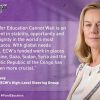
Education Cannot Wait Interviews Sigrid Kaag, Chair of the ECW High-Level Steering Group
Sigrid Kaag is the new Chair of Education Cannot Wait’s High-Level Steering Group. Kaag brings a wealth of experience in political, humanitarian and development affairs, as well as in diplomacy. In 2025, she was appointed by United Nations Secretary-General António Guterres as the UN Special Coordinator for the Middle East Peace Process, a.i. Kaag has just concluded her mandate as Senior Humanitarian and Reconstruction Coordinator for Gaza, a role she held since 2024. She served as the first Deputy Prime Minister and first female Minister of Finance in the Dutch government starting in January 2022. Prior to this, she was Dutch Minister for Trade and Development Cooperation from October 2017 until May 2021, and Minister for Foreign Affairs until September 2021.[related_articles]

Our Investment in School Meals is Our Investment in Education
Millions of children worldwide are going hungry, and we all know that hungry children cannot learn. On International School Meals Day, we are calling on donors to significantly scale-up funding for school feeding to ensure every child can go to school, every child can access at least one nutritious meal a day, and every child can concentrate, develop and achieve.
‘Rule Breakers’ Movie Launches in Advance of International Women’s Day Highlighting the Courage and Hope of the Afghan Girls Robotics Team
Angel Studios’ new feature film 'Rule Breakers' – launching in theaters across the United States, Canada, South Africa and Sri Lanka today – highlights the hope, courage and resilience of the Afghan Girls Robotics Team.
International Women’s Day, 2025
Rule Breakers: The Compelling True Story of Afghan Girls Who Risked All to Learn
Like the Afghan robotics team, Education Cannot Wait (ECW), the global fund for education in emergencies and protracted crises in the United Nations, is breaking the 'rules' and continuing to educate young women in that country despite an edict from the Taliban denying girls a secondary school education.
Next Page »





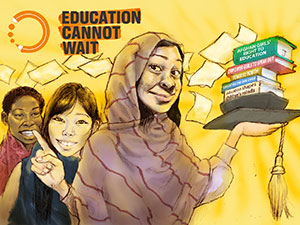
Education Cannot Wait has reached 5 million children and youth since its inception. Yet, the scale and the depth of the education emergency in crisis-affected countries needs to be matched by adeguate and scaled up financial investments to end the learning crisis for those left furthest behind, and to swiftly shift the course towards the SDGs. With 20 times more funding, the estimated 75 million children and youth can be reached. Indeed, financing stands between what is possible and what is not for these vulnerable girls and boys.
- Videos -
- Quote cards -


The Week with IPS

NEXT STOP - SDGs
Tracking global progress towards a sustainable world
Tracking global progress towards a sustainable world
