Tuesday, August 25, 2026



News and Views from the Global South
PHILIPPINES: Indigenous People Occupy Dole Pineapple Plantation
Pratap Chatterjee
- Hundreds of B’laan indigenous people are occupying a Dole pineapple plantation in the southern Philippines in an effort to regain community rights over the land.
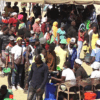
Organisers estimate that up to 164 families have for the past 11 days camped peacefully on the plantation, operated by the California-based multi-national company.
The protest action is the culmination of a year-long campaign by the B’laan to get the government to honour a 35-year-old presidential decree which recognised their rights to the land.
Smoke from a dozen fires rise from two rows of makeshift shelters which have been hastily erected in the deep furrows that snake along the pineapple fields at the bottom of 2,300 metre-high Mount Matatum, a dormant volcano.
Some 20 kms away, in the south-east, one can see the lights of General Santos City, a port in the Celebes sea that was recently expanded with U.S. development aid to facilitate the export of products from pineapples to asparagus and cattle.
“This is Lam Kwah, where our grandfathers have lived since time immemorial,” says Alding Tusan, a spokesman for the B’laan peoples, gesturing with a sweep of his hand to indicate most of the pineapple plantation.
“We had to leave the land in the 1970s when war broke out between Christians and the Muslims. When we returned in the 1980s the land was planted with pineapples,” he adds.
In 1988, migrant settlers working on the land were given title to the land by the Department of Agrarian Reform as part of a Comprehensive Agrarian Reform Programme (CARP) conducted by the government of Cory Aquino.
The settlers organised themselves into a cooperative called the Dolefil Agrarian Reform Beneficiaries Cooperative (DARBCI), which has steadfastly refused to return the land to the B’laan. DARBCI grows pineapples under contract to Dole Philippines.
The B’laan campers say Dole officials have visited their camps to try and persuade them to leave. “Marvin Gonzales, Dole’s security chief, Carlos Baldostamon, who is in charge of community relations, and Flor Macaldo, a Dole attorney, have come to talk to us,” says Antonio Imba, a B’laan ‘fulong’ (clan leader).
“But we have told them that this is our land and we are not going to leave. If they demolish our houses, we will move to another part of the plantation and build them again,” he adds.
Dole officials say the campers have not caused any trouble for them. “We are sympathetic to their cause but it has nothing to do with us. The title to the land is held by DARBCI and not by Dole,” said Dole Philippines general manager Michael O’Brien.
“We have told the B’laan that we need to apply fertiliser and pesticides to the crop. They have agreed to this and have not interfered with any of our operations at all. They are actually very friendly,” he told IPS by telephone.
The B’laan have received some government support for their cause. The Office of Southern Cultural Communities filed a case in a regional court to get the land returned to the B’laan but the case was dismissed three years ago.
Support has also come from activists and church groups. Bitoi Wapano, the local Catholic priest, provided the B’laan with wood to build the shelters while lawyers at the Legal Resources Centre (LRC) in Manila have rallied to their cause.
“To use the CARP to disenfranchise the B’laan is to defy the very spirit of agrarian reform. What the B’laan seek is a mere 341.88 hectares of their ancestral land. DARBCI owns more or less 8,700 hectares of prime agricultural land,” says Gus Gatmaytan, an LRC lawyer.
The B’laan and the T’boli, whose lands lie to the west, are the two principal indigenous groups in this area — the southern part of the island of Mindanao.
Until the end of World War II, the B’laan practised slash-and- burn cultivation in the area but things changed when former Philippine President Ramon Magsaysay encouraged settlers from Visayas to move to ‘lupang gisaad’ (the promised land).
“The settlers asked the B’laan for land and offered them cans of sardines, betel-nuts and tobacco in exchange. The B’laan who understand nothing about land title were happy to share their land, which they believe belongs to God, with their new friends,” says Wapano.
“The B’laan then moved into the mountains to cultivate land there. When they returned the Visayans had built houses and taken over their land. As more settlers arrived the B’laan gradually lost all their land. Dole was the last straw,” he adds.
Today Dole also faces criticism from many of the Visayan settlers, says Rose Romano, an activist who works with the Justice and Peace desk of the local church.
“Dole has dug deep furrows in their land so that the rain does not stand around their crops. These furrows are carrying away boulders and silt on to the land of more than 200 farmers on the fringes of the plantation, making them useless,” she says.
“Houses have been damaged and destroyed. Nearby fishponds suffer from flooding. Working animals are even carried away by the rampaging waters,” she adds.
In 1983 two local families — the Pampolinas and the Zabalas — took Dole to court for causing erosion on their farms. But Dole brought in expert witnesses from the University of the Philippines who testified that the erosion was “an act of God” and the case was thrown out of court in 1988.
“Yes, there have been complaints about erosion. We check into every case and we are willing to help an farmers that live downstream from us. But they have not been hurt by our plantations,” O’Brien told IPS.
Environmentalists disagree. A fact-finding team that visited the area two years ago upheld the farmers’ complaints. Local farmers, who have received letters of support from groups like Friends of the Earth International in the Netherlands, say they plan to pursue their complaints against Dole.
They will be supported by the B’laan who are determined to fight Dole. “We will live on our B’laan reservation and die for it, if the situation calls for it,” says one clan leader.
 Print
|
Print
|