Wednesday, September 9, 2026



News and Views from the Global South
HABITAT-POPULATION: Old Debates Return, UNFPA Head Worries
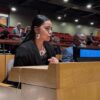
- Agreements on women’s health and reproductive rights, among other issues decided in recent U.N. conferences, are up for debate once more, warns Dr Nafis Sadik, executive director of the U.N. Population Fund (UNFPA).
Several nations and the Vatican, in its capacity as an observer to the ongoing Second U.N. Conference on Human Settlements (Habitat II) here, are trying to ensure that language protecting women’s reproductive rights are not included in the Habitat Plan of Action, she says.
Sadik says the Vatican has informed her that “they’re not going to disturb the declarations agreed to at (the 1994 International Conference on Population and Development in) Cairo and (the 1995 Women’s Conference in) Beijing.” But, she adds, neither do they want the Cairo and Beijing precedents — which the Holy See bitterly opposed — to be extended.
“They said they opposed any attempt to carry that language to another level” in the Habitat Plan of Action, Sadik says.
To that end, several nations — including Argentina, Gabon, Guatemala and Malta — have succeeded in bracketing most portions of the Plan of Action that include phrases concerning reproductive and gender rights included in both the Cairo and Beijing declarations.
At the very least, that bracketing ensures a new round of debates over issues the UNFPA thought were closed. But Sadik adds, “I’m not sure whether this is posturing on the part of governments, or whether there will be a real discussion.”
In particular, Sadik worries that all of paragraph 92 (bis) of the draft Plan of Action remains bracketed, including the assertion that the quality of life in human settlements depends on “growth, structure and distribution of population”. The paragraph also suggests that governments conduct data collection on population growth in cities and towns and include population factors in urban and regional decision-making.
Most other references to the need to discourage rapid population growth and to provide reproductive health care to women are also bracketed.
But family planning is an important part of maintaining livable cities and towns, Sadik says. UNFPA notes that 60 percent of the population growth in cities stems from natural increase, and only 40 percent from migration.
“We should not take for granted that the projections for the rate of population growth will be manageable,” Sadik argues. Family planning, she says, is essential to ensure that cities will not be strained to the breaking point to provide services to an expanding population.
Dr Enis Balkan of the Turkish Advocacy Network for Women adds that access to reproductive health care is a vital part of the creation of a healthy environment for women particularly.
Balkan says that the variety and availability of contraceptive methods should be increased, and that differences in family planning services between the relatively well-served cities and the rural areas should be reduced.
Nor are reproductive health issues the only important issues for women that remain up in the air. Sudan, among other countries, has sought to block any new language in the Plan of Action that would re-affirm women’s rights to inheritance and to have access to land and property.
The Women’s Linkage Caucus insists that language from the 1995 Copenhagen Social Summit, as well as from Beijing, that forbids discrimination against women in the workplace, in access to credit and in the family are also maintained. Currently, the Caucus notes, clauses on all those issues remain bracketed.
But the precedents of the previous U.N. conferences will in many cases be ultimately re-affirmed, Sadik contends. She says of the bracketing around women’s housing rights that “it is my gut feeling that the brackets on those will be removed.”
Wally N’Dow, secretary-general of the Habitat Conference, adds: “We have tried to protect the gains made at Beijing.”
Even if the reproductive health debates die down at Istanbul, UNFPA seems likely to remain in the shadow of controversy. Prior to Sadik’s arrival in Istanbul, conservative groups claimed that the UNFPA chief had recommended China’s draconian family planning programmes for their achievements.
In an article that appeared on China’s state-run news agency wire service, Xinhua, Sadik was quoted as praising China for reducing infant mortality and maternal mortality, without criticising Beijing’s record of forced sterilisations and coercion in abortions. Alex Marshall, UNFPA media director, says Xinhua misquoted Sadik.
Critics of UNFPA contend that China’s policy of allowing only one child per family has led to the abortion of female fetuses, which are less desired than those for males in Chinese tradition.
In Istanbul, however, Sadik did not retreat from her position that China has succeeded in improving maternal and infant health, and she claimed that the ratio of females to males in China, poor for centuries, has actually narrowed in recent years.
She blames the problems in China’s family planning programme on “the excessive zeal of their functionaries” and adds that the Chinese press has been active in revealing problems in the programme.
 Print
|
Print
|