
Wednesday, November 11, 2026



News and Views from the Global South

Hurricane Season
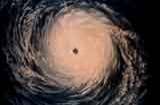
- The annual hurricane season brings with it the fury of nature: a combination of powerful winds, giant ocean waves and torrential rains that almost every year leave their mark somewhere in the Caribbean, the Gulf of Mexico or even farther north along the coast of the United States.
-
In cyberspace there are numerous websites that track the evolution of hurricanes and tropical storms in the area of the Atlantic Ocean where, says webpage Stormcarib, the season extends from June 1 to November 30.
Information about the nature and characteristics of hurricanes also abounds, and the web surfer can also find multimedia applications that show the behavior of a hurricane once it has formed.
One of the most complete websites is the National Hurricane Center of the U.S. National Oceanic and Atmospheric Administration (NOAA), which complements its information with satellite images, recommendations for action in emergency situations, and an archive with extensive information about these meteorological phenomena.
The English word “hurricane” originates in the name that the Taino Indians, a native Carib population, gave these powerful storms: hurakán.
According to the definition given by the website Infoplease, hurricanes are cyclones in which wind speed surpasses 119 km (74 miles) per hour. Although the term is used only for such storms in the North Atlantic, the phenomenon also appears in other parts of the world, and in the Pacific is known as a typhoon or a tropical cyclone.
The energy produced by the movement of a hurricane in one day is the equivalent of all the energy that would be consumed in the United States in six months, says another hurricane-dedicated Internet site.
 Print
|




