Wednesday, September 23, 2026



News and Views from the Global South

The Scent of Biodiversity
- The Amazon's plants and fruits are serving as the raw material for Brazil's perfume and cosmetics industry. Exports for this sector, which promotes environmental preservation and fair trade, are growing 20 percent a year.
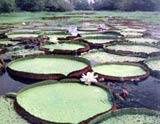
The scent of the victoria regia, a giant Amazonian plant, is recreated in a new cologne. -
This is a positive social effect of the expansion of an industry that is based on the sustainable use of Brazil's vast biodiversity.
The harvest of the Amazon forest's products is transformed into oils by Brasmazon, a small business in Belén, capital of the northern state of Pará, supplying the cosmetics division of its holding company Beraca Sabará, a chemical firm based in Sao Paulo and with affiliates in four other cities.
The river-dwelling population of Marajó stopped cutting down the andirobas (Carapa guianensis), ucuúbas (Virola sebifera) and murumurús (Astrocaryum murumuru) trees once they realized they could make a better living from their fruits, like the cupuaçú (Theobroma Grandiflorum), Luiz Roberto Morais, chemist and Brasmazon bio-prospecting manager, told Tierramérica.
The output of Brasmazon, which Morais founded in 1989 and later sold to Beraca Sabará, is growing “200 percent a year,” he said.
That reflects the exceptional expansion of demand. The Brazilian perfume and cosmetics industry association ABIHPEC reported growth of 37.1 percent in the past five years, while the country's overall industrial sector saw just 2.7 percent growth, curbed by a series of economic crises.
In that time the cosmetics industry doubled its exports, and its trade balance went from a deficit of 59.7 million dollars in 1999 to a surplus of 80.5 million in 2003, when sales abroad reached 224.3 million dollars.
The incorporation of oils and extracts of autochthonous origins is an advantage for Brazilian cosmetics on the international market, where they otherwise cannot match the technology of bigger companies, ABIHPEC president Joao Carlos Basilio da Silva said in a conversation with Tierramérica.
Furthermore, advances in design and best practices for production, with safety testing and microbiological analysis have made the Brazilian industry competitive. Its goal for the next three years to maintain export growth at 20 percent annually, at least, he said.
This year, the first four months alone saw 26.7 percent growth.
It is an industry that wants to maintain “the forest on its feet,” unlike the logging companies, Da Silva said.
Recognition of its efforts towards sustainability came in an agreement between ABIHPEC and the certified forestry product-purchasing group, created by the non-governmental organization Friends of the Earth/Amazon Brazil, so that companies in the cosmetics and perfume industry have information about the communities providing their natural inputs.
“We want an orderly system, with environmental preservation and fair trade criteria that attend to the needs of the communities, paying for their traditional botanical knowledge,” Luis Villares, manager of Friends of the Earth's sustainable business services, told Tierramérica.
Better socio-environmental results require new relationships with the extracting communities. They should organize themselves into cooperatives or partnerships and obtain more training, such as in forest management, so that they do not rely completely on the buyer, but also satisfy the demand in terms of quantity, quality and delivery, at fair prices, he said.
The cosmetics industry that takes advantage of Brazil's biodiversity could make sustainable extractive activities economically viable, and is important from the educational perspective because it teaches the consumer the value of nature, motivating him or her “to help preserve it,” said Villares.
One example of “spectacular success”, according to the Friends of the Earth expert, is the Ekos line of products from the company Natura. Its perfumes, shampoos and other beauty products based on natural ingredients have been sold since 2000 and “stimulate conservation efforts.”
Natura, founded 35 years ago, has grown a great deal since it launched this line of products, and now exports to numerous Latin American countries and has plans to open a shop in Paris.
Valuing and preserving nature paints a strong image, especially in Europe, and that is reflected in the success of Ekos, says Sonia Tuccori, head of research and development with biodiversity for Natura.
The company aims to be “socially just” with its supplier communities, recognizing the value of traditional knowledge of local flora and paying fair prices for the raw materials used in the cosmetics, she said.
Andirobas, buritis (Mauritia vinifera), Brazil nuts (Betholletia excelsa), copaibas (genus Copaifera) and pripriocas (Cyperus articulatus, Kyllinga) are just some of the “fruits of the forests” utilized in Natura products.
The company has added to its perfume line a cologne using extract of the victoria regia, symbol of the Amazon. This giant aquatic flower's leaves reach 1.8 meters in diameter, and the blossom — the largest in the Americas — grow to 30 cm in diameter.
 Print
|
Print
|