
Tuesday, October 13, 2026



News and Views from the Global South
GAZA: ‘If Civilians Can Get This Close to Establishing a Humanitarian Corridor, Then Governments Can Do It’
-
CIVICUS discusses the interception of the Global Sumud Flotilla on its mission to bring humanitarian aid to Palestinians in Gaza with Musa Roshdy, a humanitarian activist who took part in the flotilla.
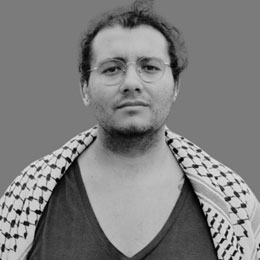
Musa Roshdy
What’s the Global Sumud Flotilla and why is it important?
The Global Sumud Flotilla was the second civilian maritime mission launched by a coalition of Palestinian solidarity organisations advocating for aid delivery to Palestinians in Gaza and the end of Israel’s illegal siege of Gaza. While it was the Global Sumud Flotilla’s second mission, this was the 39th sea-based attempt to break Israel’s illegal blockade. The Spring 2026 flotilla was organised in direct response to a call for aid put out by civil society organisations on the ground in Palestine.
On 15 April, we sailed from Barcelona with several hundred activists from dozens of countries including Brazil and Spain, determined to deliver aid to Palestinians facing severe deprivation. Our mission highlighted a crucial reality: if everyday civilians from all over the world can mobilise and get this close to establishing a humanitarian corridor, then governments can certainly do it. What’s missing is not ability or infrastructure, but political will. The flotilla represents civilian solidarity with Palestinians and a direct challenge to the illegal blockade. We were prepared for interception after Israel arrested the previous flotilla last year, but not for the scale of violence that followed.
How were you kidnapped?
I was kidnapped by the Israeli navy in the interception that occurred on 29 April, when we were sailing in international waters over 600 miles from occupied Palestine, off the coast of Crete. They attacked us in the middle of the night. We had little warning before military motorboats approached us at high speed. They pointed rifles at us and announced on a megaphone that they were the Israeli navy, they were boarding our vessel and we needed to go inside immediately or they would shoot us.
That night, the Israeli military stopped 22 of the 54 boats in the flotilla en route to Gaza. There’s no legal precedent for military action so far from Israel’s sea borders. We were in the European Union’s search-and-rescue zone, under Greek jurisdiction. But instead of protecting us, Greek coastguard ships observed Israel’s raid and then received us after we were tortured for two days.
Israel’s legal claims were absurd. They accused us of illegal entry into Israel when we were sailing to Gaza and were kidnapped en route. Most of the 180 activists were released in Greece, but two of us were abducted and brought before Ashkelon Magistrate’s Court in Israel on charges with no legal basis.
This violated fundamental principles of international law. You cannot take military action in international waters so far from your territory. You cannot abduct foreign nationals without due process. You cannot torture detainees. Yet all this happened.
Israel acts with impunity because the international community has failed to hold it accountable.
What did you endure in detention?
It was clear from the start they were trying to denigrate us for standing with Palestinians. I was forced onto my hands and knees and held in uncomfortable positions for hours. Soldiers stole my shoes, then stomped on my feet with their combat boots. I was left in just leggings and a tank top. We were held in makeshift prisons built from shipping containers. The soldiers deliberately manipulated the temperature, wetting the floor to freeze us at night, then forcing us outside under intense heat during the day. I experienced hypothermia both nights, as confirmed by a doctor who was imprisoned with me. When comrades tried to give me sweaters, soldiers took them away. At one point, a soldier pointed a rifle at my comrade and threatened to kill him for offering me a jacket in the cold.
Soldiers banged on containers and shone huge lights while we slept to keep us awake. They threw flashbangs and used force to drag people into solitary confinement. On the last day, they shot activists at point-blank range with rubber bullets. They took photographs and videos that showed us collecting our medications when they kidnapped us, but then denied us access to our medications once we were on the prison boat. Sixty-one people went on hunger strike. The food they provided, mostly bread, was insufficient to feed the rest of us, even with a third of us not eating. This cruelty is consistent with what Palestinians experience in Israeli detention, though what we experienced pales in comparison with the cruelty they face.
The Israeli military intended to deter the humanitarians sailing to deliver aid to the people of Gaza, but they were unsuccessful. People around the world recognise that Palestinians in Gaza still have an overwhelming need for aid, legal protection and solidarity. Many activists who were detained with me on 29 April set sail again a few weeks later on 14 May and were intercepted off Cyprus just days later on 18 and 19 May.
What must change internationally?
What governments must do is clear but consistently absent. They must condemn the kidnapping of their citizens. They must impose targeted sanctions against Israeli officials, not humanitarian activists. They must denormalise diplomatic relations with Israel. For instance, Croatia’s leader just refused to approve Israel’s new ambassador to Croatia due to Israel’s current policies.
The most fundamental step is an arms embargo. If we stop supplying weapons to Israel, it cannot do what it is doing. Last year, civil society in Belgium won a court case preventing the transit of military equipment to Israel. France recognises Palestine but still supplies weapons. Governments know these mechanisms exist but lack the political will to prioritise Palestinian lives over strategic interests.
Western states are also complicit in other ways. Some of our torturers had US accents. Another had a German accent. Western governments allow their citizens to join the Israeli military, which commits war crimes and kidnaps and tortures their nationals, then lets them return home without consequence.
Instead of holding Israel accountable, many western states are restricting the space for pro-Palestinian activism. In the UK, Palestine Action faced an absurd terrorism designation for blocking weapons manufacturing. In Germany, authorities banned the watermelon symbol as antisemitic.
On 19 May, as the Israeli military was kidnapping humanitarians in international waters, the United States Department of the Treasury sanctioned four leaders of the Global Sumud Flotilla, calling humanitarian aid delivery ‘pro-terror’, and blocking all access to financial institutions in the USA. The mechanism used by the USA to sanction humanitarian activists was recently deemed illegal by a federal judge when applied to Francesca Albanese, the United Nations Special Rapporteur on the Occupied Palestinian Territories. It criminalises support for Palestine and conflates it with support for terrorism.
What lies ahead for activism for Palestinian rights?
Our detention and torture were intended as a deterrent, but they failed. In practice, they had the opposite effect. Frontline work exacts a real human cost and people need time to recharge. But activism will continue because Palestinians in Gaza are still facing genocide.
What this moment teaches is that rights exist because we enact them. When everyday people learn from Palestinian courage how to stand up, call atrocities atrocities, and demand basic decency and access to life itself, movements spread across borders. People will continue to pursue humanitarian work, join future flotillas and resist authoritarian restrictions on civic space. Tactics will adapt, new symbols will emerge – as when the watermelon was adopted because Palestinians couldn’t display their flag – but the work won’t stop.
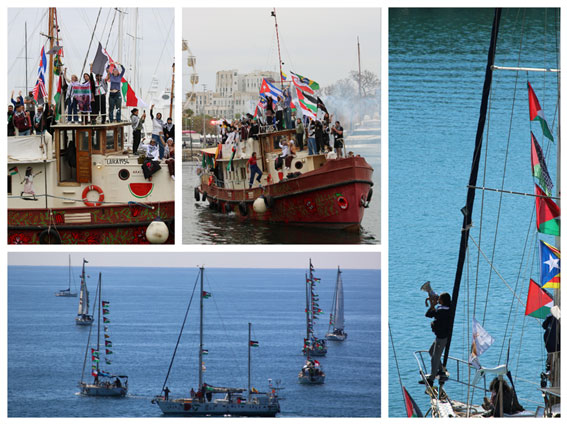
Credit: D.V. Bakke
CIVICUS interviews a wide range of civil society activists, experts and leaders to gather diverse perspectives on civil society action and current issues for publication on its CIVICUS Lens platform. The views expressed in interviews are the interviewees’ and do not necessarily reflect those of CIVICUS. Publication does not imply endorsement of interviewees or the organisations they represent.
GET IN TOUCH
Global Sumud Flotilla/Instagram
Humans of the Global Sumud Flotilla/Instagram
Musa Roshdy/Instagram
SEE ALSO
USA: sanctions weaponised against human rights CIVICUS Lens 01.Jun.2026
Gaza: ceasefire an illusion CIVICUS Lens 16.Mar.2026
Palestine: ‘The EU cannot position itself as a defender of human rights while being one of Israel’s primary arms markets’ CIVICUS Lens | Interview with 7amleh 26.Mar.2026


 Print
|
Print
|




