Languages
Saturday, October 10, 2026



News and Views from the Global South
International Justice
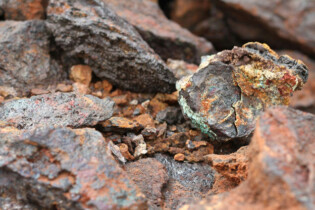
How AI-Powered War Drives the Critical Minerals Race
The demand for critical minerals is accelerating as world powers scramble to stay on top of emerging technologies. Meanwhile, the environment and frontline communities are paying a steep price.
A Rash of Hard-Hitting Questions—Which May Remain Evasive–for Candidates Running for UN Chief
The seven candidates, still in the running for the post of UN Secretary-General (SG), have so far faced a barrage of questions, mostly from delegates and the news media.
Ukrainian Groups Urge WHO to Act on Torture of Captives by Russian Medical Staff
More than 60 Ukrainian organisations have issued an appeal to the World Health Organisation (WHO) to help stop the torture of Ukrainians held in Russian captivity.
The Dollar-Gold Standard’s Lingering Demise
The 1944 Bretton Woods (BW) conference accepted the US demand to use the dollar to settle international financial transactions. This arrangement would require a US balance-of-payments deficit to issue enough dollars.
What Isn’t Named Isn’t Protected and being Named Isn’t Enough
Rightsholders came to Ulaanbaatar from across the world, carrying declarations, demands and years of experience defending the lands on which their communities depend. Indigenous Peoples, local communities, Afro-descendant Peoples, women and youth were equally clear about what they needed from COP17. But being in the room is not the same as having power in the room.
US Visas for Ruthless Autocrats to Address UN – but not for Palestinian Leaders
When Yasser Arafat was denied a US visa for his second visit to New York to address the United Nations back in 1988, the General Assembly defied the United States by temporarily moving the UN’s highest policymaking body to Geneva—perhaps for the first time in UN history—providing a less hostile political environment and a platform for the leader of the Palestine Liberation Organization (PLO).
Killing of Environmental Defenders Reflects Power Struggle Over World’s Resources
At least 124 land and environmental defenders were killed around the world in 2025 while protecting forests, rivers, farmland and Indigenous territories, according to a new report by Global Witness that warns violence against activists remains widespread even as recorded killings have declined from previous years.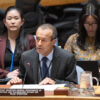
Renewed Hostilities In Yemen Inflame Displacement and Regional Risks
In recent days, the humanitarian situation in Yemen has deteriorated sharply following a new escalation of hostilities between the Iran-backed Houthi rebels and the Saudi-backed Presidential Leadership Council (PLC). This follows four years of relative stability, marking the most severe resurgence of violence since the collapse of the United Nations (UN)-mediated ceasefire in October 2022.
September 11 and the End of the American Dream
The Day That Changed Everything
On 11 September 2001 I was in New York, on one of my frequent visits to the United Nations, to which I was tied by a consultancy contract. That morning I woke up late, around eleven, sleeping off the jet lag of the flight from Italy. I was staying at the Hyatt Park, today the Millennium. A hotel a few metres from the Glass Palace, built to serve the world of the United Nations.
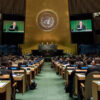
Will the General Assembly Continue to be Subservient to the P-5 Refusing to Challenge the Nominee for UN Chief?
As the race for the election of a new Secretary-General (UNSG) gathers momentum, the spotlight is on the 193-member General Assembly, the highest policy making body at the United Nations, which has refused to assert itself and continues to play a subservient role in the elections of UNSGs.
At Hammarskjöld’s Grave, Sixty-Five Years After Ndola
Late in August I stood at Dag Hammarskjöld’s grave in Uppsala. It is a quiet place, a long way from New York and from the wars the United Nations exists to prevent.
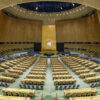
The Lighter Side of Politics at the UN General Assembly
When over 130 world leaders arrive in New York for the high-level segment of the General Assembly next week-- it will be rare to hear hard-hitting, headline-grabbing political statements from the podium.
US Plans to Restrict Foreign Journalists Trigger Rising Protests
First, it was the mass deportations of undocumented aliens, then a crackdown on liberal-minded academics from prestigious US Universities, and now, restrictions on foreign journalists based in the US.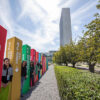
Development Goals Falter as Civil Society Is Shut Out
When the UN High-level Political Forum on Sustainable Development (HLPF) ended in New York in July, it took two recorded votes for states to pass a ministerial declaration that, until recently, would have been adopted without controversy. Uruguay, speaking for the Group of 77 developing countries plus China, pushed through the deletion of a reference to the agreement reached at the COP28 climate summit. Israel forced a vote on a paragraph about self-determination for people under occupation. Russia dissociated itself from the passage on peace and security. The wrangling revealed the extent to which the consensus that in 2015 saw all 193 UN states agree the Sustainable Development Goals (SDGs) – a common blueprint to end poverty, tackle climate change and build accountable institutions by 2030 – has been eroded.
The USA and Dictatorship – Gödel’s Loophole
Observing some of the changes over the last year and a half in the Government of the USA, one question that comes to mind is whether the greatest democracy in the world turning into a dictatorship? And, if so, how is this possible in a country with one of the most articulate and thoughtful constitutions ever written –a constitution which clearly sets out checks and balances precisely to avoid undue concentration of power.
Beyond the Death Penalty Debate: Human Dignity and Justice in Japan
A symposium examining Japan’s death penalty through the lens of human dignity was held on September 5 at Joseph Hall of St. Ignatius Church in Yotsuya, Tokyo.
Trump’s “Comprehensive” Gaza Peace Plan a Cover for Genocide
It is nearly a year since the UN Security Council (UNSC) adopted Resolution 2803 on 17 November, 2025, endorsing President Trump’s 20-point framework ostensibly designed to end the war in Gaza and create a roadmap for long-term stability. It is not clear what progress has been made. In August 2026 The Jerusalem Post reported “the IDF continues almost daily strikes in Gaza”, killing more than 1,200 Palestinians since the US-brokered ceasefire deal came into effect, seizing more territory, and continuing to restrict the movement of people and goods into and out of Gaza. Nickolay Mladenov, the UN High Representative on the Board of Peace, wrote in early August 2026 that “two days of strikes across Gaza have killed civilians and destroyed medical supplies that people depend on”. Ironically, this genocidal strike happened only a few days after a US-brokered Hamas disarmament deal, which Trump called, “a monumental step” towards peace and security.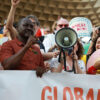
UNGA 81: A United Nations at a Turning Point
The 81st session of the UN General Assembly (UNGA81) opens tomorrow at a particularly important moment for multilateralism. The UN80 reform initiative has entered what the Secretary-General describes as a decisive phase. Member States are selecting the next Secretary-General. The 2030 Agenda is entering its final four years, while conversations about what should follow it are beginning.
‘I am one who dies for life, not one who lives for death’ – Kurdish Political Prisoner Pakhshan Azizi
In 2024, Kurdish social worker Pakhshan Azizi was sentenced to death. She remains incarcerated in Evin Prison, Tehran, Iran. This is her story ...
Pakhshan Azizi’s Letter from Evin Prison
Writing from the women's ward of Evin Prison on 10 June 2026, Kurdish political prisoner Pakhshan Azizi, who remains under a death sentence, reflects on her legal case, political principles, humanitarian work, and the broader historical and political dynamics shaping the Middle East.
Will the Future of the UN be Dictated by a Hostile US?
As the UN commemorates its 81st anniversary, one lingering question remains: what is the future of the world body.? Will a hostile US downsize its operations at the United Nations, cut down its funding, continue defaulting in its payments -- and perhaps eventually, withdraw from the world body?Next Page »





The Week with IPS

NEXT STOP - SDGs
Tracking global progress towards a sustainable world
Tracking global progress towards a sustainable world
