
Wednesday, November 11, 2026



News and Views from the Global South

The Moon
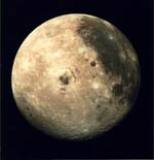
- The moon is often described as a natural satellite of Earth, as it is condemned to orbiting our planet. This link generates an important force, the effects of which are most evident in the changing tides of the oceans.
-
The moon has served, for example, to create calendars that have allowed humans to track time since the ancient era.
The moon is 384,000 km from the Earth and has a diameter of 3,476 km. It has a rough geography, spotted with craters caused by the impacts of meteorites. The largest, known as Newton, is 113 km across.
The origins of the moon remain a mystery, but there are several theories. One is that an impact of body from outer space with the Earth produced enough material to form the moon. In any case, it is believed to have occurred some four billion years ago.
Because the moon is smaller than the Earth, its gravitational pull has less effect on objects on its surface. A person would feel six times lighter, and a jump of one meter on Earth would be 5.5 meters on the moon.
That fact has been proved because the fascination with the moon prompted the world's major powers to create the technology to send humans to the moon. This occurred in 1969, but the last mission was in the 1970s, and since then there have been no more missions to that “natural satellite”.
The Internet holds a great deal of information about the moon. There are those that explain its characteristics and unique qualities, those that explain its role in eclipses, and those that invite you to navigate cyber-space in search of greater knowledge
 Print
|




