
Thursday, September 17, 2026



News and Views from the Global South

Voracious Tourism Threatens Damas Island
- Environmentalists warn that nutria, penguins and dolphins, as well as other species populating this natural Chilean paradise, are in danger.
-
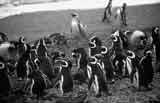
The island, located 500 km north of Santiago, is part of the Humboldt Penguin National Reserve, a protected area of international importance, as it is home to the species endemic to the Humboldt ocean current.
The National Committee in Defense of Fauna and Flora (CODEFF) organized an expedition in early November for 24 environmentalists who set up camp at the site to demand that the Ricardo Lagos government take action to protect the island.
CODEFF and other environmental organizations warned in letters addressed to Lagos and other officials that if Damas Island were to lose its status as a national reserve, the Chilean government would be violating national law and international commitments.
The alarm spread in September, when rumors circulated that the government was considering withdrawing protection for a portion of the Damas Island territory.
The National Humboldt Penguin Reserve, established in 1990, encompasses the Damas, Choros and Chañaral islands, which are relatively close to the Chilean continent.
The frigid Humboldt oceanic current flows from Antarctica past the northern Chilean coast and turns inward into the Pacific when it runs into the warm El Niño current off the Peruvian coast.
This cold current, which reaches the Galápagos Islands, is a permanent migration route for species from chillier climes, allowing penguins, seals and sea lions to coexist near the Equator with animals of the tropics, like iguanas and giant sea turtles.
The beauty of an uncontaminated marine environment and its varied fauna caught the attention of the tourism industry. The authorities of the Coquimbo region decided to authorize eco-tourism projects on Gaviota Island, next to the Damas-Choros-Chañaral triplet.
Two companies presented their plans. The first, drawn up by local investors, entailed a complex of apartments, campsites, restaurants, swimming pools and a museum, as well as an environmental education component, for a cost of 600,000 dollars.
But it was rejected by the Coquimbo Concessionary Committee, which opted for the proposal of the transnational Genera Investments, with its budget of 80 million dollars to build a 200-room five-star hotel and a marina.
Because of its size, the project would reach Damas Island, and thus endanger its biodiversity, say environmentalists.
The National Penguin Reserve is also home to the yunco (Pelecanoides garnotii), a sea bird whose population in the past numbered in the millions. Today there are only two colonies in northern Chile, one on Damas Island, with just 1,500 reproducing pairs.
The most notable endangered species is the Humboldt penguin itself (Spheniscus humboldti). There are some 300 pairs that regularly next on the islands of Damas and Choros.
Also found there is a colony of 'chungungos', the Chilean name for the sea cat or marine otter (Lontra felina, not to be confused with the sea otter), another vulnerable species that is under a strict protective regime.
The varied fauna of the small archipelago also includes the South American tern (Sterna hirundinacea), 'bandurrias' or black-faced ibis (Theristicus melanopis), and the popular bottlenose dolphin (Tursiops truncatus), which swims the waters surrounding the three islets.
 Print
|
Print
|




