
Thursday, September 17, 2026



News and Views from the Global South
ENVIRONMENT-MALAYSIA: Mega City Project Robs Common Green
Anil Netto
- Alarmed civil society groups are coming together to oppose a massive urban development project that could result in 33 tower blocks of over 40 storeys each being built on one of the last huge green spaces left on land-starved Penang island.
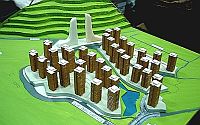
Giving Way to Mega Urban Project Credit: Penang Turf Club
PGCC is being developed by Abad Naluri, a 25 percent-owned associate firm of Taman Equine, which in turn is wholly owned by developer Equine Capital. Equine’s executive chairman is Patrick Lim, widely seen as one of the most influential businessmen in Malaysia.
Former premier Dr. Mahathir Mohamad , himself often accused of cronyism during his 22-year tenure at the helm, has reportedly referred to Lim as ”Patrick Badawi”, alluding to the perceived close ties between Abdullah and Lim.
”The project has been on the drawing board for four years but they have not consulted the public until the eleventh hour,” says Mohd. Nizam Mashar, coordinator of Friends of the Earth, Malaysia (SAM). ”The saddest part is that this green space – the only potential area that can be given to the people of Penang – will now be largely destroyed.”
The PGGC developer has hired a new but well-connected local public relations firm, Fox Communication, whose key staff are former senior journalists from the English-language Malaysian mainstream press.
Fox Communication and the mainstream media have tried to counter the major sources of concern by highlighting the PGCC’s green credentials. These include a “zero carbon” target and 40 ha allocation for recreational parks, including a 10-ha narrow kilometre-long ”Central Park”.
But they have not highlighted the 33 tower blocks. ”The destruction of the turf club environment and the construction of all those buildings is going to produce carbon emissions – not cut carbon,” contends academic Andrew Aeria, who grew up in Penang. ”If Equine are serious about zero carbon emissions or greening the earth, they would be better off turning the place into a park.”
To allay concerns over traffic congestion, the developer has also pointed to the building of a road underpass and a couple of flyovers to link up to the proposed Penang Outer Ring Road, itself a controversial project. The alignment of the ring road cuts through the site and there are also plans for a Penang monorail system.
But that has not convinced many. The roads bordering the Turf Club in Batu Gantung are heavily congested during peak hours. The two main parks nearby – the Botanic Gardens and the Penang Youth Park at the foothills of Penang Hill – are often overflowing with people and a much larger new park would have been welcome.
In fact, the PGCC has a stupendous proposed built-up area of 2.5 million sq m and will include 7,000 upmarket homes as well as hotels, commercial areas, a performing arts centre and ”two iconic towers”.
But it obviously caters only to the well-heeled. Even the project’s master planner, Teheran-born Nasrine Seraji, expressed disquiet. ”The developer only wants luxury housing. We say you can’t just have luxury housing because then it becomes a gated community,” she said in an interview with Canada.com last November. ”You need to also have social housing. These are the negotiations that take place in order to allow integration of different income levels of society.”
She added that the developer had originally wanted a density that would have been twice that of Hong Kong, but she persuaded him otherwise.
Under existing official quota requirements for developers, the PGCC developer would be required to build a couple of thousand lower-cost apartments. But the word is that these lower-cost flats would probably be located outside the project area.
The move to rezone the existing Penang Turf Club land from ‘open space’ to ‘mixed development’ was initiated in November 2002. Last year, residents of the quiet upper-class residential area in neighbouring Jesselton registered their objections to the rezoning.
In November 2002 as well, Penang Turf Club members were persuaded to vote in favour of a new racecourse on the mainland.
As part of the quid-pro-quo of the PGCC deal, Equine will build a 375 million ringgit euphemistically named ”Penang International Equestrian Centre” on the mainland in Batu Kawan – even though the horse racing industry faces an uncertain future. A racecourse on the mainland would draw gamblers to a site that is just a few dozen km south of the Kepala Batas parliamentary constituency of Prime Minister Abdullah.
Earthworks on the new racecourse began in late 2005 after the government announced it was going ahead with plans to build South-east Asia’s longest bridge, a 3 billion ringgit (800 million dollar) 24-km link between Batu Kawan and Penang Island.
Equine has another major project, Crescentia Park, which would turn 180 ha of land in Batu Kawan into Penang’s third satellite town at a gross development value of over 800 million ringgit (230 million dollars).
Both Crescentia and the new race course are located close to the site of the proposed bridge, turning Equine’s land bank on the mainland into a gold mine.
It is not clear how the PGCC developer actually paid for the Turf Club land on the island. One report said that Abad Naluri had bought the land for 488 million ringgit (140 million US dollars) in 2002. The Penang Turf Club, established in 1864, acquired the land in 1935.
According to another report, the Turf Club land would only be transferred to the PGCC developers once the Batu Kawan racecourse is completed in 2009.
Whoever owns the Turf Club land on the island stands to profit handsomely from a leap in land valuation if the rezoning to ”mixed development” is confirmed. In rezoning the land, ”the state has enabled some land speculators to make literally billions of ringgit of profit,” when it could have acquired the land for the benefit of the people of Penang, lamented heritage conservation activist, Ahmad Chik.
 Print
|
Print
|




