
Monday, November 16, 2026



News and Views from the Global South
Q&A: Europe Could Be Missing the Green Signal
Interview with Magda Stoczkiewicz, director of Friends of the Earth
- Tackling climate change was presented as the most pressing task facing European Union governments during 2007. German Chancellor Angela Merkel, who held the EU's rotating presidency for part of the year, underscored how alarming the problems associated with melting glaciers and rising sea levels are when she declared: "It's not five minutes to midnight. It's five minutes after midnight".
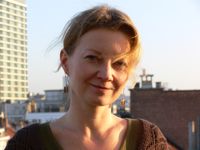
Magda Stoczkiewicz Credit: Friends of the Earth
Magda Stoczkiewicz, the Polish woman who is new director of Friends of the Earth Europe, faces the considerable challenge of trying to convince the Union's policy makers not to allow myopic economic concerns to distract them from issues that are pivotal to humanity's future. Launched recently by Thom Yorke, the singer with rock band Radiohead, her organisation's 'Big Ask' campaign seeks legally binding cuts to emissions of carbon dioxide from each EU country.
Previously working for CEE (Central and Eastern Europe) Bankwatch, Stoczkiewicz has helped highlight the inadequate attention paid to environmental and social concerns by the European Investment Bank, the EU's lending arm. She spoke to IPS Brussels correspondent David Cronin.
IPS: Do you get the impression that EU governments are not taking climate change as seriously as they ought to?
MS: The rhetoric of leaders recognises the necessity of urgent action. But in actual deeds, I don't see recognition of that urgency. I can only conclude that there are forces which do not allow politicians to go far enough.
I wonder if the lack of political will is because politicians are afraid to make decisions that would cause some companies and some sectors to lose out. Part of the problem is that politicians want to be re-elected and it is very difficult for them to deliver a message that we have to limit the way we use resources.
I haven't seen serious leadership until now. And this is really worrying. To give you one example: EU funds. We recently analysed the allocations of EU funds in the new member states (mainly in Central and Eastern Europe). One could think that because EU money is coming as grants, this is a way of putting these countries on a low emission and low carbon path. But that is not happening. They (the countries' governments) are not using the money for eco-efficiency and public transport.
Central and Eastern European countries used to be transition countries, and what they perceived development as was having a high amount of cars and everybody getting his or her own SUV (sports utility vehicle). This is an obsolete way of looking at development. Development can be having a functioning public transport system that takes into account the environmental impact.
These countries are going for the same paradigm (of economic development) as Western countries followed. And at the same time, the European Commission is not using this opportunity to push them to really make a shift.
IPS: What do you hope to achieve with the 'Big Ask' campaign?
MS: The only way to do something on climate change is to have clear annual emission cuts. Our idea with the Big Ask is to have legislation introduced at the national level on actual cuts. We want to have a 30 percent reduction (below 1990 levels) by 2020 and 90 percent by 2050. That is a lot but science shows it is what is necessary to combat climate change.
If you have specific national annual cuts in emissions, the European Commission would be able to check the level of cuts. And under a penalty system, countries would be penalised if they do not deliver. That is the only way to get things moving.
IPS: Friends of the Earth has been quite critical of the way the EU is promoting biofuels by setting a target that they will meet 10 percent of our transport needs by 2020. Do you think that policy makers see biofuels more as a way of reducing our dependence on imported oil and gas than as an environmental issue?
MS: It is partly being perceived as an energy or fuel security issue. I think it is also connected with the fear that politicians have of telling people they really need to change their behaviour. As long as they don't have the guts to say that, they will think of ways to limit the damage. Biofuels are being used as a fig leaf to cover up the fact there is no political will to make the necessary changes in the energy and transport sectors.
From our perspective, the target is not a good thing for the moment because you do not have sustainability criteria (for their production) agreed on.
The criteria that have been proposed (by the European Commission) are also not sufficient because they do not address issues such as food prices, human rights abuses and people being thrown out of their land (to make way for plantations).
Even the Commission's Joint Research Centre has brought up a lot of question marks, if not negative criticisms, about biofuels: how they will not bring cuts in emissions and how they might bring negative economic effects.
IPS: What do you think of the warnings by Javier Solana, the EU's foreign policy chief, that climate change could lead to conflict over resources with Russia?
MS: I don't think going for constant competition is the way to make proper changes. I would like to see studies that examine how instead of constant competition we have cohabitation.
The issue of competition is having a strong impact now because of China and the other emerging economies. If you just say, 'the others are grabbing, we have to grab as well', you end up potentially with a war, rather than a solution.
I do realise this might sound a bit Utopian but I don't think we will get anywhere if we just continue the rat race.
IPS: Before taking up your new post, you put a lot of pressure on the European Investment Bank to take environmental issues into account. Was your work effective?
MS: The EIB have realised that the way they used to deal with information and civil society and environmental issues was obsolete. I hope in some sense that was due to my work and the work of the organisation. But I also know it was not the only factor. There was a general change in the environment of demanding more accountability.
There still is a lot to be done. The EIB came from a very laggard position where they were lacking the capacity to really analyse the environmental and social impact of their decisions. They still have to put in a lot of effort to build that up. But they do recognise and know it has to happen.
IPS: How do you feel about the state of the environmental movement – and awareness of environmental matters generally – in Central and Eastern Europe?
MS: The change in the economic systems of these countries has meant people have been moving from not possessing things to a quite consumerist culture. This makes it difficult to convey to people that development is not solely defined by growth. It doesn't mean you have to have a more wasteful society.
In Poland, we look too much at the U.S. If we looked at Sweden and the Nordic countries, we would maybe take more of a balanced approach.
IPS: Is it frustrating to work for a non-governmental organisation, when you know that lobbyists working for corporate interests have financial resources you can only dream of? Do you feel you are in a constant David vs Goliath struggle?
MS: It feels a bit like that. On the other hand, David won by having a clear heart and using the right tactics. I hope we can do that as well. The positive thing is if you look at Eurobarometer and other surveys, people do trust NGOs quite highly. I don't see it as a lost battle.
 Print
|



Pictures for this story
This story includes downloadable print-quality images -- Copyright IPS, to be used exclusively with this story.


