Languages
Sunday, November 8, 2026



News and Views from the Global South
Opinion
Changing Weather Will Affect Living Standards of Half of India’s Population
The India Meteorological Department (IMD) on January 16 declared that 2018 was the sixth- warmest year in the last 117 years or since 1901, when recording started. Pointing towards changing weather and climate parameters, it also noted that the last monsoon rainfall was the sixth-lowest since 1901.
Defining the End State Ecosystem: How Can We Get Better at it?
Restrictions on the movement of people impedes Africa's development, limiting economic integration and trade between African countries. Using a systems-thinking approach, champions and decision-makers have led the charge towards a visa free Africa.
The Myth About the Race for Artificial Intelligence
UMEA, Sweden, 26 March 2019 (IPS) -- At this year’s Davos economic forum, US executives warned that China may be winning the so-called Artificial Intelligence (AI) race with Europe. In another recent article, Bloomberg pointed out that countries are rushing to not be left behind.
World Bank Financializing Development
The World Bank has successfully legitimized the notion that private finance is the solution to pressing development and welfare concerns, including achieving the Sustainable Development Goals (SDGs) through Agenda 2030. A recent McKinsey report estimates that the world needs to invest about US$3.3 trillion, or 3.8 per cent of world output yearly, in economic infrastructure, with about three-fifths in emerging market and other developing economies, to maintain current growth.
The Destruction of the Environment: An Unfolding Tragedy for Humanity
Late last year the World Wide Fund for Nature released their Living Planet Report for 2018. WWF’s estimates were stark: populations of mammals, birds, fish, reptiles, and amphibians have, on average, declined by 60 percent between 1970 and 2014.
What They Need: Money, Resources, & a Seat at the Table
As a long-time advocate, I’ve been invited to speak at dozens of global conferences about the needs of girls and women in humanitarian emergencies.
Words Matter: Trump and the Massacres in Christchurch
These lyrics are from Fire, the only hit by The Crazy World of Arthur Brown, which in 1968 sold over one million singles. Brenton Tarrant played it in his car while he triumphantly left the Al Noor Mosque in Christchurch, New Zealand. He had just gunned down around 100 unarmed worshippers and was on his way to another mosque to continue the slaughter before Friday prayers ended on 15 March. His murderous rampage finished by the Linwood Islamic Centre, where he could not find the entrance. He shut a man and his wife, whom he encountered outside the building and then shattered a window with a hail of bullets, killing five more inside, while he shouted that everyone had to leave the mosque. A courageous shop keeper rushed out and throw a credit card reader at Tarrant, who rushed back to his car followed by the shop keeper, who shattered the windshield with a handgun he had picked up from the ground. Tarrant run away, but was almost immediately restrained by police who had been able to trace him.
South-South Cooperation: a Path to Implementing UN’s 2030 Agenda
I see five issues that will be central to implementing the Paris Agreement on climate change and achieving the 2030 Agenda for Sustainable Development. South-South Cooperation can offer solutions to all of them. First, rising inequality both between and within countries is eroding trust and deepening a sense of injustice. Globalization has enabled many people to escape poverty – but its benefits are not shared equitably and its costs fall disproportionately on the poor and vulnerable.
A New Window for Delhi’s Migrant Women & Girls
When the most devastating flood in Bihar’s history came in 1987, Renu Devi recalled that the rampaging waters and landslides had swept away people who were sleeping, along with their beds.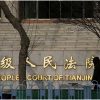
How Many Journalists are Jailed in China? Censorship Means We Don’t Know
Reporting on China's harassment of journalists has never been easy. Lately it's been getting much harder, which suggests that conditions for the press could be worsening.
The System, Youth and Democracy
If we ever needed proof of how the political system has become self-referential and unable to update itself, the latest student march in more than 1,000 towns is a very good example.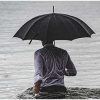
9 of the 10 Worst Global Risks are Linked to Water
Every year, the World Economic Forum asks some 1,000 decision-makers from the public sector, business, academia and civil society across the globe to assess the risks facing the world over the decade to come.
Dismantling Patriarchy Must Begin at Home: A Reflection on Gender Equality
This week, I joined thousands of activists, campaigners, thought-leaders, and change-makers in New York to advocate for women's rights and promote gender equality during the 63rd session of the UN's Commission on the Status of Women (CSW).
Depression Is More than a Stigma
Depression is often distinguished from other non-communicable diseases or NCDs (e.g., cancer, diabetes, cardio-vascular diseases, hypertension) because of the stigma attached to it. Among other consequences, those suffering from depression are often denied access to medical care. Indeed, the latter is an outcome of interaction between supply of and demand for medical care. On the provider side, stigmatizing attitudes by service providers are identified as a barrier to access. On the demand side, stigma and low mental health literacy by community members are just as emphatically reported as barriers to accessing care.
UN’s Plan to Offshore Back-Office Jobs is Probably a Waste of Money
A $64 million plan to move 750 back office jobs from the UN’s main duty stations to four new centralized service centres in Budapest, Montreal, Nairobi and Shenzhen, could end up being a waste of money.
Belt and Road Initiative vs Washington Consensus
With the Washington Consensus from the 1980s being challenged, President Donald Trump withdrawing the United States from the Trans-Pacific Partnership (TPP), and China pursuing its Belt and Road Initiative (BRI), most notably with its own initiatives such as the multilateral Asian Infrastructure Investment Bank (AIIB), the political and economic landscape in East Asia continues to evolve. Jomo Kwame Sundaram was interviewed about likely implications for developing countries in the region and beyond.
Closing the Gender Gap: The Economic Benefits of Bringing more Women into the Labour Force
As girls, we were raised with the belief that we could accomplish anything, and that no barrier was insurmountable. Yet, for so many women, the reality doesn’t quite meet their aspirations. Things weren’t exactly equal in the relatively conservative middle-class society in India where we both grew up.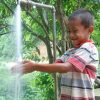
It’s Simple, but Requires Determination
I am drafting this on International Women’s Day - March 8 - with an eye towards World Water Day on March 22. On International Women’s Day we celebrate progress in gender equality. At the same time, we recognize how much remains to be done: how many women remain excluded from decision-making across many professions. Changing this is urgent. Water – clean and accessible – is getting scarcer at an alarming rate. While working to change this, we cannot afford to exclude women.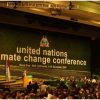
US Survey Finds Lack of Awareness on Global Warming
The U.N.’s World Water day is fast approaching as the state of the world’s consumable water supply remains dismal. Billions of people face at least the very real risk of scarcity, if they’re not facing scarcity already; and about a third of the world’s groundwater systems are in danger of becoming depleted.
Seven Challenges for US Nominee for World Bank President
All incoming World Bank presidents bring a public record of their views about the bank and about development more generally. David Malpass, who is on track to become the bank’s next president, has not been shy in criticizing the role and management of the institution he now plans to lead.
Europe under Siege: Collusions, Dugin and Bannon
EU Parliament elections take place every fifth year and votes have steadily been decreasing. In the last 2014 election, the overall turnout was 42.54 percent of those entitled to vote, in some nations it was just around fifteen percent. Nevertheless, results will not only be eagerly awaited by pro- and anti-EU activists, but also by ideologist from non-member countries. Particularily vociferous among such people are Steve Bannon, who wants to “Make America Great Again” and Aleksandr Dugin who wants to “Make Russia Great Again”.« Previous Page — Next Page »





The views expressed in these articles are those of the authors and do not necessarily represent the views of, and should not be attributed to, IPS-Inter Press Service

The Week with IPS

NEXT STOP - SDGs
Tracking global progress towards a sustainable world
Tracking global progress towards a sustainable world
