Languages
Sunday, November 8, 2026



News and Views from the Global South
Opinion
Staying Cool is Creating a Vicious Cycle on our Warming Planet
Our planet is heating up. 2018 was the fourth-warmest year on record, with peak temperatures engulfing the planet – from 43°C in Baku, Azerbaijan, to the low 30s across Scandinavia. The last four years have been the hottest since records began in 1880.
World Bank Financialization Strategy Serves Big Finance
The World Bank has successfully built a coalition to effectively advance its ‘Maximizing Finance for Development’ (MFD) agenda. The October 2018 G20 Eminent Persons Group’s (EPG) report includes proposals to better coordinate various international financial institutions (IFIs) in promoting financialization.
Why New York Should Not Decriminalize Sex Trade
Prostitution policies are bubbling up again in legislative circles across the United States, but few representatives seem to have much clarity on the issue. 2020 presidential candidate Senator Kamala Harris has given mixed messages on her thinking, while Bernie Sanders has said he simply has “no answer.”
Mobilizing Men as Partners for Women, Peace & Security
In the first month of Bangladesh joining the Security Council in January 2000, President Nelson Mandela was in New York to report to the Council in his capacity as the UN-mandated facilitator of the Burundi Peace Process. In an informal setting, he shared with us that his efforts to include women in the peace table were not working as participating men stonewalled.
In Diverse Southeast Asia, Growing Ethnic & Religious Intolerance Pose Serious Threat to Stability
When the one-year anniversary of Malaysia’s historic presidential election outcome rolls around in early May, the wave of euphoria that followed it will be all but a wistful memory.
Freshwater Canada’s Dirty Water Secret
While residents across Prince Rupert, British Columbia are once again able to get safe drinking water from their taps, the boil-water advisory lifted there in late January should not be forgotten. Canada is a freshwater-rich country, but the time for complacency on essential water issues has long passed. Most people living in Canada have access to safe water. But drinking water advisories in the country about unsafe water have been concentrated in First Nation communities.
Invested in Gender Diversity
Over the past decade, there has been mounting evidence that greater levels of gender diversity can have a positive impact on corporate performance and economic growth.
Ambitions Are Affordable for Asia and the Pacific
Three years of implementation of the transformative 2030 Agenda for Sustainable Development in Asia and the Pacific shows the region has some catching up to do. Despite much progress, the region is not on track to reach the 17 Sustainable Development Goals set out in the United Nations 2030 Agenda for Sustainable Development. We are living in a time of booming prosperity, yet many are getting left behind. Basic needs, such as the freedom for all from hunger and poverty, ill-health and gender-based discrimination, and equal opportunity for all are elusive. Economic, social and planetary well-being has a price tag. Calculations by the United Nations Economic and Social Commission for Asia and the Pacific (ESCAP) show that it is mostly affordable for the region.
The Crucial Role of the Military in the Venezuelan Crisis
In January 2019 Venezuela’s opposition-led National Assembly swore in congressman Juan Guaidó as the country’s interim president. Guaidó’s claim to power is a severe blow against the already weakened government of Nicolás Maduro, whose re-election as president in May 2018 was widely rejected by the international community and deemed illegitimate by over 50 foreign governments.
Smart Cities hold Key to Sustainable Development
Asia and the Pacific’s phenomenal development has been a story of rapid urbanization. As centres of innovation, entrepreneurship and opportunity, cities have drawn talent from across our region and driven economic growth which has transformed our societies.
Has Privatization Benefitted the Public?
In most cases of privatization, some outcomes benefit some, which serves to legitimize the change. Nevertheless, overall net welfare improvements are the exception, not the rule. Never is everyone better off. Rather, some are better off, while others are not, and typically, many are even worse off. The partial gains are typically high, or even negated by overall costs, which may be diffuse, and less directly felt by losers.
Grassroots Organising Points the way in Fight Against Rising Repression
“I never thought it would get so big and I think it is amazing.” The words of a 16-year-old Swedish teenager who skipped school to protest outside her government’s inaction on climate change. Greta Thunberg is marvelling at how, in just a few short months, her solitary protests outside Sweden’s parliament, have inspired and united hundreds of thousands of young people and others across the globe into a powerful, growing grassroots movement for climate change action.
Human Rights Defenders Need to be Defended as Much as they Defend our Rights
They are ordinary people – mothers, fathers, sisters, sons, daughters, brothers, friends. But for me they are extraordinary people – the ones who have the courage to stand up for everyone else’s rights. They are the human rights defenders.
What’s in a Name? Everything.
On March 19, 78 years old Nursultan Äbisjuly Nazarbayev unexpectedly announced his resignation as President of Kazakhstan, referring to the need for “a new generation of leaders”. The same day the speaker of the nation´s parliament was appointed as interim president, awaiting presidential elections scheduled for 2020.
The NPT & Conditions for Nuclear Disarmament
Fifty years ago, shortly after the conclusion of the 1968 nuclear Nonproliferation Treaty (NPT), the United States and the Soviet Union launched the Strategic Arms Limitation Talks (SALT).
Making it in India: Women Struggle to Break Down Barriers Starting a Business
Radhika Baburao Shinde was all of 12 years old when she was married off to a man who was 10 years older. She was sent away to live with her new husband, a truck driver, and his family in remote, drought-prone Satara district, 330 kilometers southwest of Mumbai. She left school and went to work as a laborer on her husband’s family farm.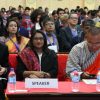
Developing Effective and Sustainable Programmes for Those Living with and Affected by Autism Spectrum Disorder
The Kingdom of Bhutan is a landlocked country surrounded by Bangladesh, India and the Tibetan region of China. It is a country that brought the term Gross National Happiness as a concept by which to measure a country’s progress. In April 2017 it celebrated WAAD by hosting the International Conference on Autism & Neurodevelopmental Disorders (ANDD2017) in Thimphu.
Rising Inequalities in Asia-Pacific have become a Major Obstacle to Accelerating Progress
2019 will be a defining year for the 2030 Agenda; and the regional forums will pave the way for our first stocktaking on the SDGs in the General Assembly in September.
The Campaign Against Greta is an Index of the Loss of Values
Since the powerful march of hundreds of thousands of students in 1,000 towns against climate change, an unexpected campaign of delegitimation, ”demystification” and demonisation has started against Greta Thunberg, the Swedish teenager who started the movement. After searching the media, social media and websites, this campaign can be divided into four different groups.
Japan’s Gender Gap
Japan is not making progress in gender equality, at least relative to the rest of the world. Despite the Japanese government’s attempts in recent years to pass legislation promoting the economic activity of women, Japan ranked a miserable 110 out of 149 in the World Economic Forum’s 2018 Gender Gap Index, which benchmarks countries on their progress toward gender parity across four major areas.
NHIF Reform Critical to Affordable Health For All in Kenya
Consider this. One million Kenyans fall into poverty every year due to catastrophic out of pocket health expenditures. For the almost four in every five Kenyans who lack access to medical insurance, the fear that they are just an accident or serious illness away from destitution.« Previous Page — Next Page »





The views expressed in these articles are those of the authors and do not necessarily represent the views of, and should not be attributed to, IPS-Inter Press Service

The Week with IPS

NEXT STOP - SDGs
Tracking global progress towards a sustainable world
Tracking global progress towards a sustainable world
