Languages
Saturday, October 10, 2026



News and Views from the Global South
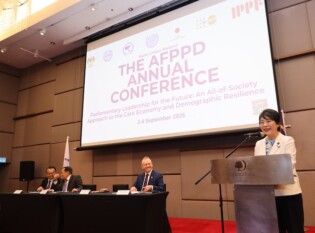
Lawmakers Need to Grapple With the ‘Human Story’ of the Aged, Youth, Women and Girls when Making Policy
"As parliamentarians, we should understand that behind every demographic indicator is a human story,” Kamikawa Yoko, MP Japan and Chair of AFPPD, reminded lawmakers in her opening address to the Asian Forum of Parliamentarians on Population and Development (AFPPD) annual conference held in Kuala Lumpur, Malaysia.
Xenophobia Won’t Bring Wealth – Only Misery – To South Africans Too
Usually, the fiesta to celebrate St Antony at the church with the same name in Crown Mines, Johannesburg, is a lively affair. The church is usually packed with congregants from the Portuguese community, including recent migrants from Mozambique and Angola.
Make Last Sprint Towards 2030 a ‘Turning Point’ for Nature Finance, Eighth GEF Assembly Told
"While pressures on public budgets are growing and geopolitical tensions rising, it can be tempting to see environmental finance as optional. It is not,” GEF Interim CEO and Chair Claude Gascon told the closing plenary of the Eighth GEF Assembly in Samarkand, Uzbekistan, today.
Security Council’s Deep Concern Over United States’ Venezuela Action
United Nations Secretary-General Antonio Guterres expressed deep concern about the immediate future of Venezuela. In a statement read by Under-Secretary-General for Political and Peacebuilding Affairs Rosemary DiCarlo, Guterres told the Security Council’s emergency meeting he was deeply concerned about “possible intensification of the instability in the country, the potential impact on the region, and the precedent it may set for how relations between and among states are conducted.”
How Pacific Wisdom Is Shaping Global Climate Action
On the Pacific Islands, where the ocean horizon is both a lifeline and a warning, communities have long interpreted environmental change through traditional knowledge, lived experiences, stories, and practice. Their observations echo those across the Pacific region, where traditional knowledge remains central to understanding shifting environments and responsible stewardship.
Sindh People’s Housing Redefines Post-Disaster Adaptation Success
By any comparison, the statistics for Sindh People's Housing for Flood Affectees (SPHF) are phenomenal. In 2022, photographs from the region showed people treading carefully through waist-deep water with their few belongings grasped firmly above their heads in an attempt to escape the flooding caused by 784 percent more than average monsoon rains.
What’s Now Needed is Political Courage, Says UN SG Guterres at COP30
Political courage is the biggest obstacle to limiting the rise in global average temperature to no more than 1.5°C, said UN Secretary-General António Guterres.
Lawmakers Urged to Consider Emerging Drivers of Child Marriage
Closing the chapter on child marriages is still a distant ambition in the Southern African Development Community (SADC) region, and despite great strides at developing and passing legislation to eradicate it, existing and emerging drivers are still at play, making youngsters vulnerable to the practice.
Adaptation Finance Shortfalls Leave Developing World Exposed
Hurricane Melissa made landfall in Jamaica yesterday—the strongest hurricane to impact the island on record since 1851—with expectations of tens of thousands of people being displaced and devastating damage to infrastructure. The tropical storm, slightly downgraded but nevertheless devastating, made landfall in Cuba today as UNEP’s newly released Adaptation Gap Report 2025: Running on Empty shows that the finance needed for developing countries to adapt to the climate crisis is falling far behind their needs.
Parliamentarians Seek Solutions to Protect Children from Digital Abuse
Vulnerable children are being targeted online faster than parliamentarians and law enforcers can act, a conference convened by the Asian Population and Development Association (APDA) heard. Yet, with international cooperation and sharing of ideas, lawmakers believe the scourge of online abuse can be addressed.
Aid Funding Crisis Means Parliamentarians’ Visionary Leadership Even More Crucial
As funding for sexual and reproductive health rights was on a “cliff edge,” parliamentarians now needed to play a “visionary” leadership role because “financing strong, resilient health systems for all their people rests with governments,” said Dr. Alvaro Bermejo, Director General of the International Planned Parenthood Federation (IPPF).
Climate Change An Existential Threat To Humanity, Urges Action – ICJ
The case was “unlike any that have previously come before the court,” President of the International Court of Justice Judge Yuji Iwasawa said while reading the court's unanimous advisory opinion outlining the legal obligations of United Nations member states with regard to climate change.
Lawmakers in Maldives Pledge to Support Women Leaders
A meeting of parliamentarians in Malé, the Maldives, pledged to provide an enabling environment for emerging women leaders by supporting them and promoting a political culture rooted in mutual respect, inclusivity, and equal opportunity.
Atoll Nation of Tuvalu Faces Climate Existential Crisis, Frustration With Slow Funding
Prime Minister of Tuvalu, Feleti Teo, describes himself as an optimist—despite the existential crisis his atoll nation faces with climate change-induced sea level rise and frustration with existing international financial mechanisms to fund adaptation and mitigation.
Vanuatu Anticipates New Era With Climate Change Reparations
To the outside world, a sea level rise of 34 cm (or slightly longer than a child’s ruler) may not seem dramatic, but it’s an existential threat to the Pacific island state of Vanuatu.
Pacific States, Territories Gift the World its ‘Largest Conservation Project’
While the island states in the Pacific may be modest, the ocean that surrounds them represents a huge oceanic state—an area equivalent to the entire European Continent.
Lawmakers Work to Build Women’s Representation in Politics and the Workplace
Jelena Pekić, MP of the Federation of Bosnia and Herzegovina (House of People) and Deputy Speaker of the Canton Sarajevo Assembly, Lana Prlić, MP of the Federation of Bosnia and Herzegovina (House of Representatives) and Marina Riđić, Assistant Representative, UNFPA Bosnia and Herzegovina, spoke to IPS ahead of the Study Tour on Gender Equality and Women's Empowerment in Bosnia and Herzegovina.
How to Put the ‘Sexy’ Back into Agriculture – Thoughts From CGIAR Science Week
This week presented a beacon of hope for young people so that the “girl from the South and the boy, of course” could stay in the developing world, Dr Ismahane Elouafi, Executive Managing Director of CGIAR, said during a press conference on the final day of the CGIAR Science Week.
Behind the Feeding of the 5,000 (or Should That Be 10,000) at CGIAR Science Week
Good Food for All is the motto of The Chef's Manifesto, a project that brings together more than 1,500 chefs from around the world to explore how to ensure the food they prepare is planet-friendly and sustainable.
Small Island States Urge International Court to Look Beyond Climate Treaties
A few UN member states responsible for the majority of emissions have breached international law, Ralph Regenvanu, a special climate envoy from Vanuatu, told the International Court of Justice in the Hague in his opening address.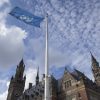
Youth-Led Landmark Climate Change Case Starts in The Hague
The intersection of law, diplomacy, and science will come under the spotlight at the International Court of Justice hearings starting today (Monday, December 2, 2024) in The Hague as the court starts its deliberations into the obligations under international law of UN member states to protect people and ecosystems from climate change.Next Page »





The Week with IPS

NEXT STOP - SDGs
Tracking global progress towards a sustainable world
Tracking global progress towards a sustainable world
