Languages
Saturday, October 10, 2026



News and Views from the Global South
COLOMBIA: Uribe Agrees US “Access” to Military Bases
With parliament in recess, the Colombian government of Álvaro Uribe confirmed that it would give the United States access to at least three military bases.
COLOMBIA: Jaime Garzon’s Murder; No Digging Allowed (Part 2)
It’s always the same: the TV audience is grief-stricken and indignant that he is no longer with us, but they continue to laugh along with him. Beloved Colombian comic Jaime Garzón was assassinated on Aug. 13, 1999, but he is still alive on the small screen.
COLOMBIA: Spying in the Name of ‘Democratic Security’ (Part 1)
While the world's attention was riveted on the inauguration of U.S. President Barack Obama, an operation was surreptitiously being carried out Jan. 19-21 at the headquarters of Colombia’s domestic intelligence agency, the Departamento Administrativo de Seguridad (DAS), which answers directly to the president’s office.COLOMBIA: UN Confirms ‘Systematic’ Killings of Civilians by Soldiers
Philip Alston, the U.N. rapporteur on extrajudicial executions, said this practice is "systematic" in Colombia. But he added that he did not have evidence that it was a state policy, as many victims and human rights defenders argue.
COLOMBIA: The Farmers Who Abandoned Coca for Cocoa
Chocaguán Amazónico, a small peasant-run alternative crop company that emerged in the midst of Colombia's cocaine boom and civil war, will celebrate its 15th birthday in September.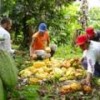
The Farmers Who Abandoned Coca for Cocoa
Amidst the violence of civil war and the illegal coca trade, a handful of Colombian farmers have embraced chocolate production in the Amazon forest.
RIGHTS-COLOMBIA: Victims of State Crimes Speak Out
In the midst of civil war and repression in San Vicente del Caguán, a municipality in southern Colombia, local communities and activists continue to hold forums to draw attention to human rights abuses. What keeps them going?COLOMBIA: Paramilitary Chief Says He Helped Finance Uribe’s Campaign
Former Colombian paramilitary chief and drug lord Diego Murillo, alias "Don Berna", testified in a U.S. court that he helped finance President Álvaro Uribe’s first election campaign, in 2002.RIGHTS-COLOMBIA: Fact-Finding Mission “Shocked”
A delegation of seven British Labour members of parliament and 10 trade union leaders from the U.S., Canada and Britain said they were in a "state of shock" over what they heard during a week-long fact-finding mission to Colombia.RIGHTS-COLOMBIA: “Situation Remains Extremely Serious” – UN Report
Extrajudicial executions, difficulty for victims’ families to gain access to justice, persecution of human rights defenders, kidnappings, and continued armed activity by previously demobilised members of paramilitary groups are the main concerns of the office in Colombia of the United Nations High Commissioner for Human Rights (OHCHR Colombia).
COLOMBIA: Awa Indians Hemmed in by War
Colombia’s FARC guerrillas admitted to killing eight Awá Indians who they accused of being army informants. Expert on military affairs Ariel Ávila said this indigenous community in the war-torn province of Nariño had formed vigilante "self-defence" groups.COLOMBIA: Spurious Cases Against Human Rights Defenders
Six months after human rights defender Julio Avella was put behind bars, a prosecutor reviewing the case threw out the charges against him, which were based on the testimony of former guerrillas and police and army reports, on the grounds that they were "contradictory, incoherent, inconsistent and illogical."
COLOMBIA: Rebels Kill Awa Indians as Army Informants
A local group of Colombia’s FARC guerrillas acknowledged that it had killed eight members of the Awá indigenous group, who it accused of being army informants.COLOMBIA: A Hundred-Year War on Drugs
The anti-drug, anti-insurgent Plan Colombia is, paradoxically, at the heart of the tragedy involving Awa indigenous people who were murdered this month by the FARC guerrillas.COLOMBIA: Ex-Hostage Says FARC Killed 11 Captives
"Why did they kill them? Out of physical cowardice. It's what we call murder. Sheer physical cowardice. It's what we call a war crime," said former lawmaker Sigifredo López, just freed by the FARC, about the massacre of his 11 colleagues on Jun. 18, 2007, when they were hostages of the Colombian guerrillas.
COLOMBIA: Freed Hostage Calls for Peace Negotiations
"At one point I thought we weren't going to find him," said Colombian Senator Piedad Córdoba about Alan Jara, the latest hostage to be freed as a goodwill gesture by insurgents after more than seven-and-a-half years as their captive in the jungle.COLOMBIA: One More Day’s Delay for Civilian Hostages
Alan Jara, the former governor of the central province of Meta, was released by Colombian guerrillas on Tuesday, instead of Monday as originally scheduled. Former regional lawmaker for the western province of Valle del Cauca, Sigifredo López, was scheduled to have been freed on Wednesday, but his handover has now been postponed until Thursday.COLOMBIA: Entire Battalion Dismantled Over Killings of Civilians
The purge of the Colombian army over killings of civilians passed off as guerrilla casualties continues, this time with the dismantling of an entire army brigade and the removal of 11 officers who served in another battalion.COLOMBIA: Hostage Release Plan at a Standstill
"Operation Mistrust" could be the name of the efforts surrounding the planned unilateral release of six hostages by the Revolutionary Armed Forces of Colombia (FARC), which has run aground a month after it was announced.COLOMBIA: Secret Documents Show US Aware of Army Killings in 1990s
Declassified U.S. documents show that the CIA and former U.S. ambassadors were fully aware, as far back as 1990, that the military in Colombia - the third largest recipient of U.S. aid after Israel and Egypt - were committing extrajudicial killings as part of "death squad tactics."COLOMBIA: Conditions in Place for New Hostage Release
Nearly three weeks after the Revolutionary Armed Forces of Colombia (FARC) announced that they would release six hostages, the government of right-wing President Álvaro Uribe has agreed to provide security guarantees for the operation, which is expected to take place this month.« Previous Page — Next Page »





The Week with IPS

NEXT STOP - SDGs
Tracking global progress towards a sustainable world
Tracking global progress towards a sustainable world
