Languages
Thursday, October 8, 2026



News and Views from the Global South
COLOMBIA: Dismal Human Rights Record Has Not Dented Uribe’s Popularity
Colombian President Álvaro Uribe ends his second consecutive term Saturday with 75 percent approval ratings and strong international support reflected by his designation this week as vice chair of a United Nations-appointed international panel to investigate Israel's attack on a flotilla of ships carrying humanitarian aid to Gaza in May.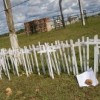
RIGHTS-COLOMBIA: A Cemetery Full of Questions
The most determined attempt by the far-right paramilitaries to establish a presence in this town in central Colombia ended in failure.
COLOMBIA: ‘Let’s Talk About the Disappeared’
Every day, Luz Marina Hache sees her disappeared husband, Eduardo Lorne, in their 25-year-old son. He sleeps the same way, is equally studious, and like his father, he is infuriated by injustice. He has the same beautiful face that she remembers.
COLOMBIA: Paramilitaries Don’t Want to Take the Blame Alone
The so-called para-politics, para-institutions and para-economy in Colombia "have their place in the dock" among the accused, said eight former leaders of ultra-right armed paramilitary groups, now demobilised and charged with crimes against humanity in the nation's decades-long civil war.COLOMBIA: Spying Knows No Borders
Venezuela's Minister of Interior and Justice, Tarek El Aissami, presented a report Oct. 29, 2009, to his country's National Assembly. That report is believed to have resulted, two days later, in the murder of two people on a farm in neighbouring Colombia, near the capital.
RIGHTS: Inter-American Court Finds Colombia Guilty in Senator’s Murder
Time does not heal everything. Finding the Colombian state guilty in the murder of Patriotic Union (UP) Senator Manuel Cepeda, the Inter-American Court of Human Rights considered the 16 years of impunity enjoyed by the masterminds behind the killing an aggravating factor.COLOMBIA: New President-Elect, Same Old Story
Former Colombian Defence Minister Juan Manuel Santos was elected president with the votes of just 30 percent of all voters on the electoral rolls, while turnout stood at a mere 45 percent in this country caught up in a civil war since 1964.
RIGHTS-COLOMBIA: Uribe Lashes Out at Sentence for Senior Officer
Surrounded by a protective phalanx of stern generals and police chiefs, Colombian President Álvaro Uribe assailed a court ruling that sentenced a senior army officer for human rights crimes committed nearly 25 years ago.COLOMBIA: Presidential Results Due in June
Opinion polls on Sunday's presidential elections in Colombia turned out to be correct in predicting a June runoff. But they pointed to a much smaller gap between the two leading candidates.
COLOMBIA: Army Killings Rear Head in Presidential Campaign
Colombian presidential candidate Antanas Mockus said he "shares the horror" over the so-called "false positives" -- young civilians killed by the army and passed off as guerrilla casualties in the military's counterinsurgency campaign.
Q&A: Death Threats for Supreme Court Justices in Colombia
The Supreme Court's opposition to the far-right paramilitary groups' growing control over Colombian society from within the state itself has put it in "real and imminent danger," in the words of former foreign minister Augusto Ramírez Ocampo.
COLOMBIA: Indigenous Justice Put to the Test
Feliciano Valencia, who holds the rank of minister for the Nasa indigenous people in the southwestern Colombian province of Cauca, was arrested Saturday but released on bail.
POLITICS-COLOMBIA: Not Enough Just to Be a Woman
Noemí Sanín, the presidential candidate of Colombia's Conservative Party, who is running second in the polls, has a few advantages over her main rival, the right-wing Juan Manuel Santos, such as extensive experience in foreign relations and in running programmes for poor families and children.
COLOMBIA: Same Paramilitary Abuses; New Faces, New Names
A leading international rights group urged the Colombian government to take action against what it called the "successors" to the far-right paramilitary militias, which continue attacking civilians and human rights defenders.Q&A: “If You Find Yourself in a Minefield, Shout for Help”
Putting on a white t-shirt or wearing olive-green pants can be life-or-death decisions in the conflict zone in the steep Andes mountains in western Colombia where 14-year-old Andrés lives and attends eighth grade.COLOMBIA: US Should Open Its Files on Palace of Justice Massacre
A declassified U.S. State Department cable dated January 1999 blames Colombian soldiers for the killings of civilians rescued by the military operation to retake the Palace of Justice from guerrillas who had seized the building in November 1985.
COLOMBIA: From Espionage to Sabotage – and the Dirty War (Part 3)
For decades now, privacy in personal electronic communications has existed only on paper. But the most serious aspect of the espionage scandal that broke this year in Colombia lies in the use given to the information that was gathered.COLOMBIA: “Proof-of-Life” Videos Feed Hostages’ Families’ Hopes
"You look as good as ever," was the radio message that Olga Valderrama sent over the airwaves to her son, army corporal Antonio Sanmiguel, who is being held captive somewhere in the jungles of Colombia by the FARC guerrillas.COLOMBIA: Spying on Human Rights Defenders
"Coming to Colombia is to enter a world that is always intense, captivating and heart-wrenching at the same time," Susana Villarán, a former member of the Inter-American Commission on Human Rights (IACHR), wrote in April 2008.
Q&A: “Obama’s Agenda Hasn’t Arrived in Colombia Yet”
An agreement between Bogotá and Washington for the U.S. to use seven military bases in Colombia points to the lingering effects of the agenda of former President George W. Bush (2001-2009), because the agenda of his successor, Barack Obama, "hasn't arrived here yet," says Colombian Senator Cecilia López.COLOMBIA: Killings of Indians Continued During UN Rapporteur’s Visit
"Colombia’s indigenous people find themselves in a serious, critical and profoundly worrying human rights situation," says the preliminary report by United Nations special rapporteur James Anaya, who just completed a visit to this country.« Previous Page — Next Page »





The Week with IPS

NEXT STOP - SDGs
Tracking global progress towards a sustainable world
Tracking global progress towards a sustainable world
