Languages
Saturday, August 15, 2026



News and Views from the Global South
MUSIC-CUBA: Rap Calls for ‘Revolution Within the Revolution’
In makeshift studios, Cuba’s hip hop movement keeps on recording music that goes to the heart of the country’s troubles, in spite of the indifference of record companies and the media, and the negative response of society, which is perhaps afraid of hearing its defects exposed in song lyrics.CUBA: Black Women Rap Against Discrimination
They are few in number, but women’s loud chants of resistance against sexism, racism and discrimination against sexual minorities have left an indelible mark on the hip hop movement in Cuba, a little more than a decade old.CUBA: Gradual Changes But No Surprises, A Year On
A year after the announcement that changed life in Cuba in the blink of an eye, this Caribbean island nation continues to defy, as it has so often in the past, expectations about the present and future of its socialist system.RIGHTS-CUBA: Dissident Group Sees No Improvement
The temporary retirement of President Fidel Castro on Jul. 31, 2006 has resulted in no change in "the civil, political, economic and certain cultural rights situation," which continues to be "unfavourable," a dissident human rights group said on Thursday.CUBA: Proposed Reform Would Give Gay Couples Equal Rights
Cuba could become the first Caribbean island nation to recognise the civil and inheritance rights of gay and lesbian couples, if a proposed reform of the Family Code is approved.CUBA-US: Violating the Right to Family Visits in 'Cuban Five' Case
When Olga Salanueva opened the door to her house in Miami, Florida in the early hours of the morning of Aug. 16, 2000, she had no idea that that day would be the last time she saw her husband, René González, and that after three months in custody she would be deported to Cuba, despite her legal residency status in the United States.CUBA: Twenty Years with God and the Revolution
Close to one of the busiest crossroads in the Cuban capital, but peaceful nonetheless, the non-governmental Dr. Martin Luther King Jr. Memorial Centre (CMLK) has been active in Cuban society for two decades, working for a more participative social system.TRANSPORT-CUBA: ‘Camels’ Fade into the Sunset
"Camellos" or camels, a form of urban transport that arose at the worst point of Cuba's economic crisis in the 1990s, appear fated to disappear from the centre of Havana, to the relief of residents and the benefit of the environment.FILM-CUBA: Young New Directors Provide a Fresh Look
Run-down neighbourhoods, cynical, sceptical young people, locals surviving in buildings crumbling around them, people forging new paths in remote mountain villages: these are all fragments of reality that live and breathe in documentaries by a new generation of Cuban filmmakers.CUBA: Dogs Suffer the Mean Streets
More than 20,000 stray dogs can be found on the streets of Cuban cities, their lives threatened by traffic and by violence - human and canine.CUBA-SPAIN: Sending Clear Signals to Europe
With the announcement of a new mechanism for dialogue on human rights, Spain and Cuba issued a clear message to the European Union on how to work towards an understanding with this socialist Caribbean island nation.CUBA: Cracking Down on Irregular Workplace Survival Strategies
Ofelia Hernández spends a large part of her workday away from her desk, visiting an office on housing problems in an attempt to find a solution for her own troubles, while Antonio López (not his real name) uses the tools from the government machine repair shop where he is employed to do his own moonlighting jobs on the weekends.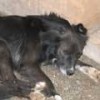
Stray Dogs Swarm Cuban Streets
Most of the dogs running loose on Cuba's streets have owners who aren't looking after their canine friends. Organized dog fights or even strychnine injections are just some of the threats the dogs face.MUSIC-CUBA: Hip Hop Sidelined but Still Rapping
Cuban hip hop music is past its peak, and is struggling to survive in a context where it lacks performance venues, receives only weak institutional support, and has to compete with more commercial music styles alien to the critical discourse that the movement has promoted since its origins.CULTURE-CUBA: Exorcising the Ghosts of the Past
The expansion of a debate among a group of intellectuals in Cuba that began as an e-mail discussion at the beginning of the year would seem to demonstrate the need to bury once and for all the cultural restrictions of the past and open up spaces for dialogue, debate and diversity.CUBA: Snail’s-Pace Internet Is Washington’s Fault
Authorities in Cuba blame the U.S. embargo for the high local cost of Internet connections, and for the serious problems in web services in this socialist Caribbean island nation.CUBA: Less Gaunt Castro Appears with Chavez on TV
A new "surprise" visit by Venezuelan President Hugo Chávez to Cuba served as a pretext to show images of his friend and host, Fidel Castro, up and about.CUBA: Despite Underlying Current of Uncertainty, Life Moves On
A strange sensation of normality seems to reign in Cuba, interrupted only by isolated tensions, doubts about the future and the deafening silence on the part of the government and the state-controlled media with regard to certain issues like Fidel Castro's convalescence.US/CUBA: Back to the Brickbats
The volume level of the dispute between Cuba and the United States, after a lull that followed the announcement of President Fidel Castro's illness on Jul. 31, has begun returning to its normal high decibels since early January.FILM: Cuba’s Almodovar Girl
She swept the floor, emptied the ashtrays and watched the plates of food served by the waiters with hungry eyes. Afterwards, when the lights were dimmed and the music came on, she appeared on stage and sang "I want to be an Almodóvar girl."RIGHTS-CUBA: Fewer Political Prisoners, But Little Progress
The number of people in prison for political reasons in Cuba fell last year, but only by an insignificant margin, and there is no sign of a change in official policy since the "temporary" withdrawal from public life of President Fidel Castro due to illness last July, dissident sources said.« Previous Page — Next Page »


The Week with IPS

NEXT STOP - SDGs
Tracking global progress towards a sustainable world
Tracking global progress towards a sustainable world
