Languages
Saturday, August 15, 2026



News and Views from the Global South
CHALLENGES 2006-2007: Cuba on the Threshold of a Critical Year
After a year marked by great uncertainty as to the future, Cubans are awaiting 2007 with a sense that it will bring major changes to the lives of every one of the 11.2 million people who live under the government of Fidel Castro.CHALLENGES 2006-2007: Cuba – on the Threshold of a Critical Year
After a year marked by great uncertainty as to the future, Cubans are awaiting 2007 with a sense that it will bring major changes to the lives of every one of the 11.2 million people who live under the government of Fidel Castro.CUBA-CASTRO: Wanna Bet?
Betting on the health of Cuban President Fidel Castro, his reappearance in public and his return to the helm is gaining in popularity with the approach of Dec. 2, the day Castro himself chose to celebrate his 80th birthday.CUBA: Faith, Farming and the Environment
Cuban pastor Raymundo García surveys the well-tended fields of crops, the artificial lake and the ancient trees that he managed to save from felling, and dreams of extending the limits of El Retiro (The Retreat) and turning the dry fields around it green.HEALTH-CUBA: War on Mosquitoes Continues During Global Summit
The start of the week-long 14th summit of the Non-Aligned Movement (NAM) forced the Cuban government to suspend its spraying with military planes, but it has not cut short the intense offensive against the Aedes aegypti mosquito, which carries the potentially deadly dengue virus.POLITICS: Non-Aligned Summit Opens Amidst Suspense Over Castro
The week-long 14th summit of the Non-Aligned Movement (NAM) opened Monday with the usual suspense over whether or not Cuban President Fidel Castro would be participating, although heightened this time by the fact that he is recovering from major surgery and is the leader of the host country.POLITICS: Non-Aligned Summit Opens Amidst Suspense Over Castro
The week-long 14th summit of the Non-Aligned Movement (NAM) opened Monday with the usual suspense over whether or not Cuban President Fidel Castro would be participating, although heightened this time by the fact that he is recovering from major surgery and is the leader of the host country.CUBA: Why Some Leave, or Want to, and Others Stay
Almost every evening, Alina Díaz goes down to the seashore in the Cuban capital to contemplate the deep Caribbean waters that two years ago swallowed up her son Abel. She still cannot understand why the 21-year-old student got involved in the adventure that would take him away from his family and cost him his life.CUBA: Why Some Leave, or Want to, and Others Stay
Almost every evening, Alina Díaz goes down to the sea shore in the Cuban capital to contemplate the deep Caribbean waters which, two years ago, swallowed up her son Abel. She still cannot understand why the 21-year-old student got involved in the adventure that would take him away from his family and cost him his life.CUBA: Troop Readiness Boosted Since Castro Stepped Aside
Cuba has "substantially" increased the military capacity and readiness of its troops to handle any potential U.S. aggression, following the announcement of President Fidel Castro's illness and temporary handover of power.ENVIRONMENT-CARIBBEAN: Beaches and Marine Life in Danger
The image of beach paradise, which for more than two decades has been the economic mainstay of many Caribbean countries, could disappear as a result of the increasingly frequent hurricanes and rising sea levels, but also the consequences of human activity.POLITICS-CUBA: Raul Castro – Still in the Shadows
When a journalist asked Raúl Castro in 1993 why he had not granted an interview to the Latin American press in more than 30 years, Cuba's second most powerful leader's simple response boiled down to "we have Fidel for that."CUBA: Everything Under Control…?
No rumours had hinted at any bombshell, the army did not increase its presence in the streets, and Cuban President Fidel Castro did not seem any weaker than usual at his Jul. 26 speech. Indeed, his announcement that he would temporarily cede power took the world by surprise, bolstering speculation that Cuba's socialist government is preparing for the worst.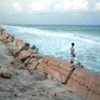
Caribbean Beaches and Marine Ecosystems in Danger
Stricter laws are needed to protect beaches and prevent the degradation process. There is an imbalance in investment in the tourism industry and the national programs for sustainable tourism.CUBA-U.S.: Faith Groups Tell Bush to “Love Thy Neighbour”
As the United States again toughens its sanctions against Cuba, in what the Fidel Castro government says amounts to a "declaration of war," another caravan organised by the inter-faith foundation Pastors for Peace arrived in the island nation's capital with 100 tonnes of humanitarian aid.CUBA: Corruption Crack-Down Aims High
The "war on corruption" declared by President Fidel Castro late last year has shaken the uppermost reaches of the Cuban Communist Party (PCC), with a 12-year prison sentence recently handed down to a former member of the country's top government body.CUBA-US: New Squeeze on Family Remittances
An increased tax on remittances sent to Cuba in dollars will bolster the flow of foreign exchange into state coffers, but will create further difficulties for the hundreds of thousands of families who are divided between Cuba and the United States.HEALTH-CUBA: Abortion Competes With Contraceptives
Many women in Cuba resort to abortion, 40 years after it was decriminalised, as though it were just another contraceptive method. Some even prefer it to condoms, the pill or intrauterine devices (IUDs), without giving a thought to the risks involved or the ethical aspects.CUBA: Soap Opera Spotlights Sexual Diversity
"La cara oculta de la luna" (The Dark Side of the Moon) - the latest soap opera to be beamed into thousands of Cuban homes - will forever be remembered as triggering unprecedented social debate on sexual diversity and homophobia in the country.CUBA: Bringing Theatre to Remote Communities
In a small village surrounded by Cuba's largest wetland, the Korimakao Community Arts Group puts on high quality performances combining theatre, dance, music, lights, sets and costumes, making the same effort they would make if they were in the most prestigious theatre in the capital.MIGRATION-CUBA: Mothers Face Legal Action for Risking Children’s Lives
Cuban parents who endanger the lives of their children in an attempt to leave the island face stiff penalties under a law that protects children. Seven Cuban women are currently in custody facing legal proceedings for that reason.« Previous Page — Next Page »


The Week with IPS

NEXT STOP - SDGs
Tracking global progress towards a sustainable world
Tracking global progress towards a sustainable world
