Languages
Wednesday, September 23, 2026



News and Views from the Global South
LATIN AMERICA: NGOs Call for Regional Whale Sanctuary
A score of Latin American whale conservation organisations have asked the Chilean senate to support their proposal to create a whale sanctuary in this country’s territorial waters, ahead of the next meeting of the International Whaling Commission (IWC) to be held in Chile in 2008.LATIN AMERICA: Historic Chance to Get Rid of Hunger
High economic growth rates, political will and laws aimed at ensuring the right to food will not be enough to eradicate hunger in Latin America by 2025, according to the United Nations Food and Agriculture Organisation (FAO), which calls for ongoing investment, improved coordination of programmes and support for family farming.CHILE: International Campaign for a Dam-Free Patagonia
"Patagonia is THE symbol of nature in the world," says U.S. lawyer Aaron Sanger, who is leading an international campaign against Hidroaysén, a joint venture that is planning to build five huge hydroelectric stations in the south of Chile.CORRUPTION-CHILE: Pinochet’s Family in Jail
A Chilean judge ordered the arrest of the widow of former dictator General Augusto Pinochet (1973-1990), his five children, and 17 of his closest civilian and military associates on corruption charges Thursday.CHILE: Mega Dams, Mega Impacts, Mega Half-Truths
An organisation in the Aysén region in the south of Chile which opposes the building of five hydroelectric stations on two large rivers has made a documentary film about the reactions of communities affected by dams and power lines in Chile and Argentina.CHILE-PERU: Decision to Extradite Fujimori Sets International Precedent
Human rights groups applauded the Chilean Supreme Court’s decision Friday to extradite former Peruvian president Alberto Fujimori (1990-2000) to be tried in his country for gross human rights abuses, noting that it sets an international legal precedent.LATIN AMERICA: Women Victims of Violence Face Hurdles to Justice
Violence against women "is one of the most serious public safety problems in the region," the Inter-American Commission on Human Rights (IACHR) Rapporteur on the Rights of Women said in the Chilean capital.MIGRATION-CHILE: Back Home, Things Are Even Worse
"I can't go back to my own country because things are really bad there," says Gloria, a 25-year-old Peruvian woman who came to Chile less than a year ago, pregnant with her third child. But her life here is no better: she is an undocumented immigrant with no job, living in a borrowed room.RIGHTS-CHILE: Baby Steps, But Progress Nonetheless
Human rights groups in Chile are celebrating legal rulings in favour of victims of the 1973-1990 dictatorship of General Augusto Pinochet, and announcements by President Michelle Bachelet in the same vein. But they are critical of the slow pace of justice and the amount that still needs to be done.LATIN AMERICA: As Citizen Oversight Spreads
Citizen oversight of public institutions and authorities is expanding in various shapes and forms in Latin America, but in order to continue spreading, the public must become more aware of their rights and their ability to take a more proactive stance in guaranteeing them, say experts.CHILE: Rediscovering Nobel Laureate Gabriela Mistral
A treasure trove of poems, letters and personal effects of Chilean poet Gabriela Mistral, which have lain untouched for 50 years, have been donated to the Chilean state and may contribute to a revaluation of the work of the first Latin American woman to be awarded the Nobel Prize for Literature.CHILE: Equal Opportunity Employers’ Seal of (E)quality
"Chile - Growing in Equality" is the name of the campaign launched by the government of Michelle Bachelet to advertise its programme "Iguala.cl", aimed at certifying state and private companies that comply with gender equity standards for their employees.BOLIVIA-CHILE: How Close Is the Sea?
Bolivia’s recently sacked consul in Chile, Roberto Finot, triggered a flurry of speculation about how close the two countries are to agreeing on a mechanism that would grant Bolivia access to the sea, which it lost to Chile in a 19th century war.
Global Fight to Protect the Ozone Layer Celebrates 20 Years
The Montreal Protocol on ozone-depleting substances eliminated emissions of around 11 million tons of greenhouse gases, benefiting the climate system, the Protocol's executive secretary Marco González told Tierramérica.CHILE: Arica Residents Tired of ‘Undrinkable’ Tapwater
Residents of the city of Arica, in northern Chile, are demanding regulations to limit the amount of boron in their drinking water, while the authorities are waiting for the results of a study to determine whether it has a harmful effect on human health.CHILE: Copper Miners’ Strike May Set a Precedent for Labour Rights
The 35-day strike by roughly half the 28,000 subcontracted workers at Chile’s state National Copper Corporation (CODELCO) may set a precedent for labour rights in the country, experts say.CHILE: State Upholds Gender Discrimination Within Marriage
Discrimination against married women under the law providing for joint ownership of marital property led Sonia Arce Esparza to take the Chilean state to the Inter-American Commission on Human Rights (IACHR) in 2001. An amicable agreement reached in March this year has not been implemented.RIGHTS-CHILE: UN on the Offensive Against Iraq Mercenaries
Mercenary recruitment agencies that send former soldiers to Iraq have been accused in Chile of human right abuses, illegal association, possession of explosives and unauthorised use of army weaponry, and are the target of a special United Nations mission.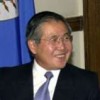
CHILE-PERU: Despite Judge’s Ruling, Fujimori No Nearer to Lima
In a surprise move, Chilean judge Orlando Álvarez this Wednesday turned down Peru's request for the extradition of former Peruvian President Alberto Fujimori (1990-2000), disregarding a recommendation from Chile's own Supreme Court prosecutors.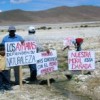
CHILE: Aymaras Don’t Want to Disappear
Twenty years ago, close to 100 indigenous Aymara people lived in the village of Cancosa, but today only 10 remain. The same is true of many indigenous communities in the Chilean Altiplano, as their members have moved out in search of jobs and educational opportunities.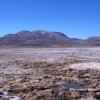
CHILE: Aymaras Vow Mining Co. Will Restore Wetland
The Aymara community of Cancosa on the Chilean Altiplano region of Tarapacá, bordering Bolivia, will spare no effort in its struggle to rehabilitate a wetland dried out by the Cerro Colorado Mining Company (CMCC), an affiliate of the Anglo-Australian BHP Billiton company.« Previous Page — Next Page »


The Week with IPS

NEXT STOP - SDGs
Tracking global progress towards a sustainable world
Tracking global progress towards a sustainable world
