Languages
Wednesday, September 23, 2026



News and Views from the Global South
CHILE-ARGENTINA: Pascua Lama Mining Project on Hold
Nearly two years after winning environmental approval from the Chilean government, the controversial Pascua Lama gold mining project of the transnational Barrick Gold Corporation remains without a launch date.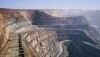
Pascua Lama Mining Project On Hold
Differing tax rules in Argentina and Chile, lawsuits and other obstacles have created uncertainty for the launch of the controversial gold mining project in Pascua Lama, high in the Andes Mountains, by Barrick Gold Corporation.CHILE: Copper Boom – Cui Bono?
According to global forecasts, the price of copper, Chile’s main export, will remain high in 2008 thanks to strong demand from China. But just who will benefit from this bonanza is up for debate.RIGHTS-CHILE: Mapuche Land Conflict Stained With Blood
An indigenous Mapuche university student was shot and killed Thursday in southern Chile in a confusing incident with the police. In the meantime, an imprisoned activist who is on a hunger strike for the Mapuche cause is at death’s door after 82 days of fasting.ARTS-CHILE: Shedding Light on the Torturers
"Where Are They?" is the title of an installation by Chilean artist Iván Navarro, prompting visitors to pick out, from a gigantic word search puzzle, the names of 332 agents who tortured and murdered opponents of the 1973-1990 dictatorship of General Augusto Pinochet.ENVIRONMENT: Chile Finally Has a Native Forests Law
Environmental groups in Chile are pleased by the approval of the Native Forest Recovery and Forestry Development Act, which took 15 years to make its way through Congress. But they have not forgotten the unaddressed pending issues.CHILE: Pots and Pans Against Climate Change
The vegetarian restaurant El Huerto, here in the Chilean capital, is the country's first to take steps towards reducing its production of climate-changing emissions.LATIN AMERICA: The Hand that Rocks the Cradle… Forfeits Equal Pay
To avoid reproducing gender inequality, governments should implement integrated policies that recognise, for instance, the unpaid work done by women, according to an ECLAC report on the fulfilment of the third Millennium Development Goal (MDG).RIGHTS-CHILE: Workers’ Massacre More Relevant Than Ever 100 Years On
Dec. 21 will be the 100th anniversary of a massacre of thousands of striking workers of the then-flourishing saltpetre industry in northern Chile, carried out by military troops on the order of the government, an event known as the massacre of the Santa María de Iquique school.
Pots and Pans Against Climate Change
To minimize its impact on the climate, a restaurant in Santiago is making more efficient use of heat and energy, purchasing "clean" electricity and carbon certificates.CHILE: Indigenous Hunger Strikers in Critical Condition
Four Mapuche community leaders and an activist are in critical condition on the 58th day of a hunger strike in the southern Chilean prison where they are serving time on charges of terrorism. Two of them had already fasted for more than two months in 2006.CHILE: Stepping Up the Focus on Alternative Energy
Chile is rich in natural resources with energy potential, like the wind, ocean and rivers, the sun and biomass, but the country only began to take them into account in 2004, while importing 72 percent of the energy its population consumes.ENVIRONMENT-CHILE: Riders Against the Dams
A group of activists set out on a nine-day horseback ride Monday between two cities in the southern Chilean region of Aysén to protest the construction of five hydroelectric dams on two large rivers in the area.
Chile in Search of Its Energy Treasure
Chile's efforts to develop its non-conventional energy resources are well under way, but are still insufficient, say experts and environmentalists.LATIN AMERICA: And Now For Some More Ambitious Anti-Poverty Goals
Sixty-eight percent of the time available for reaching the first Millennium Development Goal (MDG), which is to halve the proportion of people living in extreme poverty by 2015, has expired, and Latin America has gone 87 percent of the way towards achieving it. Countries that have advanced the most should now work on halving total poverty, ECLAC says.IBERO-AMERICA: Summit on Track to Protect Migrants’ Social Rights
The Multilateral Convention on Social Security, to be signed at the 17th Ibero-American Summit in Chile, is an important step toward improving the quality of life of poor people in this community of nations, according to its governments.CHILE: Breath of Fresh Air for Community Radio Stations?
After a seven year wait, community radio stations in Chile are celebrating a draft law that would regulate and promote their activities, which the government of President Michelle Bachelet has sent to Congress. But they remain aware of the hurdles that still lie ahead.ENVIRONMENT-LATIN AMERICA: Same Old Problems
Urban poverty and chaotic urban growth, loss of biodiversity, degradation of marine ecosystems and water and air pollution are just a few of the serious environmental problems that continue to plague Latin America and the Caribbean, the U.N. Environment Programme said Thursday in a new global report.CHILE: Amnesty for Immigrants a Stride Forward, Not a Magic Bullet
Immigrant rights advocates welcomed the amnesty for undocumented Latin American immigrants offered by the Chilean government, but said it is not a cure-all.CHILE: Deaths of Teens Highlight Problems in Juvenile Justice System
The deaths of eight teenagers between the ages of 14 and 18 who set fire to the juvenile detention centre where they were being held rekindled the debate on the conditions in which a new law on the penal responsibility of adolescents began to be implemented four months ago.
“We Must Seek Alternatives to the Aysén Dams”
The government should hire consultants to audit the dams and environmental projects, says Chilean Fernando Avila, expert in corporate environmental responsibility.« Previous Page — Next Page »


The Week with IPS

NEXT STOP - SDGs
Tracking global progress towards a sustainable world
Tracking global progress towards a sustainable world
