Languages
Friday, September 18, 2026



News and Views from the Global South
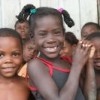
LATIN AMERICA: Food Price Inflation Threatens Children
Child malnutrition in Latin America and the Caribbean will be aggravated by global food shortages, even though the region produces much more food than it consumes, say experts and officials.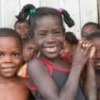
Food Price Inflation Threatens Children
Breast feeding, enriched foods and monitoring of children's growth are among the basic weapons for fighting a potential new wave of childhood malnutrition in Latin America, say experts.LATIN AMERICA: South-South Cooperation to Fight Child Malnutrition
Cooperation between Latin American countries, which is cheap, efficient and horizontal, could fast-track the fight against child malnutrition, Nils Kastberg, the regional director of the United Nations Children’s Fund (UNICEF), said at a conference held in the Chilean capital.LATIN AMERICA: 60 Years On, ECLAC Still Has Key Role to Play
Among the tasks facing the Economic Commission for Latin America and the Caribbean (ECLAC), which is celebrating its 60th anniversary this year, is to contribute to the design of a development strategy to make the best use of the region’s current bonanza.CHILE: Environmentalists Withdraw Backing from Government
Twenty-three environmental groups in Chile withdrew their support from President Michelle Bachelet, complaining that she had failed to live up to an agreement they had signed with her during her election campaign.LATIN AMERICA: Can Rising Food Prices Help Small Family Farms?
Rising global food prices could represent an opportunity for the development of small-scale family farming if national governments provide effective support as part of long-term policies, say experts from various agencies.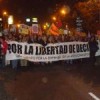
CHILE: Thousands Protest Ban on "Morning-After" Pill
More than 15,000 people marched in the Chilean capital Tuesday evening to protest a Constitutional Court ruling that banned the free distribution of the "morning-after" pill by the public health system.ECONOMY-LATIN AMERICA: From Optimism to Concern
The Economic Commission for Latin America and the Caribbean (ECLAC) called on countries in the region Tuesday to take urgent measures to deal with the rising cost of food, which threatens to tip an additional 15 million people into extreme poverty.CHILE: Fishermen Clash Over Pulp Mill Waste Pipeline
A group of mainly Mapuche indigenous fisherfolk opposed to the installation of a pipeline to dump waste from the Celulosa Arauco y Constitución (Celco) paper pulp mill into the ocean in southern Chile complain that they have been the target of attacks by other fishermen who reached an agreement for a payout from the company.CHILE: Bachelet Unveils New Indigenous Policy
Chilean President Michelle Bachelet has announced a new policy for indigenous people, which includes novel approaches to political participation and the protection of natural resources in the hands of the country’s native groups.CHILE: Environmentalists Defend Patagonian Wilderness from Dams
Robert Kennedy, senior attorney for the U.S.-based Natural Resources Defence Council (NRDC), is in Chile to support opponents of a plan for building five dams in the southern region of Patagonia.ENVIRONMENT-CHILE: Experts Call for Stronger Anti-Smog Measures
"It’s as if we were swimming at a beach unfit for bathing. For four or five months a year, the air is unfit to breathe in the Chilean capital, and the government throws out a lifejacket when people are in difficulties, so that they don’t drown," Patricio Pérez of the University of Santiago told IPS.CHILE: Bachelet to Help Seek Humanitarian Solution for Colombia’s Hostage Crisis
Chilean President Michelle Bachelet promised to work "quickly" and "efficiently" to obtain the release of the hostages held by the FARC, according to Juan Carlos Lecompte, the husband of former Colombian presidential candidate Ingrid Betancourt, who was taken hostage by the Colombian guerrilla group in 2002.ENVIRONMENT-CHILE: Campaign Against Dams – and Against the Clock
On the International Day of Action for Rivers, Chilean environmental groups delivered an open letter Friday to President Michelle Bachelet describing the serious environmental, social and cultural impacts that they say are caused by large hydroelectric dams.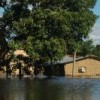
SOUTH AMERICA: La Niña and Climate Chaos
It is still difficult to predict the local impacts of the cyclic climate phenomenon known as La Niña, which has been responsible for catastrophic floods in Bolivia, Ecuador, Peru and Argentina, and - on the other extreme - severe drought in Chile.
La Niña and Climate Confusion
While the climate cycle known as La Niña gradually winds down over the equatorial Pacific, its local consequences have surprised experts in the countries most affected.
LATIN AMERICA: Justice Disserved for Indigenous Prisoners
While Mapuche Indians in Chile complain that the government has "criminalised" their land-rights protests, many indigenous people are in prison in Mexico and Peru because there were no translators to explain why they were on trial.
RIGHTS-CHILE: In the Mapuche People’s Heartland
Before the latest outbreak of protests and unrest among Mapuche Indians in the southern Chilean region of Araucanía, IPS visited the village of Temucuicui, whose residents have complained for years about judicial persecution and police brutality in response to their claims to their ancestral land.CHILE: Anti-Discrimination Bill Undermined by the Right
The Chilean Movement for Homosexual Integration and Liberation (MOVILH), together with members of Congress belonging to the centre-left governing coalition parties, have complained that conservative groups are attempting to water down an anti-discrimination bill.
HEALTH-CHILE: Government Finances Mapuche Medical Service
A conventional hospital and a Mapuche medical centre, run by traditional healers who examine urine and prescribe infusions, coexist at the Intercultural Health Complex in the southern Chilean region of Araucanía.
Government Finances Mapuche Medical Service
The residents of a region in southern Chile can choose from a menu of medical services at a state-run center, including Western medicine or indigenous medicine.« Previous Page — Next Page »


The Week with IPS

NEXT STOP - SDGs
Tracking global progress towards a sustainable world
Tracking global progress towards a sustainable world
