Languages
Friday, September 18, 2026



News and Views from the Global South
CHILE: Salmon Farm Workers Left Out in the Cold
While non-governmental organisations appreciate the Chilean government's efforts to improve hygiene and environmental conditions in the salmon industry, they are calling for an end to the expansion of salmon farming and solutions for thousands of workers who lost their jobs because of a crisis in the sector.CHILE: Keeping Indigenous Languages Alive
"Mari, mari!" shout the excited group of 20 Chilean, Peruvian and Ecuadorean three- and four-year-olds, using the Mapuche language greeting to welcome a visitor to their intercultural day care centre in Santiago.CHILE: Exhibit to Celebrate Indigenous Art
More than 100 artists from Chile’s nine indigenous groups will take part in the second biennial exhibition of indigenous art in the capital Oct. 17-Nov. 2, which hopes to draw at least 30,000 visitors.
HEALTH: Safe Sex With HIV – and Without a Condom?
The Swiss Federal Commission for HIV/AIDS set off a small firestorm of debate by asserting that people living with the virus can have sexual relations without a condom and without endangering their uninfected partners, under certain conditions.
Safe Sex With AIDS and Without a Condom?
People who are HIV positive but who are undergoing antiretroviral therapy do not transmit the virus, said the top Swiss authority in HIV/AIDS. In most of the world, the statement sounded like permission to abandon the best protection against the epidemic: the condom.HEALTH: AIDS Meet – Fine Words, Few Concrete Actions
Governments, international bodies and civil society renewed their commitment to fighting HIV/AIDS at the 17th International AIDS Conference, but they will have to work hard in order for this commitment to be reflected in concrete policies, especially on prevention.HEALTH: Indigenous People Speak Out Clearly on AIDS
"In my community, living with HIV is synonymous with death," Fernando Solís, a 34-year-old member of the Cuna ethnic group in Panama, told IPS. Solís, who was diagnosed four years ago, is now working in prevention efforts among other young indigenous people, which he described as "the key to eradicating the epidemic in our communities."HEALTH: Stepping Up the Response to AIDS
It is necessary to evaluate the current global architecture for responding to the AIDS epidemic, move forward with studies on HIV rates, and implement effective prevention strategies, said the experts meeting at the 17th International AIDS Conference, which opened Sunday in Mexico.
CHILE-PERU: Preserving Potatoes More Important than Age-Old Dispute
Policies to get small farmers involved in saving, preserving, producing, marketing and genetically improving potatoes should take precedence over the age-old dispute between Chile and Peru about where potatoes originated, experts from both countries say.
CHILE: Declaring War on Pigeons
The cities of the world are ideal habitat for the proliferation of the pigeon, or rock dove, a picturesque species that actually poses health and environmental risks.
War on Pigeons
Pigeons have become a serious environmental problem in many cities. Experts warn that allowing hunting to reduce their numbers is not enough.
ENVIRONMENT: Profit in Watching – Not Hunting – Whales
Eighteen Latin American countries are currently involved in whale and dolphin watching tourism, which brings in about 278 million dollars a year. But experts say there is a lack of standards, research and education to ensure that it is a sustainable activity.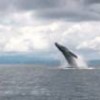
Profit in Watching — Not Hunting — Whales
More than one million tourists will go whale watching this year in Latin American waters, an activity that is exciting for the public and profitable for tour operators.ENVIRONMENT: Is Whale Conservation Negotiable?
Whale conservation organisations attending the 60th meeting of the International Whaling Commission (IWC) in the Chilean capital have reacted cautiously to a decision by the organisation’s member countries to create a small negotiating group to determine the future of whales.ENVIRONMENT: Whaling Commission Seeks Consensus on Future
The International Whaling Commission’s (IWC) 60th annual meeting, which is testing the future of the organisation itself, kicked off this week in Chile with a strong conservationist message from President Michelle Bachelet.LATIN AMERICA: Quality of Life at School Boosts Learning
The school environment is the factor that makes the greatest difference in student learning in Latin America and the Caribbean, according to UNESCO’s Second Regional Comparative and Explanatory Study (SERCE). Equality in the education system, however, is still a distant goal.RIGHTS-CHILE: Growing Outcry Over Filmmaker’s Arrest
There is growing international alarm over the arrest of Chilean filmmaker Elena Varela, who was taken into custody by police a month ago while working on an investigative documentary on the conflicts between lumber companies and the Mapuche indigenous people in southern Chile.RIGHTS-CHILE: Amnesty Report Highlights Impunity
The Amnesty International Report 2008 on the state of the world’s human rights, released Wednesday, expresses disappointment in Chile’s delay in seeking truth, justice and reparations for the victims of crimes committed during the dictatorship of General Augusto Pinochet (1973-1990).RIGHTS-CHILE: Historic Mass Arrest of Soldiers
In an unprecedented decision, Chilean Judge Víctor Montiglio ordered the arrest of 98 former members of the security forces in connection with the abduction and killing of 42 leftists in 1974.CHILE: Courts Active in Human Rights Cases, but Results Mixed
A concert was held in the Chilean capital Monday to protest a judge’s decision to close the case involving the murder of folksinger Víctor Jara, who was killed by the dictatorship of Augusto Pinochet 35 years ago.CULTURE-CHILE: Free Book Selections for 400,000 Families
The Chilean government has begun distributing carefully selected packages of books to thousands of low-income families. But the programme aimed at promoting reading is not without its detractors, who question the extent of its real impact.« Previous Page — Next Page »


The Week with IPS

NEXT STOP - SDGs
Tracking global progress towards a sustainable world
Tracking global progress towards a sustainable world
