Languages
Thursday, September 17, 2026



News and Views from the Global South
Nobody Is Predicting Cleaner Air for Santiago
Santiago prepares for a winter predicted to be at least as harsh as last year in terms of air pollution.
CHILE: Controversial Fuel Taxes and Subsidies
In 2008, Chile’s state coffers took in just over one billion dollars from the specific tax on fuels. But at the same time, the government injected 700 million dollars into a fund that year to shore up fuel prices and made another 500 million available in case the price of oil continued to rise.CHILE: Progress for Women, But Still a Yawning Gap
With one year to go in office, women's groups and civil society organisations report positively on Chilean President Michelle Bachelet's government policies to promote gender equity. But there is still much to be done, they say.
CHILE: Biofuels Head to the Forests
Chile has set its sights on producing second-generation plant-based fuels from forest biomass within the next five years. But before that it must consider the environmental and socioeconomic impacts of such an endeavour, warn experts and activists.
Biofuels Head to Chile's Forests
Chile wants to begin distilling fuels with raw material from the forests -- a new technological area with many unresolved questions.
Q&A: Water Pushed to the Limit
When it comes to water, "humanity does not have the full awareness of the danger it is facing and will only act under extreme circumstances. The bad news is that those extremes are drawing near," Manuel Baquedano, president of the Chilean non-governmental Institute of Political Ecology, told Tierramérica.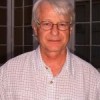
Q&A: "We Need to Let the World Social Forum Evolve"
At the World Social Forum "we have tried new formulas," like holding meetings in different regions, but "we cannot repeat the same things every year," said French activist Henri Rouillé d'Orfeuil, who believes the responses generated by the upcoming edition of the global meeting should effectively address the current global crisis.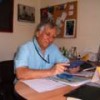
Water Pushed to the Limit
The World Water Protocol, which seeks inclusion in the negotiations of the post-Kyoto climate treaty, underscores the urgency of regulating a scarce resource, a common good shared by all humanity.CHILE: Ex Political Prisoners in Therapeutic Theatre
A group of former political prisoners in Chile will become actors and actresses this month to heal the wounds left by the 1973-1990 dictatorship. They will be performing a cycle of plays written in torture camps and in exile.HEALTH-LATAM: Too Many Women and Children Dying
"Latin America is not in the tragic conditions of the least developed countries, but an average rate of 130 maternal deaths per 100,000 live births is very high," UNICEF representative Egidio Crotti told IPS.CHILE: End of the Copper Boom
Chile’s anti-crisis plan, announced this week, is based on windfall copper earnings saved up over the last few years. But soaring copper prices are a thing of the past, due to the global economic meltdown that originated in the United States, say analysts.ECONOMY-CHILE: Workers Nervous, Despite Anti-Crisis Plan
The four billion dollar economic stimulus plan announced by Chilean President Michelle Bachelet has majority support, but trade unions are still worried about mass layoffs.RIGHTS-CHILE: False Disappearances Trigger Debate on Truth Commissions
A debate is on in Chile as to whether to reopen the truth commissions that documented the victims of the 1973-1990 dictatorship, after four cases of false disappearances were confirmed.CHILE: Best Christmas Gift – a New House, Built by New Friends
Before the volunteers showed up at her house, Pamela Peña was nervous. She was embarrassed for others to see the poverty that her family lived in. But once the work started, she relaxed and enjoyed the unexpected Christmas present.CHILE: Finding a Place for Memory
Chile’s socialist President Michelle Bachelet recently laid the foundation stone for the Museum of Memory and Human Rights, thus coming one step closer to carrying out one of the projects she has put a priority on, which has however given rise to criticism and reservations from both ends of the political spectrum.ENVIRONMENT-CHILE: Widespread Opposition to Power Plants
Not only the five mega-dams planned for two pristine rivers in southern Chile have drawn opposition from environmentalists, local residents and indigenous groups, but other major hydropower and thermoelectric projects have as well.LATIN AMERICA: Poverty Rates Likely to Rise
Two million people in Latin America and the Caribbean were lifted out of poverty in 2008, but three million poor people fell into extreme poverty, according to a new report by the regional United Nations agency ECLAC.
ENVIRONMENT-LATIN AMERICA: Personal Crusades for Nature
Elba Muñoz rescues and cares for mistreated monkeys in Chile; Trinidad Vela revived a dry riverbed and saved her Peruvian community from drought; Rubén Pablos has spent 12 years restoring the native Patagonian forest in southern Argentina; and Angela Corvea is cultivating awareness about the environment in Cuba.CLIMATE CHANGE-CHILE: Govt Plan Falls Short, Say Activists
The Chilean government’s 2008-2012 National Climate Change Action Plan presented by President Michelle Bachelet failed to satisfy local environmental and citizen groups.CHILE: Salmon Industry Workers Demand Subsidies
Workers in Chile’s salmon industry are demanding that the national government grant assistance to thousands of the sector’s workers who have been laid off due to the sanitary crisis affecting the sector. With the aim of pressuring socialist President Michelle Bachelet, the workers have announced that they will soon begin a hunger strike.Q&A: “Young People Are Invisible Until They Become a Problem”
Latin American and Caribbean countries with specific laws and policies on young people must now move on to concrete actions, international consultant Dina Krauskopf told IPS in this interview.« Previous Page — Next Page »


The Week with IPS

NEXT STOP - SDGs
Tracking global progress towards a sustainable world
Tracking global progress towards a sustainable world
