Languages
Tuesday, October 6, 2026



News and Views from the Global South
Social Networking Sites Mobilise Mexicans Fed Up with Violence
Thousands of people took to the streets in 20 cities across Mexico Wednesday to protest the wave of drug-related killings, in demonstrations triggered by the murder of the son of poet Javier Sicilia, in another show of the power of social networking sites in channelling public outrage.
MEXICO-US: Little Spillover of “Narco-Deaths”
In the U.S. city of El Paso, Texas the media sounded the alarm: six murders committed in just two months, more than the 2010 total of five. Just across the Mexican border, in the sprawling border city of Ciudad Juárez, no one doubts that this year's homicide rate will surpass last year's record: 3,111.MEXICO: Eco-Friendly Livelihoods for Women in the Sierra Madre
They live in a town with an apt name, Soledad (Solitude) de Guadalupe, of just 50 houses, most of which are inhabited by women on their own, in the Sierra Madre mountains in the small state of Querétaro in central Mexico.MEXICO: “They Don’t Want Their Town to Vanish” – Underwater
The people of three towns that would be flooded by the El Zapotillo dam to be built in the western Mexican state of Jalisco have refused to be relocated and are fighting to save their homes.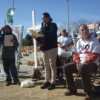
MEXICO: Fasting for Life in Land of Death
"The moral reserve of this country is low. People have let too many things happen without taking to the streets...and they continue to let them go by," peace activist Pietro Ameglio told IPS in this Mexican border city.
Mexico Tempted to Shift From Tortillas to Ethanol
Farmers' protests and the rise in corn tortilla prices in late December put temporary brakes on the Mexican Senate, which was preparing to lift the national ban on utilising maize to make fuel alcohol, or ethanol.
Q&A: “In Mexico, We Have Let the Violent Ones Do the Talking”
"In Mexico, we have let the violent ones do the talking," says journalist Marcela Turati, author of "Fuego Cruzado" (Crossfire), a new book that tells the stories of victims of President Felipe Calderón's war on drugs, which has left an official death toll of 30,000 in four years.
Q&A: “This Time There Will Be No Noah’s Ark”
"The market is not going to resolve the environmental crisis," says theologian and environmentalist Leonardo Boff, professor at Brazil's State University of Rio de Janeiro. The solution, he says, lies in ethics and in changing our relationship with nature.
“This Time There Will Be No Noah's Ark”
The collective duty of humanity is to seek a balance with nature. Everyone has to do their part; be more with less. The problem is not money, says Brazilian Leonardo Boff in this exclusive Tierramérica interview.CLIMATE CHANGE: Legislators Seek to Influence Cancun
"And what about after 2012?", when the Kyoto Protocol climate change treaty’s first period of commitments ends, was the question floating around an international meeting of legislators held over the weekend in the Mexican capital.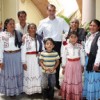
MEXICO: Oaxaca Voters Hope for Change
"A dark chapter has come to a close in the history of Oaxaca. A chapter that must never again be repeated," said lawmaker Flavio Sosa, the head of the social movement that brought this southern Mexican state to its knees for several months in 2006 and was brutally repressed.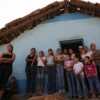
MEXICO: Sexist Violence Invisible in War on Drugs
They were not looking for war, but it found them anyway: Yosmireli and Griselda, two and four years old, died by bullets to their heads from soldiers' guns. Their mother, aunt and seven-year-old brother Joniel were also killed, on a rural road in northwest Mexico.MEXICO: Altars to Victims of Violence on Day of the Dead
"It's painful to build an altar of offerings to your dead child," Abraham Fraijo, one of the leading activists in a citizens' movement against violence and impunity in Mexico, wrote in his Twitter account while taking part in a series of protests during the celebrations of the Day of the Dead.
MEXICO: Juarez Residents Fight for Safe Public Spaces
The setting sun creates long shadows on the pavement in the crowded Del Safari neighbourhood in the southwest of Ciudad Juárez, Mexico. Casting the shadows are young people playing percussion instruments or children breakdancing or performing daring skateboard jumps.
MEXICO: Four Years On, No Justice for Atenco Women
At 30, Mexican activist América del Valle knows loneliness all too well: she spent four years in hiding, out of contact with friends and family, her only goal being to "endure" the government's persecution of her family.MEXICO: Freedom of Information Laws a Model; Not So the Practice
Mexico has suffered a setback in terms of government transparency and access to public information, according to Thomas Blanton and Kate Doyle, experts with the Washington-based National Security Archive (NSA).MEXICO: Bicentennial Nothing to Celebrate, Say Indigenous Peoples
"I don't understand why we should celebrate [Independence]. There will be no freedom in Mexico until repression against indigenous peoples is eliminated," says Sadhana, whose name means "moon" in the indigenous Mazahua language.
MEXICO: Gender Violence Hits Behind the News
Amalia is an indigenous Maya girl from a rural community in southern Quintana Roo, on Mexico's Caribbean coast. She is 11 years old, and in August became the youngest mother in the country when she gave birth to a baby girl, 51 cm long and just under three kg.Tamaulipas, Mexico’s Black Hole
Tamaulipas state has become the black hole of organised crime in Mexico. But there are few accounts of the rapid social breakdown that the northeastern border state has experienced since the start of the year, because the local press is silenced.
MEXICO: Threats Against Journalists: “You’re Vulnerable, and It’s Hard to Accept”
"The threats change your whole life," said Jade Ramírez, a journalist who has been living for months with that burden, which also hangs over a growing group of her colleagues in Mexico.MEXICO: Supreme Court Upholds Non-Discrimination Against Gays
In the last two weeks, Mexico's Supreme Court has taken two fundamental steps in recognising the rights of gays and lesbians. On Monday, it voted to uphold a Mexico City law that allows same-sex couples to adopt.« Previous Page — Next Page »





The Week with IPS

NEXT STOP - SDGs
Tracking global progress towards a sustainable world
Tracking global progress towards a sustainable world
