Languages
Monday, October 5, 2026



News and Views from the Global South
FOOD-GUATEMALA: Bad Omens for 2011
Guatemala needs to take steps to prepare for even worse problems of hunger in 2011, caused by climate change and farmers' heavy dependence on a few basic crops like corn and beans, experts warned on the occasion of World Food Day, celebrated Saturday.Guatemala to Investigate Human Experimentation by U.S. Doctors
A high-level commission has been set up to look into appalling medical experiments carried out by U.S. researchers on hundreds of Guatemalans in the 1940s, and the government of this Central American country is debating alternative ways for the United States to make reparations.CENTRAL AMERICA: Youth Gangs – Reserve Army for Organised Crime
In El Salvador, Honduras and Guatemala, the expression "de rodillas ante las pandillas" is not just a catchy rhyme referring to youth gangs bringing the countries to their knees but is an accurate description of reality today: these criminal groups, born and evolved in violence, wield ever-increasing power.MIGRATION-LATIN AMERICA: Another Wall Blocks Route to U.S.
Travelling without documents to the United States from Latin America can turn into an odyssey, in which migrants have to elude common criminals and drug traffickers along the way, not to mention the laws on migration. But now another obstacle is emerging: a wall between Guatemala and Mexico.MIGRATION-MEXICO: A Cemetery without Tombstones or Epitaphs
With a backpack full of dreams, Gelder Lizardo Boche, a 17-year-old from Guatemala, set out for the United States on Aug. 9 from his hometown of San Antonio La Paz, with two brothers-in-law.GUATEMALA: New Challenges for Anti-Corruption Commission
New challenges and a long list of shocking cases involving hidden power structures are faced by the new head of the United Nations-mandated International Commission Against Impunity in Guatemala (CICIG).GUATEMALA: Multi-Pronged Effort to Boost Food Security Still Falling Short
"I used to work on the south coast, cutting sugar cane, and I would go all the way to Belize to pick oranges during the harvest. I went through a lot so we could get by," Héctor Pan, a Q'eqchi Indian in Guatemala who has now abandoned farming to become a river rafting guide, told IPS.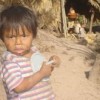
Climate Extremes Fuel Hunger in Guatemala
"Three-quarters of the fields are still under water. Maize, plantains, okra and pasture are all lost," José Asencio told IPS at the village of Santa Ana Mixtán in southern Guatemala, the area worst affected by tropical storm Agatha.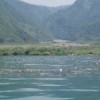
GUATEMALA: Reviving Lake Atitlan
"There are hardly any tourists now, and nearly all the hotels are empty," says Rosa Rosales, who works at the Hotel Pa Muelle, on the shores of Guatemala's Lake Atitlán, a natural treasure that has been overcome by pollution.Reviving Lake Atitlán
What was once a beautiful blue lake surrounded by volcanoes is now stewing with tons of pollutants and the proliferation of toxic bacteria.CENTRAL AMERICA: Doors Wide Open for Renewable Energy
Heavy reliance on petroleum imports, the need for electricity in rural areas, and the ongoing effort towards sustainable development have focussed Central America's attention on renewable energy. But that doesn't mean there isn't opposition.CENTRAL AMERICA: Rampant Violence Means Childhood Interrupted
Very early one recent morning in the eastern Guatemalan municipality of Esquipulas, the residents slept soundly -- until heart-rending screams from the street broke the calm.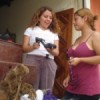
GUATEMALA: Giving Poor Women Entrepreneurs a Boost
Rosenda Gómez, a 53-year-old mother of five, knows all about challenges. To overcome them, she started a modest sausage business in Guatemala, and thanks to her leadership skills and training and other support she received, she is now an example of the economic empowerment of women.GUATEMALA: Major Setback in Fight Against Corruption
The resignation of the head of the International Commission Against Impunity in Guatemala (CICIG), Spanish judge Carlos Castresana, due to a lack of government support will make the already Herculean task of fighting corruption and impunity in this Central American country even more complex, human rights groups warn.Agatha Exposes Central America’s Many Vulnerabilities
Guatemala, El Salvador and Honduras, which form the so-called Central American Northern Triangle, have many weak points when it comes to natural disasters. The were exposed once again this week by tropical storm Agatha, which claimed nearly 200 lives and left millions of dollars in infrastructural damage.
URUGUAY: Environmental Partners
A wide range of strategies are being followed in the southeastern Uruguayan province of Rocha to counteract the environmental damages of activities like soy cultivation, plantation forestry and tourism. But challenges abound.Agro-Tech Alone No Panacea for Food Insecurity
Providing technology to communities to ensure food security doesn't work if local traditions and social dynamics are not taken into account, concluded the participants in a forum here at the Fourth Assembly of the Global Environment Facility.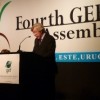
LATIN AMERICA: Governments Call for Greater Voice in Environmental Funding
"There should be a mechanism for recipient countries to help bring about a more balanced distribution of GEF funds," Cuban delegate Jorge Luis Fernández told IPS after a forum Tuesday on how to boost the efficiency and effectiveness of the Global Environment Facility.
More Funds, Less Red Tape, NGOs Tell GEF Assembly
Civil society organisations called for more funds, less bureaucracy and greater decision-making power, at the opening of the Fourth Global Environment Facility (GEF) Assembly Monday in this Uruguayan resort town.
Q&A: Justice in Guatemala – A Child That No One Helped Learn to Walk
In Guatemala, "justice was like a child just starting to stand up" when the 36-year armed conflict came to an end, but no one helped it "learn to begin to walk," says Jesús Tecú, who will be awarded a prestigious international human rights prize Wednesday in New York.
Guatemalan Wildlife at the Mercy of Traffickers
The shortage of resources for law enforcement and high demand from the wealthy countries of the North have left the field wide open in Guatemala for trafficking of wild animals, many of which are endangered, warn experts and environmentalists.« Previous Page — Next Page »


The Week with IPS

NEXT STOP - SDGs
Tracking global progress towards a sustainable world
Tracking global progress towards a sustainable world
