Languages
Thursday, October 15, 2026



News and Views from the Global South
Prioritising Menstrual Health and Hygiene During Emergencies
Over the last few years, the world has witnessed accelerated action to achieve the Sustainable Development Goals (SDGs), especially SDG 5 on gender equality and women’s empowerment. This has also led to significant interest in menstrual health and hygiene management (MHHM) as a critical factor in girls’ education and women’s participation in many spheres of life.
ECW Interviews Jan Egeland, Secretary General of the Norwegian Refugee Council
Jan Egeland has been the Secretary General of the Norwegian Refugee Council since August 2013, a role which oversees the work of the humanitarian organisation in over 30 countries affected by conflict and disaster.
Modern Slavery: How Consumers Can Make a Difference
Few people want to buy products that involve the exploitation or enslavement of the workers who make them – but that’s exactly what most of us do on a daily basis.US report on human trafficking: Bangladesh remains on Tier-2
The Bangladesh government does not fully meet the minimum standards for elimination of trafficking but is making significant efforts to do so and has demonstrated overall increasing efforts compared to the previous reporting period, considering the impact of Covid-19 pandemic on its anti-trafficking capacity and therefore remained on Tier 2, according to a US Department of State report.
New COVID-19 testing equipment deployed in Tonga
Last week, the Tonga Laboratory Services completed the installation of a 4 module GeneXpert testing equipment used for diagnosis of COVID-19 infection and to increase SARS-coV-2 testing capacity.
Education Cannot Wait Develops Groundbreaking Curriculum for Crisis-Affected Adolescents – Derived from Viktor Frankl’s Seminal Work ‘Man’s Search for Meaning’
Education Cannot Wait (ECW) – the United Nations global fund for education in emergencies – is developing a curriculum derived from the seminal work of world-renowned psychiatrist and Holocaust survivor Viktor Frankl’s “Man’s Search for Meaning”, and its related branch of psychotherapy, Logotherapy. The curriculum, which has been preliminary field-tested in Uganda, aims to fully tap into the resilience of girls and boys living in crisis settings.UN Food Systems Summit Releases Potential Solutions for Local, Regional and Global Action
The UN Food Systems Summit has revealed the 15 action areas with more than 50 solution clusters that will inspire discussions at the Pre-Summit in Rome from July 26-28.New global index seeks to transform how developing nations are supported
The Commonwealth Secretary-General Patricia Scotland has spoken today urging the international community to make crucial changes to how it delivers finance to developing nations, proposing a new system that moves beyond the use of GDP as the sole criteria for receiving certain types of support.
Ivanancy Vunikura: Navigating the Waves of Change
In April 2021, the Pacific Community (SPC) coordinated the 14th Triennial Conference of Pacific Women and the 7th Meeting of the Pacific Ministers for Women, hosted by the Government of French Polynesia. The conference brought together decision-makers, development partners, research institutions and civil society organisations. Following this landmark event, SPC will continue to publish portraits of inspiring gender champions who are at the heart of Pacific development programmes.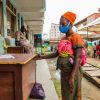
Global Herd Immunity Remains Out of Reach Because of Inequitable Vaccine Distribution – 99% of People in Poor Countries Are Unvaccinated
In the race between infection and injection, injection has lost. Public health experts estimate that approximately 70% of the world’s 7.9 billion people must be fully vaccinated to end the COVID-19 pandemic. As of June 21, 2021, 10.04% of the global population had been fully vaccinated, nearly all of them in rich countries.
World Refugee Day
"Education will prepare refugee children and youth for the world of today and of tomorrow. In turn, it will make the world more resilient, sustainable and peaceful." ~ Filippo Grandi, UN High Commissioner for Refugees
Improving Water Services Planning for Climate Resilience in Nauru
Policymakers worldwide consistently rank water scarcity among the greatest risks faced by humanity. In Pacific island countries and territories, where water resources are limited, it has become essential to reassess and adapt water planning and decision-making processes taking into account the current and future impacts of climate change.World Day Against Child Labour
The facts:- The progress to end child labour has stalled for the first time in 20 years, reversing the previous downward trend that saw child labour fall by 94 million between 2000 and 2016.
Global Leaders to Prime Minister Abiy Ahmed: Stop the Atrocities in Tigray
Seven highly respected leaders in conflict resolution have issued a call for Ethiopian Prime Minister Abiy Ahmed to take immediate action to bring a halt to the atrocities being committed in the Tigray region of his nation. The letter urges the Prime Minister to implement seven steps to resolve the crisis.
Protecting the Nile Delta
Children run after each other with kites flying along Egypt’s Nile Delta. Families and friends enjoy the scenery as they enjoy an afternoon picnic. Just a few miles away, farmers work in their fields of green. These diverse crops will feed millions of Egyptians. Throughout the region, cities buzz with people coming and going from factories and offices, playing football with their families, and building the economic engine that will support the nations’ goals for low-carbon climate-resilient development.
India’s COVID-19 Vaccine Drive Is Excluding Millions of Citizens
In May, the Ministry of Health and Family Welfare (MoHFW) uploaded a Standard Operating Procedure (SOP) related to ‘COVID-19 Vaccination of Persons without prescribed Identity Cards through CoWIN’ on its website.
ECW Interviews Save the Children Uk’s Chief Executive Kevin Watkins
Kevin Watkins is the Chief Executive of Save the Children UK. Kevin joined Save the Children in September 2016, after spending three years as Executive Director of the Overseas Development Institute.
UN Urges Intense Restoration of Nature to Address Climate and Biodiversity Crises
Facing the triple threat of climate change, loss of nature and pollution, the world must deliver on its commitment to restore at least one billion degraded hectares of land in the next decade - an area about the size of China. Countries also need to add similar commitments for oceans, according to a new report by the UN Environment Programme (UNEP) and the Food and Agriculture Organization of the UN (FAO), launched as the UN Decade on Ecosystem Restoration 2021-2030 gets underway.
Child Marriage and Domestic Violence: What We Found in 16 African Countries
The number of girls who marry before their 15th birthday has remained unchanged for 20 years in most countries in sub-Saharan Africa. The region has the highest rate of child marriage, with nearly four in 10 girls married before age 18. In Niger, for example, over 77% of girls are married before the age of 18.
World Environment Day 2021
 These are just some of the beautiful ecosystems that we are lucky to have on our planet.
An ecosystem is the interaction between living things and their surroundings – from plants to animals to people.
These are just some of the beautiful ecosystems that we are lucky to have on our planet.
An ecosystem is the interaction between living things and their surroundings – from plants to animals to people.
The Issue is Exploitation, not Migration
“There’s no other option but to return,” said Chitrasen in January 2021, when asked if he would migrate back to the city. The previous year’s pandemic-induced lockdown had left migrant workers stranded in cities and stripped of all their savings. An entire year later, as the second wave of COVID-19 engulfs India, many migrant workers find themselves confronted by a similar situation.« Previous Page — Next Page »





The Week with IPS

NEXT STOP - SDGs
Tracking global progress towards a sustainable world
Tracking global progress towards a sustainable world
