Languages
Thursday, October 15, 2026



News and Views from the Global South

Why Latin America is the Middle East of Biofuel
Latin America has lots of natural advantages for the coming energy transition. It already has the greenest power matrix in the world. While having the planet’s largest reserves of copper make it a key provider for international electrification programmes.
Five Ways to Measure the Effects of a Crisis Like COVID-19 on Women
Social issues and crises tend to affect women more severely than men. This is why terms like “gender mainstreaming policies”, “gender-responsive interventions” and “gender-based budgeting” have become more popular in public policy discussions in recent years.
Bangladeshi Authorities Arrest Journalist Rozina Islam under Official Secrets Act
The Committee to Protect Journalists today called on Bangladeshi authorities to immediately release journalist Rozina Islam, withdraw the investigation into her, and to stop arresting journalists under the Official Secrets Act.
ECW Interviews Melissa Fleming, United Nations Under-secretary-general for Global Communications
Melissa Fleming is the United Nations Under-Secretary-General for the Department of Global Communications – taking up her functions as of 1 September 2019 – and oversees operations in 60 countries and platforms that reach millions of people in multiple languages.
Education Cannot Wait Enhances Mental Health and Psychosocial Support for Crisis-affected Children and Youth in the Middle East and North Africa
Approximately 100 million children are out of school in the Middle East and North Africa as a result of the COVID-19 pandemic, armed conflicts and protracted crises. To provide these girls and boys with the mental health and psychosocial support they need to deal with the trauma and stress of these multiplying crises, Education Cannot Wait (ECW) announced today US$250,000 in new funding to support the Norwegian Refugee Council’s Better Learning Programme in the Middle East.
The Garment Industry Needs More Women Leaders
If you enter a garment factory in India, or any part of the world for that matter, you will see that the workforce is starkly female. The Indian textile and garment industry employs 45 million people, out of which more than 60 percent are women. This makes it the biggest formal employer of women in a country where 80 percent of them are not engaged in paid work. While that might paint a rosy picture of women’s empowerment at the first glance, a closer look reveals something different.
World Press Freedom Day 2021
 WORLD PRESS FREEDOM DAY: a reminder to governments of their commitment to press freedom. This year’s World Press Freedom Day theme: “Information as a Public Good.”
Why Variants are Most Likely to Blame for India’s COVID Surge
With more than 300,000 new COVID cases a day and hospitals and crematoria facing collapse, Director-General of the World Health Organization Tedros Adhanom Ghebreyesus has called the situation in India “beyond heartbreaking”.
Diversification of Media Content Can Break Gender Stereotypes
A renowned Pacific gender equality champion and Technical Advisor of Shifting the Power Coalition, Sharon Bhagwan Rolls, believes that gender equality is about men and women working together and this can be achieved by diversifying media content to break gender stereotypes.
Education Cannot Wait Calls on World Leaders to Urgently Fund Education in the Democratic Republic of the Congo with US$45.3 Million
Education Cannot Wait (ECW) Director Yasmine Sherif today called on world leaders to urgently support the children and youth in desperate need of education support in the Democratic Republic of the Congo (DRC), affected by new emergencies and multiple protracted crisis.
Pacific Women Triennial – Flashback
SPC hosted the first triennial conference of Pacific women more than 40 years ago with the purpose to create a space where Pacific women could meet, share their experiences and identify measures for the advancement of women.
GGGI appoints Kyung Hee University Professor, Mr. Kyung Nam Shin, as Assistant Director-General and Head of Investment and Policy Solutions
The Global Green Growth Institute (GGGI) has officially appointed Professor Kyung Nam Shin as Assistant Director-General and Head of Investment and Policy Solutions. He will assume his duties at the GGGI Seoul headquarters on May 1, 2021, to further the organization’s aim to catalyze green investments and policies for its Members.
Challenges with Skill Development Programmes During the Pandemic
India’s evolving Technical and Vocational Education and Training ecosystem (TVET) faced many challenges during the COVID-19 pandemic. Because of the national lockdown, organisations had to remain shut for 7-8 months, until September 2020.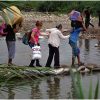
Colombia Gives Nearly 1 Million Venezuelan Migrants Legal Status and Right to Work
Colombia will grant legal status to all Venezuelan migrants who fled there since 2016 to escape their country’s economic collapse and political crisis.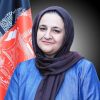
Education Cannot Wait Interviews Afghanistan’s Minister of Education Rangina Hamidi
H.E. Rangina Hamidi is the first female Minister of Education of Afghanistan in the last 30 years. Minister Hamidi was born in Kandahar, Afghanistan, fled with her family to Pakistan in 1981 during the Soviet Occupation and eventually immigrated to the United States. She attended high school in the United States and received her B.A. degree with a double major in Religion and Gender Studies at the University of Virginia.
Fulfilling the Right to Education for Children Left Furthest Behind in Burundi’s Crisis
On 5 December 2019, heavy rainfall triggered landslides in Cibitoke province in northwestern Burundi. Twenty-seven people were killed and almost 2,000 were forced to relocate. Along with the lives and homes lost, the school in the Nyamakarabo village was also destroyed. Today, some children in the village walk over two hours a day to attend an over-crowded school in a neighboring village. Others have yet to step back in a classroom.
World Autism Awareness Day – 2 April 2021
Autism Spectrum Disorder is a complex condition that remains misunderstood.
The effects of ASD and the severity of symptoms vary so much between individuals.
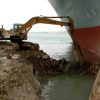
After the Ever Given: What the Ship Wedged in the Suez Canal Means for Global Trade
In the early hours of March 23, the container ship Ever Given was blown off course by high winds on its way through the Suez Canal. At 400 metres long, the Ever Given is longer than the canal is wide, and the ship became wedged firmly in both banks, completely blocking traffic.
„We will overcome it“: Experiences of the impact of COVID-19 in Suva, Fiji
This short video explores the experiences of COVID-19 in Fiji's capital, Suva, by University students. The participants reflect on the impact of the virus in the Pacific nation, where themes such as the emotional implications of COVID as well as its effects on the economy, food security, resilience and more are discussed.


Why Children Are Prime Targets of Armed Groups in Northern Nigeria
Due to growing insecurity, Nigeria is gradually becoming one of the most dangerous places to live. The 2020 Global Terrorism Index identified the country as the third most affected by terrorism. There was a sharp increase in Boko Haram’s targeting of civilians by 25%, and killings by herdsmen increased by 26%, compared with the previous year. The two countries higher on the index are Iraq and Afghanistan.« Previous Page — Next Page »





The Week with IPS

NEXT STOP - SDGs
Tracking global progress towards a sustainable world
Tracking global progress towards a sustainable world
