Languages
Friday, October 16, 2026



News and Views from the Global South

Why Children Are Prime Targets of Armed Groups in Northern Nigeria
Due to growing insecurity, Nigeria is gradually becoming one of the most dangerous places to live. The 2020 Global Terrorism Index identified the country as the third most affected by terrorism. There was a sharp increase in Boko Haram’s targeting of civilians by 25%, and killings by herdsmen increased by 26%, compared with the previous year. The two countries higher on the index are Iraq and Afghanistan.
ECW Interviews Youth Refugee Advocate Nujeen Mustafa
Nujeen Mustafa is a Syrian refugee, youth advocate and champion for children with disabilities for the UN Refugee Agency. At just sixteen years old, Nujeen Mustafa made the 3,500-mile journey from Syria to Germany in a steel wheelchair. Nujeen was born with cerebral palsy and spent the majority of her life confined to her apartment in Aleppo, Syria, where she taught herself English watching shows on TV.
International Women’s Day, 8 March 2021
“Women in leadership: Achieving an equal future in a COVID-19 world.”
“Women in leadership: Achieving an equal future in a COVID-19 world.”
On this occasion, IPS Inter Press Service is pleased to bring to it’s readers, opinions, views and perspectives of women leaders on the Covid19 crisis, the centrality of women’s contributions and the disproportionate burdens that women carry.
Education Cannot Wait Interviews Karina Gould Canada’s Minister of International Development
The Honourable Karina Gould was first elected as the Member of Parliament for Burlington in 2015. A graduate of McGill University and the University of Oxford, Minister Gould is passionate about public service and international development. Before her election as the Member of Parliament for Burlington, she worked as a trade and investment specialist for the Mexican Trade Commission in Toronto, a consultant for the Migration and Development Program at the Organization of American States in Washington, D.C., and spent a year volunteering at an orphanage in Mexico.
International Women’s Day 2021
 “A girl should be two things: Who and what she wants.” – Coco Chanel
Women of the world want and deserve an equal future...a future that’s sustainable, peaceful, with equal rights and opportunities for all.
“A girl should be two things: Who and what she wants.” – Coco Chanel
Women of the world want and deserve an equal future...a future that’s sustainable, peaceful, with equal rights and opportunities for all.
Education Cannot Wait, the Inter-agency Network for Education in Emergencies and the Un Girls’ Education Initiative Call for Gender Equality to Be at the Centre of COVID-19 Education Crisis Recovery Efforts
Education Cannot Wait (ECW), the Inter-agency Network for Education in Emergencies (INEE) and the United Nations Girls’ Education Initiative (UNGEI), today launched a new toolkit to support stronger integration of gender equality in education responses for children and youth in countries affected by emergencies and protracted crises.EIE-GenKit Launch: A Core Resource Package for Gender in Education in Emergencies
In the lead up to International Women’s Day, the Inter-agency Network for Education in Emergencies (INEE), Education Cannot Wait (ECW) and the UN Girls’ Education Initiative (UNGEI), are launching a new core resource package for gender in education in emergencies: the ‘EiE-GenKit’!
SACRED FUTURES – The NESFAS Story
Here is a glance at our journey as a non-profit organisation, like all successful endeavors strong relationships stem from time, effort and patience.
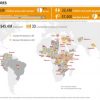
Education Cannot Wait: COVID-19 Emergency Response Fact Sheet
Education Cannot Wait’s (ECW) COVID-19 emergency response has reached over 9 million children and youth (47% girls) to date. ECW’s COVID-19 emergency grants span across 33 crisis-affected countries/emergency contexts.
Majority Rule Giving Way to Majoritarianism
Celebrated Indian writer, Member of Parliament and former diplomat Shashi Tharoor in a conversation with The Daily Star Editor and Publisher Mahfuz Anam on the occasion of the newspaper's 30th anniversary yesterday spoke eloquently on media freedom, regional politics and democracy on a virtual platform.
The Perils of Child Marriage & the Promise of Freedom
How much is a girl worth? If you are Maja, the answer is a chicken, a six-pack of beer and 100 euros. That is how much her family, living in a Roma settlement in Serbia, received in exchange for her hand “in marriage.” She was 11 years old at the time. “They benefited maybe a month from it, and I was left with a problem for my whole life,” Maja, now 18, said.
Valérie Allain – Women in Science (2021)
"Working in Science, like any other career, is fit for women too… Just go for it, nobody can stop you", Valérie Allain, Senior Fisheries Scientist at the Pacific Community (SPC).

Food Systems Need to Change to Promote Healthy Choices and Combat Obesity
COVID-19 has had a devastating impact on people with obesity and noncommunicable diseases such as diabetes. The pandemic has underlined the importance of the food environment and healthy food intake. It has shown the urgent need for effective policies to make sure that everyone can get enough nutritious food – and particularly in sub-Saharan Africa.Bangladesh Charges 3 Journalists under Digital Security Act
In response to Bangladesh authorities’ recent filing of charges under the Digital Security Act against photographer Shafiqul Islam Kajol, writer Mushtaq Ahmed, and cartoonist and Kabir Kishore, the Committee to Protect Journalists issued the following statement:
Education Cannot Wait Interviews United Nations Secretary-General António Guterres
Education Cannot Wait’s interview with the Secretary-General of the United Nations, António Guterres, focused on the crucial role of education in the lives of crisis-affected children and youth, follows below. ECW: Why is education a priority in emergencies and protracted crises? António Guterres: The COVID-19 pandemic has upended societies and created the largest-ever disruption of education systems, affecting more than 1.5 billion students. While remote solutions were rolled out, 1 in 3 children missed out on such opportunities, exposing and exacerbating inequalities and vulnerabilities, especially for those in crisis situations. In such circumstances, education protects girls and boys from sexual violence and exploitation, trafficking, early pregnancy and child marriage, forced recruitment into armed groups and child labour. It also ensures that they continue learning, offering them hope for the future. As we enter 2021, education must be at the core of pandemic response and recovery efforts. Without resolute political commitment by global leaders, as well as additional resources for Education Cannot Wait, and its UN and civil society partners, millions of girls and boys may never return to school. Investing in the education of these vulnerable children and youth is an investment in peace, prosperity and resilience for generations to come – and a priority for the United Nations.[related_articles]
Helping Survivors of Violence Seek Justice through Forensic Science in the West Bank
Violence, especially against women and girls, is a worldwide systematic human rights violation that has only increased since the COVID-19 pandemic. Globally, 243 million women and girls aged 15 to 49 have suffered sexual and/or physical violence by an intimate partner in the last year.
New Multi-Country Survey Finds Overwhelming Majority of Citizens Want Their Governments to Act Now to Accelerate Progress on Gender Equality
A first-of-its-kind international survey finds that the global public overwhelmingly supports gender equality, and a resounding majority is ready for their governments and business leaders to take action to bridge the gender divide. At the same time, women and girls around the world are suffering the worst impacts of the COVID-19 crisis, which has disproportionately affected their mental and physical health, as well as their economic prospects. The vast majority of respondents—80% on average across the 17 surveyed countries—said gender equality is a priority to them personally, and 65% said their government should do more to promote gender equality in their country.
Sri Lanka on Alarming Path Towards Recurrence of Grave Human Rights Violations, Says UN
A new UN report published on Wednesday warns that the failure of Sri Lanka to address past violations has significantly heightened the risk of human rights violations being repeated.
Incitement to Violence Is Rarely Explicit – Here Are Some Techniques People Use to Breed Hate
As senators plan for an impeachment trial in which former President Donald Trump is accused of inciting his supporters to mount a deadly insurrection at the Capitol, global concern is growing about threats of violent unrest in multiple countries, including the U.S. The United Nations reports the proliferation of dangerous speech online represents a “new era” in conflict.
Global Economic Recovery Remains Precarious in post-COVID-19 Years
The United Nations has warned that the devastating socio-economic impact of the COVID-19 pandemic will be felt for years to come unless smart investments in economic, societal and climate resilience ensure a robust and sustainable recovery of the global economy.
COVID-19 Vaccines: How and When Will Lower-Income Countries Get Access?
COVID-19 vaccination programmes are gathering pace in high-income countries, but for much of the world, the future looks bleaker. Although a number of middle-income countries have started rolling out vaccines, widespread vaccination could still be years away.« Previous Page — Next Page »





The Week with IPS

NEXT STOP - SDGs
Tracking global progress towards a sustainable world
Tracking global progress towards a sustainable world
