Languages
Friday, October 16, 2026



News and Views from the Global South
‘Please save us’
Temperatures have plummeted way below zero in Bosnia, making life even more miserable for hundreds of migrants and refugees — including entire families with small children — sleeping rough while trying to reach Western Europe.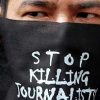
Targeting Journalists Takes a Toll on ‘societies as a Whole’ – UN Chief
When journalists are targeted, “societies as a whole pay a price”, the UN chief said on November 2, 2020, the International Day to End Impunity for Crimes against Journalists.
Tuberculosis Kills As Many People Each Year As COVID-19. It’s Time We Found a Better Vaccine
In July 1921, a French infant became the first person to receive an experimental vaccine against tuberculosis (TB), after the mother had died from the disease. The vaccine, known as Bacille Calmette-Guérin (BCG), is the same one still used today.
For Heavily Indebted Small Islands, Resilience-Building is the Best Antidote
In December 2020, Fiji was pounded by Pacific Cyclone Yasa, the years’ second category 5 storm which destroyed hundreds of buildings and caused about $1.4 billion in damage to health facilities, homes, schools, agriculture and infrastructure.
Was It a Coup? No, But Siege on US Capitol Was the Election Violence of a Fragile Democracy
Supporters of President Donald Trump, following his encouragement, stormed the US Capitol building on Jan. 6, disrupting the certification of Joe Biden’s election victory. Waving Trump banners, hundreds of people broke through barricades and smashed windows to enter the building where Congress convenes. One rioter died and several police officers were hospitalized in the clash. Congress went on lockdown.
Tractors Can Change Farming in Good Ways and Bad: Lessons from Four African Countries
Agricultural mechanisation is on the rise in Africa, replacing hand hoes and animal traction across the continent. While around 80-90% of all farmers still rely on manual labour or draught animals, this is changing, driven by falling machinery prices and rising rural wages. During the last couple of years, tractor sales grew by around 10% annually.
Ten Defining Moments for Women in 2020
While 2020 will be remembered most for the way COVID-19 changed our lives in nearly every way and in every part of the world, we made some strides for women’s rights and gender equality.
2020: The Year of COVID 19
 At the end of this year, we must pay our respects to the nearly 1.5 million people who have died from the Coronavirus.
COVID 19 has inflicted extensive damage beyond human casualties, exposing the frailties of governments, societies, economies and health systems, particularly in those countries that chose to ignore the warnings and advice of the WHO.
At the end of this year, we must pay our respects to the nearly 1.5 million people who have died from the Coronavirus.
COVID 19 has inflicted extensive damage beyond human casualties, exposing the frailties of governments, societies, economies and health systems, particularly in those countries that chose to ignore the warnings and advice of the WHO.

Education Cannot Wait Interviews Colombia’s Minister of Education María Victoria Angulo
María Victoria Angulo is Colombia’s Minister of Education. She holds a Master´s Degree in Development Economics from the Universidad de Los Andes and a Master´s Degree in Specialized Economic Analysis from Pompeau Fabra University (Barcelona, Spain). The minister has more than 20 years of experience in educational policy development.
Safe Drinking Water Should Mean Safe Collection Too: How to Reduce the Risks
Globally, millions of people don’t have access to water in their home. They collect water from shared water supply points or surface water sources and physically carry water containers back home for household use.
GGGI selected as Technical Assistance Providers for Burkina Faso and Viet Nam by K-CEP
The Kigali Cooling Efficiency Program (K-CEP), a philanthropic collaboration, has selected the Global Green Growth Institute (GGGI) as technical assistance providers to improve access to and the efficiency of cooling in Burkina Faso and Viet Nam.
Education Cannot Wait Interviews H.E. Mr. Stanislas Ouaro, Minister of National Education and Literacy, Burkina Faso
H.E. Mr. Stanislas Ouaro became the Minister of National Education and Literacy of Burkina Faso in February 2018 after a long academic career. Between 2012 and 2018, Mr. Ouaro was the President of the Université Ouaga II. Prior to that, the eminent mathematician held several teaching and administrative posts with Ouagadougou University. Mr. Ouaro is widely published, and has also served as the President of the Réseau pour l’Excellence de l’Enseignement Supérieur en Afrique de l’Ouest (Network for Excellence in Higher Education in West Africa). A leading advocate for education and equality, Mr. Ouaro has been awarded several academic awards in Burkina Faso and elsewhere.
Misinformation on Social Media Fuels Vaccine Hesitancy: a Global Study Shows the Link
Vaccine hesitancy is a severe threat to global health, according to the World Health Organisation (WHO). The term refers to the delay in acceptance or the refusal of vaccines, despite the availability of vaccination services. It’s a serious risk to the people who aren’t getting vaccinated as well as the wider community.
Pacific Data Hub to Make Data Accessible for All
Pacific Governments, agencies, donors and civil society now have a central source of reliable and current data to help them to make decisions that affect Pacific Islanders.
Battles Won – and Lost – Against AIDS Hold Valuable Lessons for Managing COVID-19
World AIDS Day this year finds us still deep amid another pandemic – COVID-19. The highly infectious novel coronavirus has swept across the world, devastating health systems and laying waste to economies as governments introduced drastic measures to contain the spread. Not since the HIV/AIDS pandemic of the 1990s have countries faced such a common health threat.
Online Attacks On Female Journalists Are Increasingly Spilling Into the ‘Real World’ – New Research
The insidious problem of online violence against women journalists is increasingly spilling offline with potentially deadly consequences, a new global survey suggests.
Racial Discrimination Ages Black Americans Faster, According to a 25-Year-Long Study of Families
I’m part of a research team that has been following more than 800 Black American families for almost 25 years. We found that people who had reported experiencing high levels of racial discrimination when they were young teenagers had significantly higher levels of depression in their 20s than those who hadn’t. This elevated depression, in turn, showed up in their blood samples, which revealed accelerated aging on a cellular level.
Journalists covering conflict, essential workers for a ‘durable peace’ says Guterres
Reporters and other media workers in warzones across the world, are reliable witnesses who contribute to forging peace, and must be better-protected under international humanitarian law, said the UN chief on Wednesday.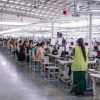
Working Class Bears Disproportionate Burden of COVID-19 Economic Fallout
Back in May 2019, we were visiting a large garment factory in Arsikere, Karnataka, when we asked some of the workers, “What would you do if you got Saturdays off?” Their responses to this simple question summed up their priorities. A majority said they would spend time with family or friends and take care of their children. Many said they would use this time to relax or do household chores. Only a few said they’d look for additional pay.
More Children in Zimbabwe Are Working to Survive: What’s Needed
The ability of Zimbabwean families to take care of children has been compromised by a collapsing economy, compounded by COVID-19. About 4.3 million people in rural communities, including children, are food insecure this year. The World Food Programme indicates that at least 60% of the population of Zimbabwe need food aid.
India: How Did Young People Access Care During the Lockdown?
COVID-19 has developed into an unprecedented public health crisis, the impact of which has been seen across global health systems and services. As the crisis continues to evolve in India, there is a need to examine the impact of the pandemic and ensuing nation-wide shutdown on young people’s lives, particularly, their experience of mental ill health.« Previous Page — Next Page »





The Week with IPS

NEXT STOP - SDGs
Tracking global progress towards a sustainable world
Tracking global progress towards a sustainable world
