Languages
Saturday, November 28, 2026



News and Views from the Global South

Online Attacks On Female Journalists Are Increasingly Spilling Into the ‘Real World’ – New Research
The insidious problem of online violence against women journalists is increasingly spilling offline with potentially deadly consequences, a new global survey suggests.
Racial Discrimination Ages Black Americans Faster, According to a 25-Year-Long Study of Families
I’m part of a research team that has been following more than 800 Black American families for almost 25 years. We found that people who had reported experiencing high levels of racial discrimination when they were young teenagers had significantly higher levels of depression in their 20s than those who hadn’t. This elevated depression, in turn, showed up in their blood samples, which revealed accelerated aging on a cellular level.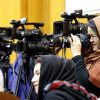
Journalists covering conflict, essential workers for a ‘durable peace’ says Guterres
Reporters and other media workers in warzones across the world, are reliable witnesses who contribute to forging peace, and must be better-protected under international humanitarian law, said the UN chief on Wednesday.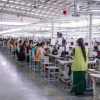
Working Class Bears Disproportionate Burden of COVID-19 Economic Fallout
Back in May 2019, we were visiting a large garment factory in Arsikere, Karnataka, when we asked some of the workers, “What would you do if you got Saturdays off?” Their responses to this simple question summed up their priorities. A majority said they would spend time with family or friends and take care of their children. Many said they would use this time to relax or do household chores. Only a few said they’d look for additional pay.
More Children in Zimbabwe Are Working to Survive: What’s Needed
The ability of Zimbabwean families to take care of children has been compromised by a collapsing economy, compounded by COVID-19. About 4.3 million people in rural communities, including children, are food insecure this year. The World Food Programme indicates that at least 60% of the population of Zimbabwe need food aid.
India: How Did Young People Access Care During the Lockdown?
COVID-19 has developed into an unprecedented public health crisis, the impact of which has been seen across global health systems and services. As the crisis continues to evolve in India, there is a need to examine the impact of the pandemic and ensuing nation-wide shutdown on young people’s lives, particularly, their experience of mental ill health.
South Africa Has Failed to Harness the Digital Revolution: How It Can Fix the Problem
The COVID-19 pandemic has precipitated a migration from physical work spaces in many sectors of the economy to online, digital services, supported by staff working from home. Parts of the economy such as mining, manufacturing and hospitality still require workers to be physically present. But other sectors have discovered that virtual platforms are effective substitutes for offices.
Education Cannot Wait Interviews LEGO Foundation CEO John Goodwin
John Goodwin joined the LEGO Foundation as CEO in April 2017 to pursue a career where he could combine his business skills with his passion for philanthropy and driving positive social impact.
COVID-19: A Global Survey Shows Worrying Signs of Vaccine Hesitancy
It has been nine months since the World Health Organisation (WHO) declared the outbreak of COVID-19, caused by the SARS-CoV-2 virus, a “public health emergency of international concern”. Since then, more than 44 million cases have been recorded and over one million lives lost. Economic costs measure in trillions of dollars. Global recovery will take years.
Escaping the ‘Era of Pandemics’: experts warn worse crises to come; offer options to reduce risk
Future pandemics will emerge more often, spread more rapidly, do more damage to the world economy and kill more people than COVID-19 unless there is a transformative change in the global approach to dealing with infectious diseases, warns a major new report on biodiversity and pandemics by 22 leading experts from around the world.
Why a Zimbabwean Farming Project Failed: Lessons for Rural Innovation
Many countries in sub-Saharan Africa commit resources to promote agricultural innovations. This is based on the assumption that rural livelihoods are mainly agricultural and that the innovations will increase agricultural production and household income.
What Developing Countries Can Teach Us About How To Respond To a Pandemic
Nine months into the pandemic, Europe remains one of the regions worst affected by COVID-19. Ten of the 20 countries with the highest death count per million people are European. The other ten are in the Americas. This includes the US, which has the highest number of confirmed cases and deaths in the world.
WORLD FOOD DAY 2020
 The COVID-19 pandemic is threatening the food security and nutrition of millions of people around the world.
More than 820 million people were classified as chronically food insecure before the virus hit.

COVID-19: Examining Theories for Africa’s Low Death Rates
As the threat of a COVID-19 pandemic emerged earlier this year, many felt a sense of apprehension about what would happen when it reached Africa. Concerns over the combination of overstretched and underfunded health systems and the existing load of infectious and non-infectious diseases often led to it being talked about in apocalyptic terms.
Building Back Better: Education Cannot Wait
The United Nations General Assembly adopted Resolution 66/170 declaring October 11 as the International Day of the Girl Child, to recognize girls’ rights and the unique challenges girls face around the world.

Can Colonialism be Reversed? The UN’s Declaration on the Rights of Indigenous Peoples Provides Some Answers
Can a state built upon the “taking of another people’s lands, lives and power” ever really be just? Colonialism can’t be reversed, so at a simple level the answer is no.
Empowering Women in Organic Value Chains
As COVID-19 shapes and re-shapes the “new normal” in the Pacific, organic food and products will be a key to community adaptation and resiliency in the region’s economies and livelihoods, with the opportunity to advance a more inclusive gender and people centred approach.
On the Occasion of World Teachers’ Day, ECW, GPE, UNESCO & UNICEF Call for the Resumption of Salary Payments for Teachers for the Coming School Year in Yemen
This World Teachers’ Day, celebrated under the theme, “Teachers: Leading in crisis, reimagining the future”, the Global Partnership for Education, Education Cannot Wait, UNESCO and UNICEF are calling for the resumption of salary payments for around half of the Yemeni teachers and school-based staff (estimated 160,000) who have not received regular salary payments since 2016. With suspended salary payments and schools regularly coming under attack, many teachers have been forced to find alternative sources of income to provide for their families.
The Key to Peace in the Lake Chad Area Is Water, Not Military Action
Lake Chad is an extremely shallow water body in the Sahel. It was once the world’s sixth largest inland water body with an open water area of 25,000 km2 in the 1960s, it shrunk dramatically at the beginning of the 1970s and reduced to less than 2,000 km2 during the 1980s, decreasing by more than 90% its area. It is one of the largest lakes in Africa. It is an endorheic lake – meaning that it doesn’t drain towards the ocean.
Hundreds of sustainable and profitable agribusiness opportunities available in Nigeria – IITA DDG
CGIAR-IITA Deputy Director General, Partnerships for Delivery, Kenton Dashiell, has encouraged Nigerians to take up sustainable and profitable opportunities in the country’s agriculture sector. He made this appeal during his keynote address at the National Conference on Agricultural Innovations for Food Security in the Post COVID-19 Era.
Pivoting Through the Pandemic: A Global Problem with a Pacific Solution
As the Intergovernmental Oceanographic Commission (IOC-UNESCO) reported earlier this year, COVID-19 has caused massive disruptions to ocean observing systems around the globe, as research cruises, maintenance visits, and sensor deployments have been postponed or cancelled.« Previous Page — Next Page »


The Week with IPS

NEXT STOP - SDGs
Tracking global progress towards a sustainable world
