Languages
Friday, October 16, 2026



News and Views from the Global South
Wise People Know That Winning a War Is No Better Than Losing One
From the desk of the Tricontinental: Institute for Social ResearchDedicated to Soni Prashad, 1929-2020, who spent her life looking for a better world. US President Donald Trump and his ‘war council’ – led by Secretary of State Mike Pompeo – have amplified their aggression against China. What began as a trade dispute in the 1990s has now escalated into the United States making an existential challenge against China.
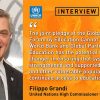
Interview with the UN High Commissioner for Refugees, Filippo Grandi
Education Cannot Wait: As the UN agency mandated by the UN General Assembly to provide international protection and seek solutions for refugees, could you please elaborate on the overall importance of education for refugee children as a component of protection and solutions?
Fight Fire with Trade: How Europe Can Help Save the Amazon
The EU is thinking about agreeing to a €4 billion trade deal with Brazil, Argentina, Uruguay and Paraguay (known as the Mercosur bloc). In our new academic research, myself and 21 international co-authors looked at the details of this deal so you don’t have to. What we found wasn’t pretty.Rebbilib Episode 2
Come to the table, with a willingness to share and be vulnerable: This video is the second in a 3 part series hearing directly from Monitoring Evaluation and Learning practitioners within the Pacific region and their experience of using Pacific approaches in their work. In this video we hear from Associate Professor Cresantia Frances Koya – Vaka’uta who works with the University of the South Pacific, the regionally owned provider of tertiary education in the Pacific region and an international centre of excellence for teaching, research consulting and training on all aspects of Pacific culture, environment and human resource development needs.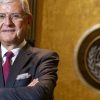
INTERVIEW: the top diplomat shepherding the General Assembly through its 75th year
The Turkish diplomat elected to be the president of the 75th session of the UN General Assembly, Volkan Bozkir, is taking on the role as the Organization grapples with an unprecedented pandemic, and questions surrounding the future direction it should take.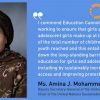
Statement by UN Deputy Secretary-general Amina J. Mohammed at ECW High-level Steering Group
As a friend and strong advocate of Education Cannot Wait, I welcome this opportunity to convey my support for ECW’s critical work and my solidarity with the millions of children and youth who are still being deprived of the opportunity to obtain a quality education because they are caught up in conflict, crisis or disaster.Rebbilib Episode 1
It is important to understand the needs of the Vanua, the culture, tradition and its’ protocols: This video is the first in a 3 part series hearing directly from Monitoring Evaluation and Learning practitioners within the Pacific region and their experience of using Pacific approaches in their work. In this video we hear from Mr. Eroni Wavu, the MEL Officer with the Ministry of i-Taukei Affairs in Fiji who are responsible for developing, implementing and monitoring government programs focussed on the governance and wellbeing of the iTaukei people.The science behind the #Biodiversity and #Tourism relationship – #wtflucerne in conversation with IPBES Chair Ana Maria Hernandez Salgar (Colombia)
Biodiversity is declining faster than at any time in human history. Tourism and biodiversity have a symbiotic relationship – positive and negative.
Message for Laureates and Leaders for Children
 His Holiness the Dalai Lama’s message for "Fair Share for Children - Laureates and Leaders Summit 2020", held online September 9, 2020.

Why COVID-19 Vaccines Need to Prioritize ‘Superspreaders’
Once safe and effective COVID-19 vaccines are available, tough choices will need to be made about who gets the first shots.
Fridays for Future: How the Young Climate Movement Has Grown Since Greta Thunberg’s Lone Protest
At the end of her first week on strike in August 2018, Greta Thunberg handed out flyers that said: “You grownups don’t give a shit about my future.” Her appearance at the 2019 UN Climate Summit capped a year in the spotlight for the teenage climate activist. Delegates at the summit gave her a standing ovation, but the sound of their applause couldn’t mask Greta Thunberg’s deep frustration.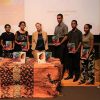
Pacific Partnership launches human rights and social justice-themed poetry book for children
The Pacific Partnership to End Violence Against Women and Girls (Pacific Partnership) programme has launched a poetry anthology publication comprising a collection of Pacific poems and artworks about human rights and social justice suitable for students in Years 7-13.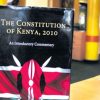
Katiba at 10: A Landmark Constitution and a Blueprint for Deepening Democracy
On 27 August 2020, we mark the tenth anniversary of the New Constitution of Kenya – a landmark social contract inspired by citizens’ desire for a country characterised by participatory governance, inclusive development, human rights and the rule of law.
Approval of a Coronavirus Vaccine Would Be Just the Beginning – Huge Production Challenges Could Cause Long Delays
The race for a SARS-CoV-2 vaccine is well underway. It’s tempting to assume that once the first vaccine is approved for human use, all the problems of this pandemic will be immediately solved. Unfortunately, that is not exactly the case.
The Invisibles: Inhumane Conditions of Italy’s Migrant Farmworkers
Over 200,000 migrant laborers, mostly from Africa, work in Italy’s fields. After being exploited for years, the coronavirus global pandemic made these workers “essential” overnight — but without labor rights or even access to basic sanitation, these farmworkers are living and working in conditions that have been described as modern slavery. Union leader Aboubakar Soumahoro has been documenting these inhumane conditions and is now helping the workers organize to demand real and lasting change.
How Two Young Women Are Working to Improve Access to Contraception in Trinidad and Tobago
According to a 2016 Guttmacher Institute study, 60% of girls ages 15-19 in developing countries who want to avoid pregnancy do not have access to modern contraceptive methods. Women Deliver Young Leaders Kizanne James and Khadija Sinanan dive deeper into stigma around contraceptive use in their home country of Trinidad and Tobago as part of their projects as World Contraception Day Ambassadors.
A Historical SPC Tuna Tagging Cruise
The Pacific Community (SPC) 7-week research expedition to monitor the health of world’s largest tuna fishery has departed from Honolulu on Saturday 15 August 2020 despite the significant challenges presented by COVID-19. With most research and fisheries observer programmes currently suspended, the importance of this cruise cannot be overstated. Half of the world's tuna catch comes from the Western & Central Pacific, providing a critical source of protein and export revenue for Pacific Island Nations.

Tourism Trauma and COVID-19
Pandemic-related lockdowns, flight cancellations, and border closures may be putting a crimp on summer vacation plans. However, the precipitous drop in tourism will have an outsized impact on countries that rely on foreign travelers—with potentially large-scale effects on their economies’ national accounts.
Another Mutiny Turned Coup: Mali Is No Stranger to Military Unrest
What appears to have started as a mutiny, and resulted in a coup, came on the heels of renewed civilian protests in Bamako, the Malian capital. Tensions have been high since president Ibrahim Boubacar Keïta’s 2018 re-election which was marred by irregularities. All the while, he has continued to face allegations of corruption and fraud.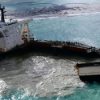
Mauritius Oil Spill Puts Spotlight on Ship Pollution
Small island nations face an existential and developmental threat from ship-source pollution endangering their vulnerable marine ecosystems and ocean economies. An effective international legal regime can help.
How to Help Belarus
President Aliaksandr Lukashenka’s government is teetering after he declared victory in a rigged 9 August vote. Protests have exploded. Moscow, Brussels and other stakeholders should avoid transforming the Belarus crisis into a European one, cooperate to warn against repression and insist on new, fair elections.« Previous Page — Next Page »





The Week with IPS

NEXT STOP - SDGs
Tracking global progress towards a sustainable world
Tracking global progress towards a sustainable world
