Languages
Friday, October 16, 2026



News and Views from the Global South

Pacific Tuna Tagging Expedition Overcomes COVID Challenge
Despite the significant challenges presented by COVID-19, the Pacific Community (SPC) 7-week research expedition to monitor the health of world’s largest tuna fishery will depart from Honolulu on Saturday 15 August 2020.
Lack of Human Capital is Holding Back Latin America’s Growth
In 1990, Latin America’s average GDP per capita was a little over a quarter of the United States’ income level, while emerging and developing Asian countries’ GDP per capita was only 5 percent. In 2019, Asian countries had grown fourfold, but Latin America was still at the same level.
Call for Urgent Action by 275 World Leaders on Global Education Emergency In Face of Covid19
We write to call for urgent action to address the global education emergency triggered by COVID-19. With over 1 billion children still out of school because of the lockdown, there is now a real and present danger that the public health crisis will create a COVID generation who lose out on schooling and whose opportunities are permanently damaged. While the more fortunate have had access to alternatives, the world’s poorest children have been locked out of learning, denied internet access, and with the loss of free school meals - once a lifeline for 300 million boys and girls - hunger has grown.
Education Cannot Wait Interviews EU Commissioners Jutta Urpilainen & Janez Lenarčič
The European Commission (EC) is one of the founders of Education Cannot Wait, which was established at the World Humanitarian Summit in 2016 and aims at increasing funding and efficiency in delivering quality education to some 75 million children and youth affected by conflicts, natural disasters and forced displacement. EC plays a major role since in advancing education in the humanitarian-development nexus during crisis. Please elaborate on the EC vision in driving education to achieve humanitarian-development coherence and deliver quality education in situations of crisis, for refugees, for girls, and other stakeholders who are left furthest behind.
Brain Scientists Haven’t Been Able to Find Major Differences Between Women’s and Men’s Brains, Despite Over a Century of Searching
People have searched for sex differences in human brains since at least the 19th century, when scientist Samuel George Morton poured seeds and lead shot into human skulls to measure their volumes. Gustave Le Bon found men’s brains are usually larger than women’s, which prompted Alexander Bains and George Romanes to argue this size difference makes men smarter. But John Stuart Mill pointed out, by this criterion, elephants and whales should be smarter than people.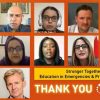
Stronger Together: Education in Emergencies & Protracted Crises
‘Stronger collective efforts and collaboration are key to meeting the urgent education needs of children and youth affected by crises’: this is the unifying message from leaders and youth advocates brought together by Education Cannot Wait (ECW) and Devex in a high-level, Global Discussion held online on 12 August, on the occasion of International Youth Day.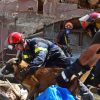
The Beirut Blast: An Accident in Name Only
The catastrophic explosion in Beirut’s port is a manifestation of the Lebanese political elite’s predation and dysfunction. Among the country’s long-suffering citizens, shock is quickly yielding to fury. It may be the last chance for those in power to effect long-overdue structural reforms.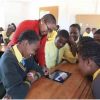
Young South Africans are Shut Out From Work: They Need a Chance to Get Digital Skills
Most young people from disadvantaged backgrounds in South Africa continue to be denied access to information and communications technology because of poor infrastructure and the digital divide.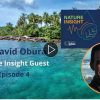
Dr. David Obura: The New Natural
 Coral reefs are iconic, but we have all seen the images of bleached areas that were previously teeming with life and colour. These ecosystems, and more broadly coastlines, are a vital part of the efforts to protect biodiversity. So how are coral reefs doing? Are we too late? Can we still secure a better future for reefs and people? In this week’s episode, Brit talks to Dr. David Obura. David has studied coral reef resilience and adaptation his whole life. He founded CORDIO, a non-profit organisation specialising in finding solutions that benefit marine ecosystems and people. To find out more about IPBES, head to www.ipbes.net or follow us on social media @IPBES.
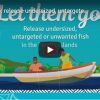
Let them go: release undersized, untargeted or unwanted fish!
Is it weird for fishers to release fish? Not at all. It’s actually smart to let some fish go back to the ocean: fish that are under the minimum size limit or are protected during their spawning season. Fishers who catch them and release them alive give them a chance to reproduce and become bigger. Also, fish that are poisonous or not edible should go back to the ocean because they help keep the reefs alive and healthy.

International Day of the World’s Indigenous Peoples 2020
Indigenous Peoples are culturally distinct societies and communities.
There are approximately 476 million Indigenous Peoples worldwide, in over 90 countries.

75 Years after the Bomb, Hiroshima Still Chooses ‘Reconciliation and Hope’
In a video message delivered to a Peace Memorial Ceremony in Japan on Thursday, UN Secretary-General António Guterres has paid tribute to the victims of the atomic bombing of Hiroshima, which devastated the city in 1945.
Biodiversity Loss Could be Making Us Sick – Here’s Why
By 2050, 70% of the world’s population is expected to live in towns and cities. Urban living brings many benefits, but city dwellers worldwide are seeing a rapid increase in noncommunicable health problems, such as asthma and inflammatory bowel disease.
Why the African Free Trade Area Could be the Game-Changer for the Continent’s Economies
Most economists see structural transformation as one of the main routes to Africa’s sustainable development. What it means is changing the share of agriculture, manufacturing and services in an economy. It is a central aim of the African Union’s Agenda 2063.
Prof. Kai Chan: Choose Your Own Adventure
In the IPBES Global Assessment report, we learnt that to safeguard all life on Earth, we need transformative change. So what does that mean? How can we make it happen? This week's guest is Kai Chan. He is a professor at the University of British Columbia and one of the Coordinating Lead Authors of the Global Assessment. To find out more about IPBES, head to www.ipbes.net or follow us on social media @IPBES.
Pacific Tuna Fisheries: Electronic reporting in Tonga
In order to help captains onboard longline fishing vessels and port samplers collect data, SPC has developed two digital apps, Onboard and Offshore. Let's travel to Nuku'alofa, capital of the Kingdom of Tonga, to see innovation in action!
For further information, please contact SPC: spc@spc.int
World Day Against Trafficking in Persons 30 July 2020
The illicit trade of human lives is happening right under our noses every day. It is primarily affecting the lives of millions of women and children.
How Smart Investments in Technology Can Beef up Africa’s Economy
There is no shortage of technological innovations designed to boost animal agriculture in Africa. These range from GPS tracking systems which identify and trace pastoralists’ herds to livestock vaccine SMS services that alert farmers to disease outbreaks.
Billy Offland, Dr. Anne Poelina: Wake up the Snake
 How do we incorporate different knowledge systems in the battle for biodiversity? Billy Offland set off on a 2-year journey to learn about conservation from as many different people as possible. In his travels, he met Dr. Anne Poelina in the Kimberley in Western Australia. Anne is a Nyikina Warrwa Traditional Owner and chair of the Mardoowarra Fitzroy River Council.What can we learn from the Fitzroy River Council? How do we create "forever industries"? How can we use this knowledge in global policymaking?Music: River Feeling by Kalaji (Mark Coles Smith)To find out more about IPBES, head to www.ipbes.net or follow us on social media @IPBES.
Coronavirus Shows the Dangers of Letting Market Forces Govern Health and Social Care
In March, 10,000 NHS staff signed a letter to UK prime minister Boris Johnson demanding better protection against COVID-19. Nurses and doctors wanted to treat patients without fear of infecting them and to minimise their own risk of falling ill. But they lacked the proper protective equipment.
Putting Young People at the Heart of Their Climate Plans
The NDC Partnership is a global initiative to accelerate climate and development action -- ensuring countries have the support and tools they need to achieve ambitious climate and sustainable development targets as fast and effectively as possible.
« Previous Page — Next Page »





The Week with IPS

NEXT STOP - SDGs
Tracking global progress towards a sustainable world
Tracking global progress towards a sustainable world
