Languages
Saturday, November 28, 2026



News and Views from the Global South
Pacific Tuna Fisheries: Electronic reporting in Tonga
 In order to help captains onboard longline fishing vessels and port samplers collect data, SPC has developed two digital apps, Onboard and Offshore. Let's travel to Nuku'alofa, capital of the Kingdom of Tonga, to see innovation in action!
For further information, please contact SPC: spc@spc.int
World Day Against Trafficking in Persons 30 July 2020
The illicit trade of human lives is happening right under our noses every day. It is primarily affecting the lives of millions of women and children.
How Smart Investments in Technology Can Beef up Africa’s Economy
There is no shortage of technological innovations designed to boost animal agriculture in Africa. These range from GPS tracking systems which identify and trace pastoralists’ herds to livestock vaccine SMS services that alert farmers to disease outbreaks.
Billy Offland, Dr. Anne Poelina: Wake up the Snake
 How do we incorporate different knowledge systems in the battle for biodiversity? Billy Offland set off on a 2-year journey to learn about conservation from as many different people as possible. In his travels, he met Dr. Anne Poelina in the Kimberley in Western Australia. Anne is a Nyikina Warrwa Traditional Owner and chair of the Mardoowarra Fitzroy River Council.What can we learn from the Fitzroy River Council? How do we create "forever industries"? How can we use this knowledge in global policymaking?Music: River Feeling by Kalaji (Mark Coles Smith)To find out more about IPBES, head to www.ipbes.net or follow us on social media @IPBES.
Coronavirus Shows the Dangers of Letting Market Forces Govern Health and Social Care
In March, 10,000 NHS staff signed a letter to UK prime minister Boris Johnson demanding better protection against COVID-19. Nurses and doctors wanted to treat patients without fear of infecting them and to minimise their own risk of falling ill. But they lacked the proper protective equipment.
Putting Young People at the Heart of Their Climate Plans
The NDC Partnership is a global initiative to accelerate climate and development action -- ensuring countries have the support and tools they need to achieve ambitious climate and sustainable development targets as fast and effectively as possible.
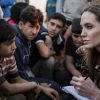
UNESCO, UNHCR & EDUCATION CANNOT WAIT Call for the Inclusion of Refugees in the Post-Covid-19 Education Effort
We must not leave young refugees by the wayside, urged UNESCO, the Office of the United Nations High Commissioner for Refugees (UNHCR) and Education Cannot Wait as they urged more support in favour of young refugees’ education during an online debate today, moderated by UNHCR Special Envoy Angelina Jolie, on how best to provide them with improved learning during and after the pandemic.
Miracle or Mirage? Gangs and Plunging Violence in El Salvador
After decades of harrowing gang crime, homicides have plunged in El Salvador on the watch of the new president, Nayib Bukele. Faced with the growth of the MS-13 and 18th Street gangs, previous governments resorted to “iron fist” policies to crush them, only to find these fuelled a backlash.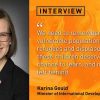
Education Cannot Wait Interviews Karina Gould, Canada’s Minister of International Development
The Honourable Karina Gould was first elected as the Member of Parliament for Burlington in 2015. A graduate of McGill University and the University of Oxford, Minister Gould is passionate about public service and international development. Before her election as the Member of Parliament for Burlington, she worked as a trade and investment specialist for the Mexican Trade Commission in Toronto, a consultant for the Migration and Development Program at the Organization of American States in Washington, D.C., and spent a year volunteering at an orphanage in Mexico.
World Population Day 2020 – ‘The Time is Now to Accelerate the Promise for Women and Girls’
Fulfilling women’s and girls’ rights through promoting sexual and reproductive health and rights (SRHR) is an essential prerequisite for reaching national development goals as well as the Sustainable Development Goals (SDGs).
Why Does Racism Prevail? Leading Scholars Apply their Minds
All people belong to one biological species and there are no human “races”. So why does belief in race persist? It may be a scientific misconception, but it is real. It defines the lived experience of many people and determines how governments act and how people treat one another. How did race come to have this power and this durability?
How do we get out of lockdown?
Dr David Nabarro is a Special Envoy of World Health Organization Director-General on COVID-19, Co-Director of the Imperial College Institute of Global Health Innovation at the Imperial College London and Strategic Director of 4SD. His Narratives are being written with the 4SD team to help readers to make sense of the fast-evolving pandemic and its multiple consequences and to identify the questions to consider when making decisions about measures to contain and suppress outbreaks. They provide readers with insight from David’s leadership and continuous learning, as a public health and development professional with over 40 years’ experience across many countries and contexts, as we navigate this complex, multi-faceted crisis.
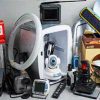
Global E-waste Surging: Up 21% in 5 Years
A record 53.6 million metric tonnes (Mt) of electronic waste was generated worldwide in 2019, up 21 per cent in just five years, according to the UN's Global E-waste Monitor 2020.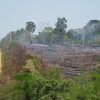
How Deforestation Helps Deadly Viruses Jump from Animals to Humans
The coronavirus pandemic, suspected of originating in bats and pangolins, has brought the risk of viruses that jump from wildlife to humans into stark focus.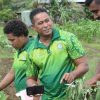
Field Connections- How technology is supporting Pacific agriculture
Standing in the middle of a field around a withered plant, the Pacific Community’s Plant Health Doctors conducted their first virtual meeting as they continue their work on the frontline by providing vital support for farmers in Fiji and the region.
UNESCO Campaign – The next normal
UNESCO launches a global campaign challenging our perception of normality. The 2’20” film relies on facts to prove its point – facts about the world before and during the Covid-19 pandemic. Put together, these facts make us question our ideas about what is “normal”, suggesting that we have accepted the unacceptable for far too long. Our previous reality cannot be considered normal any longer, now is the time to make a change. It all starts with Education, Science, Culture and Information.
Guidance note: Addressing the impacts of the COVID-19 pandemic on women migrant workers
This guidance note highlights the emerging impacts of the COVID-19 pandemic on women migrant workers, focusing on the key challenges and risks they face. It makes recommendations in the context of the economic and social response and recovery packages that governments are putting forward, supported by examples of existing good practices from around the world.A look into the lives of Cambodia’s gentle giants
For generations, elephants have been inextricably tied to the lands of Mondulkiri in Cambodia. The people who call this place their home -- the indigenous Bunong community -- share a unique bond with the gentle giants of the land.
MD of the International Monetary Fund – Kristalina Georgieva
Ed Conway and Sajid Javid talk to the Managing Director of the International Monetary Fund about the global economic outlook, the level of support it's providing during the pandemic, how globalisation can help ease inequality and how she sees the shape of economic recovery.
Helping Bangladesh Recover from COVID-19
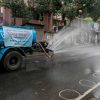
One of the most densely populated countries in the world, Bangladesh exemplifies the triple blow that many emerging market countries have suffered from COVID-19: domestic slowdown caused by the disease and the efforts to contain its spread; a sharp decline in exports, particularly in the ready-made garment sector, and a drop in remittances. Its once robust economy has dramatically slowed in recent months.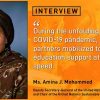
Education Cannot Wait Interviews Amina J. Mohammed, Deputy Secretary-general of the United Nations
Ms. Amina J. Mohammed is the Deputy Secretary-General of the United Nations and Chair of the United Nations Sustainable Development Group. Prior to her appointment, Ms. Mohammed served as Minister of Environment of the Federal Republic of Nigeria where she steered the country’s efforts on climate action and efforts to protect the natural environment. Ms. Mohammed first joined the United Nations in 2012 as Special Adviser to former Secretary-General Ban Ki-moon with the responsibility for post-2015 development planning. She led the process that resulted in global agreement around the 2030 Agenda for Sustainable Development and the creation of the Sustainable Development Goals.« Previous Page — Next Page »


The Week with IPS

NEXT STOP - SDGs
Tracking global progress towards a sustainable world
