Languages
Friday, October 16, 2026



News and Views from the Global South
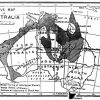
Was There Slavery in Australia? Yes. It Shouldn’t Even Be Up for Debate
Prime Minister Scott Morrison asserted in a radio interview that “there was no slavery in Australia”. This is a common misunderstanding which often obscures our nation’s history of exploitation of First Nations people and Pacific Islanders.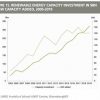
Falling Clean Energy Costs Create Opportunity to Boost Climate Action in COVID-19 Recovery Packages
As COVID-19 hits the fossil fuel industry, a new report shows that renewable energy is more cost-effective than ever - providing an opportunity to prioritize clean energy in economic recovery packages and bring the world closer to meeting the Paris Agreement goals.
How a Global Ocean Treaty Could Protect Biodiversity in the High Seas
Oceans cover 70 per cent of the Earth’s surface. But, because many of us spend most of our lives on land, the 362 million square kilometres of blue out there aren’t always top of mind.
Post-COVID recovery should lock in ocean sustainability, says Commonwealth Secretary-General
The Commonwealth Secretary-General is urging governments to ensure their countries’ post-COVID economic recoveries are environmentally sustainable and safe for the ocean.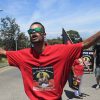
‘I Can’t Breathe!’ Australia Must Look in the Mirror to See our Own Deaths in Custody
I can’t breathe, please! Let me up, please! I can’t breathe! I can’t breathe! These words are not the words of George Floyd or Eric Garner. They weren’t uttered on the streets of Minneapolis or New York. These are the final words of a 26-year-old Dunghutti man who died in a prison in south-eastern Sydney.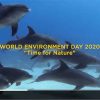
WORLD ENVIRONMENT DAY 2020
 My name is Emma, I’m 10 years old, and I live in Canada. I am sharing this video with you, today, because I learned at school that my future – the future of all children – will be determined by what we do together today.
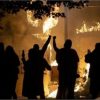
As Minneapolis Burns, Trump’s Presidency is Sinking Deeper into Crisis. And yet, he may still be Re-elected
Violence has erupted across several US cities after the death of a black man, George Floyd, who was shown on video gasping for breath as a white police officer, Derek Chauvin, knelt on his neck. The unrest poses serious challenges for President Donald Trump and former Vice President Joe Biden as each man readies his campaign for the November 3 election.
Young People are Key to a Nicotine-free Future: Five Steps to Stop them Smoking
Tobacco use kills more than 8 million people each year. Most adult smokers start smoking before the age of 20. This implies that if one can get through adolescence without smoking, the likelihood of being a smoker in adulthood is greatly reduced.
Elimination of Leprosy
Warm greetings from Sasakawa Health Foundation in Tokyo. The 100th Issue of the WHO Goodwill Ambassador’s Newsletter has been published. Read special interviews with the Goodwill Ambassador and the UN Special Rapporteur on leprosy, and check out the Timeline of all that has happened since the first issue.
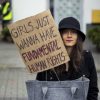
Reproductive Rights of Women and Girls Under Lockdown
Health systems around the world are prioritising health care services and equipment to treat people diagnosed with Covid-19, which means that many procedures deemed to be elective and non-essential are being suspended or simply not provided. Abortion, for instance, has been categorised as a non-essential health service by some States, while others have removed certain restrictions to accessing abortion.
IITA banana research paper in Wiley’s Plant Pathology journal among the most downloaded
A paper published by a team led by scientists from IITA was among the top 10% most downloaded of all papers published between January 2018 and December 2019 in Wiley’s Plant Pathology journal.
LIVE STREAM: Former Norwegian Prime Minister Brundtland on Pandemic Leadership
Between 2002 and 2004, the World Health Organization (WHO) faced the first pandemic of the globalized 21st century, SARS (Severe Acute Respiratory Syndrome). Under the leadership of Dr. Gro Harlem Brundtland and through epidemiological, clinical, and logistical coordination, the WHO facilitated a strong and ultimately successful response to the outbreak. Today, the WHO is facing the coronavirus pandemic in an even more globalized and urbanized world, further complicating response and coordination efforts. What similarities do these two pandemics share, and what lessons in leadership might we be able to learn from the past?

How a Post-COVID-19 Revival Could Kickstart Africa’s Free Trade Area
The African Continental Free Trade Area was launched two years ago at an African Union (AU) summit in Kigali. It was scheduled to be implemented from 1 July 2020. But this has been pushed out until 2021 because of the impact of COVID-19 and the need for leaders to focus on saving lives.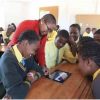
Education Post-COVID-19: Customised Blended Learning is Urgently Needed
Many well meaning education benefactors and commentators in South Africa have expressed that in the light of the COVID-19 pandemic online self-guided learning could solve some of the current teaching problems and address the educational backlog. What learners need, the reasoning goes, is to get free internet access to educational support materials on offer online. Nothing could be further from the truth.
How is the COVID-19 impacting climate action?
In the context of COVID-19 crisis, what are the risks for climate action?
Climate change still continues and climate impacts are still very visible in the Pacific. A few weeks ago, we had major forest fires in Australia and in other countries. Now we’re battling tropical cyclone Harold which is a result of climate change. This week a new study was released, pointing out that the great barrier reef in Australia suffered one of its most severe bleaching in 5 years. Climate change is still happening, so climate actions have to be pursued. People might have different priorities these days, with funding being reoriented to other activities, but the action definitely needs to be continued to strengthen the resilience of our systems to global changes.

Why More Must be Done to Fight Bogus COVID-19 Cure Claims
Fake and bogus cure claims are a longstanding, but neglected public health problem. Throughout recorded history, plagues have inspired anxiety and desperation. Time and again, this public nervousness has proved a fertile ground for false cures and claimants to thrive. In this sense, recent claims of COVID-19 cures and antidotes are no exception.
COVID-19 Has Blown Away the Myth About ‘First’ and ‘Third’ World Competence
One of the planet’s – and Africa’s – deepest prejudices is being demolished by the way countries handle COVID-19.
Dr Stuart Minchin, Director-General of SPC: With the crisis, we’re learning new ways of working
A conversation with SPC's Director-General on how the Pacific Community (SPC) helps Pacific countries respond to the COVID-19 crisis.

Could BCG, a 100-year-old Vaccine for Tuberculosis, Protect Against Coronavirus?
This week, the Bill and Melinda Gates Foundation announced it will donate A$10 million to help fund an Australian trial testing whether a very old vaccine, BCG, can be used against a new threat, COVID-19. So what is the BCG vaccine and what might its place be in the fight against coronavirus?
UNESCO and Education Cannot Wait provide the Ministry of Education and Higher Education with online learning material for teachers and students
(UNESCO/Ministry of Education and Higher Education/ECW) - The COVID-19 pandemic has translated into a major education crisis. In Lebanon, 1.2 million children are affected by school closures and have seen their learning routines disrupted. While Lebanon has switched to distance teaching and learning to mitigate the effects of this disruption, challenges related to preparedness, infrastructure and capacity, as well as the digital gaps, have put additional strains on students, parents, teachers, and the educational authorities.
Black Americans are Bearing the Brunt of Coronavirus Recession – This Should Come as no Surprise
As the COVID-19 pandemic worsened in April, many Americans were shocked by the extent that black Americans were being disproportionately impacted: higher infection rates, more deaths and greater job loss. But many black Americans were not surprised.« Previous Page — Next Page »





The Week with IPS

NEXT STOP - SDGs
Tracking global progress towards a sustainable world
Tracking global progress towards a sustainable world
