Languages
Saturday, October 17, 2026



News and Views from the Global South
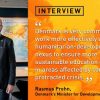
The Power of Education in Emergencies: Interview with Denmark’s Minister of Development Cooperation Rasmus Prehn
Denmark is Education Cannot Wait’s (ECW) third largest donor, with US$79.1 million in contributions to date. In this insightful interview with Denmark’s Minister for Development Cooperation, Rasmus Prehn, we explore the importance of girls’ education and gender equality, the humanitarian-development nexus, expanded engagement with the private sector, education in emergency response to the COVID-19 pandemic and more. A former high school teacher, with a master’s degree in social science, Minister Prehn has been a member of Danish Parliament since 2005, and was named Minister for Development Cooperation on June 27, 2019. Minister Prehn is the former chairman of the Danish Research, Education and Further Education Committee, a tireless advocate for education in emergencies, and a true champion for achievement of the Sustainable Development Goals, especially SDG4: inclusive and equitable, quality education for all.Press Freedom and Tackling Disinformation in the COVID-19 context
On the occasion of World Press Freedom Day 2020, join UNESCO for a dynamic online discussion on the importance of press freedom and independent journalism to provide reliable, life-saving information during the COVID-19 pandemic. Topics to be covered include:- • Fighting disinformation and rumours
• Journalists on the front lines: ensuring their health and safety
• The role of governments: protecting press freedom and independent journalism
• The role of social media and technology: supporting journalism and fighting disinformation
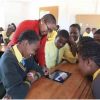
How South Africa can Address Digital Inequalities in E-learning
South Africa’s education system is complex, with historical inequalities dating back to apartheid. Most of the country’s pupils come from disadvantaged backgrounds. Language is an issue; most pupils do not speak English as a mother tongue, yet English dominates in many classrooms. And, as the COVID-19 crisis has showed, there’s a huge digital divide at play.
WORLD PRESS FREEDOM DAY: Journalism Without Fear or Favour
 MEDIA WORLDWIDE is facing crises on multiple fronts, exacerbated by the COVID19 pandemic. Reporters without Borders released its 2020 World Press Freedom Index on April 21st, noting that the Coronavirus is being used by authoritarian governments to implement “shock doctrine” measures that would be impossible in normal times.

Coronavirus Shows the Urgency of Ensuring that Research gets into the Public Domain
Following the outbreak and declaration of COVID-19 as a global pandemic, there has been a flurry of scientific research and publications to address challenges posed by the virus. Publications have risen exponentially over the past few months as scientists work tirelessly to find out more about the pandemic, and the SARS-CoV-2 virus causing it.
Coronavirus: Six Key Factors Poor Countries Should Focus on
Since the outbreak of coronavirus pandemic late last year in Wuhan, China, the global community has witnessed unprecedented policy responses to curtail, contain and control the disease. Many have proven to be successful. But others required critical context consideration.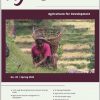
Ag4Dev, Spring 2020: Journal of the Tropical Agriculture Association
No. 39, Spring 2020, Agriculture for Development: open edition 14th Hugh Bunting Memorial Lecture: Smarter foods | Agricultural hazard management in Bangladesh |IPPC special report Climate change and land: extended review | Getting more, much more, from tropical agriculture | Sir George Stapledon | Agriculture and rural roads | TAA 2019 AGM report | TAA 2019 Honours |Moving coastlines: farming the mudflats of Bangladesh | Digital farming and tropical agriculture.

Debunking 9 Popular Myths Doing the Rounds in Africa About the Coronavirus
In the second week of March the World Health Organisation (WHO) declared COVID-19 a pandemic. By mid-March the disease had spread rapidly in many countries around the world.
How Can We Support Sanitation Workers During COVID-19?
In addition to healthcare professionals, there is another group of people at the frontlines of the global crisis caused by COVID-19. They put their lives at risk every day and play a critical role in preventing the spread of the virus, by ensuring our streets, parks, public spaces, sewers, septic tanks, communities, and public toilets are kept clean and hygienic.
Few Clinical Trials are Done in Africa: COVID-19 Shows Why this Urgently Needs to Change
The World Health Organisation (WHO), in its quest to find efficacious therapies to treat COVID-19, plans to conduct a multi-arm, multi-country clinical trial. The trials have yet to begin, but ten countries have already signed up. Only one of them, South Africa, is on the African continent.The Declaration of the Human Solidarity Initiative Against the Coronavirus Pandemic
We find this to be a difficult time in the history of humanity. COVID-19 has brought about ever-increasing tragedies of death and deprivation all the while inflaming our social and economic problems. The time has come to form a humanitarian consensus – strong and active – to face the challenges and dangers that threaten humankind and its future onour small planet.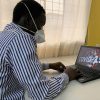
10 Ways Young People are Leading the Way Against COVID-19
As the world grapples with unprecedented challenges posed by the COVID-19 pandemic, young people are demonstrating their continued leadership in their communities and countries. According to a new UN plan to address COVID-19, young people are some of the most affected by the pandemic’s socio-economic impacts. Nevertheless, youth are also among the most active in global responses: Not only are they on the frontlines as health workers, but they are also advancing health and safety in their roles as researchers, activists, innovators, and communicators. As such, decision-makers must commit to ensuring youth voices are part of the solutions for a healthier, safer, and gender-equal world.
Coronavirus: Country Comparisons are Pointless Unless We Account for These Biases in Testing
Suppose we wanted to estimate how many car owners there are in the UK and how many of those own a Ford Fiesta, but we only have data on those people who visited Ford car showrooms in the last year. If 10% of the showroom visitors owned a Fiesta, then, because of the bias in the sample, this would certainly overestimate the proportion of Ford Fiesta owners in the country.
COVID-19 requires gender-equal responses to save economies
Globally, women are more vulnerable to economic shocks wrought by crises such as the coronavirus pandemic. Why are women so at risk? Firstly, women are more likely to lose their jobs than men. In many countries, women's participation in the labour market is often in the form of temporary employment.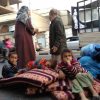
The Gaza Strip and COVID-19: Preparing for the Worst
The coronavirus is now present in Gaza, the populous Palestinian enclave blockaded by air, land and sea since 2007. An epidemic would be calamitous. Hamas should tighten public health measures; Israel should loosen restrictions so that medical supplies can enter and afflicted Palestinians can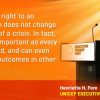
Education Cannot Wait Interviews Henrietta H. Fore, Unicef Executive Director
Henrietta H. Fore became UNICEF’s seventh Executive Director on 1 January 2018. She has worked to champion economic development, education, health, humanitarian assistance and disaster relief in a public service, private sector and non-profit leadership career that spans more than four decades.
COVID-19 and Education in Emergencies
Armed conflicts, forced displacement, climate change induced disasters and protracted crises have disrupted the education of 75 million children and youth globally. And that number is growing in an unprecedented way with the spread of COVID-19. Education has been hit particularly hard by the COVID-19 pandemic with 1.53 billion learners out of school and 184 country-wide school closures, impacting 87.6% of the world’s total enrolled learners. Drop-out rates across the globe are likely to rise as a result of this massive disruption to education access.
TB, HIV and COVID-19: Urgent Questions as Three Epidemics Collide
Tuberculosis (TB) and HIV pose a significant burden on South Africa’s health system. There’s a close relationship between the two. About 60% of TB patients are also HIV-positive. The novel coronavirus (Sars-CoV-2) is likely to be of particular concern for communities with high rates of TB and HIV.
In Light of the Global Pandemic, Focus Attention on the People
SARS-CoV-2 or COVID19, now declared a global pandemic by the World Health Organisation, has begun to wreak havoc in large parts of the world, with other parts waiting in anticipation. We are in a real struggle, which needs total mobilisation; a struggle that needs to put life before profit. We will only win this struggle – as China has already done – if our people are united and disciplined, if governments earn our respect by their actions, and if we act in solidarity across the globe.
COVID-19 in Africa: Fewer Cases So Far, and More Preparation Needed
The novel coronavirus disease (COVID-19) outbreak, recently declared a pandemic by the World Health Organisation, has taken the world by surprise. The good news is that tremendous scientific and technological advances have permitted scientists to understand a lot about this virus in a short amount of time.
Gender “Could be Coronavirus Key”
Analysing how coronavirus impacts genders differently could be key in fighting the disease, say public health experts.« Previous Page — Next Page »





The Week with IPS

NEXT STOP - SDGs
Tracking global progress towards a sustainable world
Tracking global progress towards a sustainable world
